
The Best Wholesale Real Estate Coaching: Costs, Formats & How To Choose
Jun 24, 2026
Written by
Alex Martinez — Founder & CEO, Real Estate Skills. Closed his first wholesale deal at age 20 and has since wholesaled, flipped, and invested in rentals across the country.
Reviewed by
Ryan Zomorodi — Co-Founder & COO, Real Estate Skills. Reviewed and verified the coaching guidance, cost ranges, and student results in this guide before publication.
Publication history: Originally published March 24, 2022. Updated June 2026 with a full rewrite: a clearer explanation of what coaching is, an honest coaching-vs-DIY breakdown, the four program formats, real cost ranges, how to choose a program, verified student results, and a new FAQ. Reviewed and verified by Ryan Zomorodi, Co-Founder & COO of Real Estate Skills.
Wholesale coaching is a structured program where experienced investors teach you to wholesale real estate through a defined system, live deal reviews, accountability, and community — so you reach your first deal faster than learning alone. The right program is judged by its real student results, what's included, and what it costs.
If you're looking into wholesale coaching, you're usually in one of two spots: you're overwhelmed at the start and want a clear path instead of a thousand scattered YouTube videos, or you've already tried and stalled — offers going nowhere, deals falling through, not sure what you're doing wrong. Either way, the question isn't really "is wholesaling legit?" It is. The question is whether paying for a program is the fastest, safest way to get yourself to a closed deal.
That's what this guide is about. Not hype, and not a sales pitch dressed up as advice — a straight look at what wholesale coaching actually is, how it's different from a course you watch alone, what good programs cost, how to choose one without getting burned, and how to decide if it's worth it for your situation. Some people genuinely should just learn it free and DIY; others will save themselves months of expensive trial and error by getting structure and feedback from people who've already done it. By the end, you'll know which one is you.
A quick note on honesty up front, because this topic attracts a lot of it: you'll see programs promising six figures in your first month, "nearly inevitable" success, and results that sound too good to be true. Treat those as red flags, not selling points. Real coaching improves your odds and your speed — it doesn't hand you a guaranteed outcome, and the best programs are the ones honest enough to tell you that.
What Wholesale Coaching Is
Wholesale coaching is a structured program that teaches you to wholesale real estate through a step-by-step system, live deal reviews, accountability, tools, and a community of other students. Unlike a self-paced course, coaching gives you real-time feedback on your actual deals from people who've closed their own.
Start with the thing being coached. Wholesaling real estate means putting a property under contract with a seller, then assigning that contract to a cash buyer for a fee — you're getting paid to connect a motivated seller with an investor, without ever owning the property. It's one of the lowest-barrier ways into real estate: no license required in most situations, and little to no money of your own at risk. Simple to explain. Genuinely hard to execute the first few times.
That gap — between understanding wholesaling and actually closing a wholesale deal — is what coaching exists to close. A wholesale coaching program takes everything an experienced wholesaler knows and packages it into something you can follow: a defined process for finding deals, running the numbers, making offers, lining up buyers, and getting to the closing table. Then, crucially, it adds the things a video can't — someone reviewing your real deals, telling you what to fix, and keeping you moving when you'd otherwise stall.
The best programs bring four things together. A proven system, so you're not guessing what to do next. Live feedback and deal reviews, so when a real seller or agent throws you something the training didn't cover, you get an answer from someone who's been there. Accountability, so you actually do the work week to week instead of letting it drift. And a community of other students, often the most underrated piece — people a few steps ahead of you who've just solved the exact problem you're stuck on.
That's the real distinction from a course. A course hands you information. Coaching adds the part that actually moves beginners forward: real-time, personalized feedback at the moment a deal needs a judgment call. Most people who stall in wholesaling don't fail for lack of information — there's more free information online than anyone could use. They stall because, alone, they can't tell which of the ten things they could do next is the right one. Coaching answers that question, over and over, until it becomes second nature.
You'll notice people use "mentor" and "coach" almost interchangeably, and the difference is genuinely small — both mean an experienced investor helping you get to a deal faster. If you're specifically weighing a one-on-one mentor relationship, how to find a mentor near you or virtually, and how to vet one, that's a topic of its own, and we cover it in full in our guide to finding a wholesale real estate mentor. The rest of this page focuses on coaching programs: how they help, what they cost, how to choose one, and whether one is worth it for you.
Do You Need A Coach? (Coaching vs. Doing It Yourself)
No, you don't need a coach to wholesale real estate — plenty of people learn it free and close deals on their own. But coaching dramatically shortens the timeline and lowers the risk of costly mistakes. It's most worth it if you value speed and would rather not learn everything the hard way.
Let's answer the real question first: you can wholesale real estate without ever paying for coaching. The fundamentals are freely available, and some people piece them together through sheer persistence and grind their way to a first deal. If you're disciplined, patient, and genuinely enjoy figuring things out alone, the free path can work. Anyone who tells you a coach is mandatory is selling something.
What coaching changes is speed and risk. Going it alone, most beginners spend months — sometimes years — and real money learning what doesn't work: locking up deals no buyer wants, mishandling a contract, mispricing an offer, burning an agent relationship, or quitting right before momentum would have kicked in. A program compresses that. You still do the work, but you skip the most expensive lessons, because someone who's already made those mistakes is steering you around them.
For a beginner, that usually means getting to a first deal in a fraction of the time, with someone to call when a real seller or agent says something the videos never covered. For someone already wholesaling, coaching tends to be less about the basics and more about leveling up — tightening a marketing approach, getting sharper on a specific market, building systems so the business runs without you on every call, and scaling past the ceiling they've hit. Coaching isn't only a beginner tool; it's also how experienced wholesalers break through a plateau.
So the honest decision comes down to what you're optimizing for. If your budget is tight and your timeline is flexible, and you'd enjoy the puzzle of learning it yourself, DIY is a legitimate choice — start with wholesaling for beginners and free training and see how far you get. If you'd rather not spend a year learning the hard way, and you want structure, accountability, and a real person in your corner when a deal gets tight, that's exactly what a program buys you. It's not free versus paid as a matter of virtue. It's slower-and-riskier versus faster-and-guided, and only you know which trade you'd rather make.
The Four Coaching Formats (And Who Each Is For)
Wholesale coaching comes in four main formats: self-paced courses, group coaching, one-on-one coaching, and full programs that combine training, coaching, tools, and community. They differ mainly in how much direct access and accountability you get — and that's what drives both the price and the results.
"Coaching" gets used as a catch-all, but what's actually on offer ranges from a cheap set of videos to a high-touch program with weekly access to working investors. Knowing the formats keeps you from overpaying for hand-holding you won't use — or underpaying for a course when what you really needed was accountability.
A self-paced course is the lightest option. You get the curriculum — videos, templates, maybe a workbook — and you work through it on your own schedule. There's usually little or no live feedback. It's the cheapest way in and fine for disciplined self-starters, but on its own it's information, not coaching. Many people buy a course, watch half of it, and stall, because nothing is holding them accountable or answering their specific questions.
Group coaching is where most beginners get the best value. You follow a structured program alongside a cohort, with live calls, deal reviews, and a community moving through the same material. You get real feedback on your real deals, plus the underrated benefit of watching other students hit and solve the exact problems you're about to face. It costs more than a course, but the accountability and live answers are usually what actually get people to a first deal.
One-on-one coaching is the most personalized. You get direct, private time with an experienced wholesaler giving feedback on your specific situation, deal by deal. It's the fastest form of guidance and the most expensive, because you're buying someone's individual attention. It suits people who want maximum access and can afford to pay for it, or who have a specific, complex situation a group setting can't fully address.
A full program is the format most established coaching brands actually sell, and it bundles the others: a complete training system, group coaching and live Q&A, the tools (scripts, calculators, contracts), a student community, and ongoing support. The idea is that no single piece carries the whole load — the system teaches, the coaching corrects, the community sustains, and the tools save you from reinventing everything. For most people serious about wholesaling, a well-built full program is the highest-leverage choice, which is why it's worth understanding exactly what's inside one before you pay.
How Much Wholesale Coaching Costs
Wholesale coaching typically costs anywhere from a couple hundred dollars for a self-paced course to $10,000–$50,000+ for premium one-on-one or mastermind coaching, with most structured group programs landing in the low-to-mid four figures. What you pay tracks how much live access, accountability, and proven support you get.
The honest answer is that it depends on the format, and the range is wide. But "it depends" isn't helpful on its own, so here's what the tiers actually look like in practice.
| Format | Typical Cost | What's Included | Best For |
|---|---|---|---|
| Self-Paced Course | A few hundred to ~$1,000 | Curriculum, templates, maybe a community — little to no live feedback | Disciplined self-starters on a tight budget |
| Group Coaching / Full Program | Low-to-mid four figures (roughly $2,000–$8,000) | Structured system, live coaching and deal reviews, tools, community, ongoing support | Most beginners — the usual best value |
| One-On-One Coaching | Several thousand into low five figures | Private, personalized deal-by-deal feedback from an experienced wholesaler | Those who want maximum access and can pay for it |
| Mastermind / High-Touch | $10,000–$50,000+ | In-person events, peer networks, high-level access | Experienced wholesalers scaling a business |
A few things move a program's price within those ranges: how much live, personal access you get; whether real working investors are reviewing your deals or it's just recorded content; how complete the toolset is (scripts, calculators, contracts, comp tools); the strength of the program's track record and verifiable student results; and whether you're buying a one-time course or ongoing support. More access and more proof cost more — and, generally, deliver more.
Now the part most pages oversell: the return. It's true that a single wholesale deal can pay for an entire program several times over — assignment fees often run five figures — and that's a real argument for coaching. But be careful with anyone quoting you specific income, guaranteed timelines, or "six figures in your first month." Results vary enormously based on your effort, your market, and a hundred factors no program controls. The honest way to think about cost isn't the sticker price or a fantasy return — it's whether the structure and speed a program buys you are worth more to you than the months and mistakes you'd otherwise spend learning alone. Judge a program by what's actually included and by results you can verify, not by who promises the biggest payday.
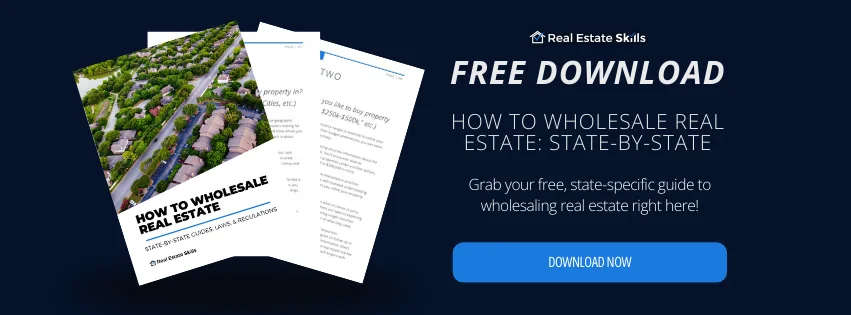
One area worth getting right before you spend anything is the legal side. Wholesaling is legal, but the disclosure and marketing rules vary by state and change often — and a program that ignores that is a liability. Before your next deal, know exactly where your state stands.
Free Guide: How To Wholesale Legally In Your State
Great coaching isn't only about finding deals — it's about building a business that's compliant wherever you operate. The rules for wholesaling vary by state and change often, and a lot of generic programs skip right past them. This free state-by-state guide breaks down the licensing laws, assignment rules, and disclosure requirements where you work, so you can wholesale with confidence. Download it free and know exactly where you stand before your next deal.
Is Wholesale Coaching Worth It?
Wholesale coaching is worth it if you're committed and ready to do the work — the right program can save you months of expensive trial and error and get you to a first deal far faster. It's not worth it if you want passive, guaranteed, or get-rich-quick results, or won't put in the effort.
For the right person, coaching is one of the highest-return decisions in wholesaling, and the logic is simple. Alone, most beginners lose months and real money to mistakes a coach would have caught in a sentence — and many quit before they ever get traction. A program compresses that learning curve, and a single closed deal can pay for the whole thing several times over. If it turns a year of flailing into a few months of guided progress, the time saved alone is worth more than the fee.
But "worth it" depends entirely on you, and this is where honesty matters more than enthusiasm.
Coaching is worth it if you're genuinely committed — if you'll show up, make the calls, send the offers, and keep going when a deal falls through. If you're coachable enough to follow a proven process before you start improvising. And if you can treat setbacks as feedback instead of proof you've failed. For that person, the structure and accountability are often the difference between starting and never starting at all.
Coaching is not worth it — at least not yet — if you're hoping for passive income with no effort, if you expect a guaranteed result on a fixed timeline, or if you're being drawn in by promises of six figures in your first month. Wholesaling is a real business that rewards consistency, not shortcuts, and no program can want it for you. If you won't do the work, the best coaching on earth won't help, and you'll have wasted your money. That's not a knock on coaching — it's just the truth about who it serves.
And to be fair to the alternative one more time: you can learn this for free. Plenty of people start with free training, work the process, and get there on grit alone. Coaching isn't the only path — it's the faster, lower-risk one, with someone in your corner when a deal gets tight. If you're committed and you'd rather not learn every lesson the hard way, that's exactly when a program earns its cost. If you're not sure you'll put in the work yet, start free, prove it to yourself, and upgrade to coaching when you're ready to move faster.
How To Choose A Wholesale Coaching Program
Choose a wholesale coaching program by results, not promises. Look for verifiable student outcomes you can check, coaches actively closing deals, a clear and complete system, real live support and deal reviews, and honest expectations. Walk away from income guarantees, high-pressure sales, and anything that hides what's actually included.
Search "wholesale coaching" and you'll get millions of results, most of them selling. The good news is that a handful of checks will separate a real program from a repackaged video course or a guru with a funnel. Here's what actually matters.
Start with verifiable student results. This is the single strongest signal. A real program can point you to actual students — by name, with real outcomes — and ideally let you talk to a few. Don't settle for a wall of testimonials; ask whether you can connect with current or recent students once you join, because the people a few steps ahead of you are some of the most useful proof, and the most useful help, you'll find. If a program is cagey about its results, that tells you what you need to know.
Check that the coaches are actually doing this. You want guidance from people whose hands are still in the work — closing deals now, not coasting on a story from a decade ago. Ask what the coaching team has closed recently. Markets and rules change, and you need coaches who are current, not nostalgic.
Look at the system, not just the inspiration. A strong program teaches a complete, repeatable process — finding deals, analyzing them, making offers, lining up buyers, closing, getting paid — backed by the actual tools you'll use: scripts, calculators, contracts, comp resources. If you can't see a clear path from where you are to a closed deal, and the real materials to walk it, that's a gap.
Demand real support, not just recordings. The thing you're paying extra for, over a course, is live help: deal reviews, Q&A calls, and people who answer when you're stuck on a real deal. Confirm it exists and how it works. A program that's all pre-recorded video with no live access is a course wearing a coaching price tag.
Then weigh the practical stuff. Does it teach you to operate legally and cleanly across states, not just chase deals? Is the structure — group, one-on-one, or a full program — a fit for how you learn and what you can afford? And does it set honest expectations, or does it lean on income guarantees and "six figures in 30 days," which are the brightest red flags in this whole industry? The best programs are confident enough to tell you the truth: this works if you do the work.
What A Coaching Program Actually Produces
The real test of a coaching program isn't its marketing — it's whether ordinary people who join actually close deals. Here are two examples of what that looks like in practice, friction included.
Raymond — Northern California
Raymond came to wholesaling already a serial entrepreneur — he'd run multiple businesses and even flipped houses before — but he'd taken a beating on his last flip and wanted a better way to acquire properties. The problem was that he had no real training in wholesaling specifically; he understood real estate, but not how to actually work the system to get deals under contract and assigned. So he joined a program and treated it the way he'd treat any business: he studied the material relentlessly, built a small team, and put structure around the process.
It still took real work and real setbacks. He went through plenty of offers, got close on deals that fell through, and had to cancel a few — the normal, unglamorous reality of getting started. What carried him through wasn't a secret tactic; it was persistence plus structure. His own read on it: most people who fail in business fail because they quit too soon, before the momentum builds. He didn't quit. His first wholesale deal closed for a $28,000 assignment — about $23,000 to him after splitting with a JV partner who brought the buyer.
What's useful about Raymond's story for anyone weighing a program is how much of his progress came from the things coaching actually provides. He leaned on the deal reviews and Q&A calls, where the coaches would look at a specific deal with him and point out the exact problem he was about to hit. He used the support to navigate negotiations and JV splits he hadn't done before. And he made the point himself that the material only works if you actually apply it — that the people who buy a program and never work it are the ones who get nothing from it. The program gave him the structure and the feedback; he supplied the effort, and the two together got him to a paid deal.
Landon — South Carolina
Landon's starting point was the opposite of Raymond's. He had no real estate background at all — just a trail of businesses that hadn't worked out (dropshipping, Amazon, solar, roofing, a marketing startup), most of which he'd walked away from. He'd always actually wanted real estate; he just didn't know wholesaling was a way in until he stumbled onto it online. He was also doing all of this part-time, around a full-time job.
His first deal tested him. Working entirely from his computer — he lives in South Carolina and the property was in North Carolina — he cold-called agents on listed properties, spent zero dollars on marketing, and built a relationship with one agent who, weeks later, brought him an off-market deal as the first investor he thought of. Landon got it under contract, and then the wall every beginner hits showed up: not one of his cash buyers wanted it. He nearly panicked. Instead of folding, he kept working it, found an investor, and navigated a tense round of inspection-driven renegotiation on both sides — trimming his buyer's credit request while going back to the seller for a further reduction. It closed for a $20,000 wholesale fee, about $19,000 after a referral fee to the agent. On his first deal, part-time, with no experience.
What he credits isn't a trick. It's the structure and support: the deal reviews, where a coach recorded custom walkthrough videos for his specific deals; the group chat, where his analysis questions — the small ones beginners are afraid to ask — got answered; and the course material on building agent relationships, which is what produced the deal in the first place. His read on the whole thing was blunt and useful: the agents who berated him as inexperienced, the buyers who passed, the self-doubt after past failures — none of it mattered as much as simply not quitting. He showed up, did the work, and the structure did the rest.
Two things are true about both stories. The deals were real and so were the obstacles — canceled contracts, buyers who passed, tense renegotiations, months of work before the first check. And they're individual results, not typical or guaranteed ones; outcomes vary widely based on your effort, your market, and plenty no program controls. What a good program changes isn't the guarantee. It's your odds, and how fast you learn.
See The Exact System Before You Pay For Coaching.
Students like Raymond and Landon didn't guess their way to a first deal — they followed a proven, step-by-step system with coaches in their corner. Our FREE Training walks you through that same MLS-based approach at no cost, so you can see exactly how it works before deciding whether a program is right for you. Watch it today and decide for yourself.
Watch The FREE Training →The Top Wholesale Coaching Program
The Pro Wholesaler VIP Program is Real Estate Skills' full wholesale coaching program: a complete step-by-step system, live coaching and deal reviews, the tools you'll actually use, and a community of active students. It's built to take a beginner from zero to a first deal and beyond.
By the criteria laid out above — real student results, coaches who are actively closing deals, a complete system, genuine live support, and honest expectations — the program we stand behind is our own Pro Wholesaler VIP Program. It's the "full program" format described earlier, built so that no single piece carries the whole load.
Here's what's actually inside it. A complete training system that walks you through the entire process step by step, from finding deals on the MLS to assigning the contract and getting paid. Live Q&A coaching calls and deal reviews, where the coaching team looks at your real deals — the same support Raymond and Landon used to get to their first checks. The tools you'd otherwise spend months building or guessing at: wholesale scripts, deal calculators, contract templates, and walkthroughs. And a community of hundreds of active students, so you're never working alone and can learn from people a few steps ahead of you.
The whole thing is designed around a single idea: the system teaches you, the coaching corrects you, the tools save you time, and the community keeps you going. That combination is what tends to separate people who finish from people who buy a course and stall.
We're not going to put a fantasy number on it. What we'll say honestly is what you've read throughout this guide: the program improves your odds and your speed, the students who succeed are the ones who do the work, and a single closed deal can pay for the program. If you want to see exactly how the system works before committing to anything, the best starting point is the free training — it walks you through the same MLS-based approach the program is built on, at no cost, so you can decide for yourself whether it's a fit.
For investors who want to go beyond wholesaling into flipping and rentals as well, Real Estate Skills also offers the Ultimate Investor Program, which extends the same coaching approach across multiple investing strategies. But if your focus right now is getting to your first wholesale deal, the Pro Wholesaler VIP Program is the place to start.
Wholesale Coaching FAQs
Final Thoughts On Wholesale Coaching
Wholesaling is a real way to start in real estate, and you don't strictly need to pay anyone to do it. That's the honest bottom line. The free path exists, and disciplined people walk it every day.
What coaching changes is speed and risk. A good program compresses months of expensive trial and error into a guided few — a system so you're not guessing, real feedback when a deal gets tight, accountability so you actually do the work, and people a few steps ahead who've solved the problem you're stuck on. Students like Raymond and Landon didn't succeed because a program handed them a deal. They succeeded because they did the work, used the structure, and refused to quit when it got hard. That's the pattern, every time.
So here's the decision, made simple. If your budget is tight and your timeline is flexible and you'd enjoy figuring it out yourself, start with free training and see how far you get. If you'd rather not learn every lesson the hard way and you want structure and a real team in your corner, a coaching program is what that costs — and the right one pays for itself with a single deal. Either way, the move now is the same: stop researching, pick your path, and take the first real step toward a deal. The people who make it are simply the ones who start, and don't stop.
Stop Researching. Take The First Step.
Whether you go the free route or join a program, the move now is the same: start. Our FREE Training shows you the same step-by-step system our students use to find deals, lock them up, and get paid — without spending a dollar on marketing. Watch it today, then take your first real step toward a deal.
Watch The FREE Training →
About The Author
Founder & CEO, Real Estate Skills
Alex Martinez is the Founder and CEO of Real Estate Skills. With more than a decade of investing experience and 33+ residential properties acquired, he has personally wholesaled and flipped houses across the country. Through Real Estate Skills, Alex and his team have helped thousands of students learn how to find deals, use the right contracts, and close profitable real estate transactions.
Real Estate Skills is not a law firm, and the information in this article is provided for educational purposes only — it does not constitute legal, tax, or financial advice. Wholesale real estate laws and contract requirements vary by state and change over time. Real estate investing carries risk, and past results do not guarantee future outcomes. Always consult a licensed real estate attorney and your own tax and financial advisors before entering into any contract or transaction.
👉FREE Training
How To Consistently Wholesale, Flip Houses, & Invest In Rental Properties From The MLS
(Without Spending $1 On Marketing)

Alex Martinez, the founder of Real Estate Skills, is known for his strong, practical expertise in real estate, starting from a beginner with no family connections in the industry to acquiring over 55 real estate deals, including wholesale and flips, within his first year.
He has dedicated his career to providing cutting-edge education and resources for real estate professionals. He emphasizes the importance of self-taught knowledge through mentors, books, and hands-on experience.
His journey from earning a modest income to becoming a successful real estate entrepreneur and educator showcases his expertise and dedication to the field.

Ryan Zomorodi, co-founder and COO of Real Estate Skills, leverages his experience from a diverse background in real estate investment, construction management, and entrepreneurship to provide comprehensive education in the real estate sector.
His expertise is rooted in hands-on experience, extensive industry knowledge, and a commitment to empowering others through education.
Ryan's journey reflects a blend of practical experience and entrepreneurial success, contributing to his role in developing a platform that educates and supports aspiring real estate professionals.
Read Ryan's Full Bio >>
