
Section 8 Pro Review (2026): Cost, Features & Is It Worth It?
Jun 09, 2026

Written by
Alex Martinez — Founder & CEO, Real Estate Skills. Has wholesaled and flipped houses for over a decade, personally acquiring 33+ residential investment properties.
Reviewed by
Ryan Zomorodi — Co-Founder & COO, Real Estate Skills. An active real estate investor who reviewed and verified the facts, figures, and analysis in this review before publication.
Publication history: Originally published September 30, 2025. Updated June 2026 with a clear breakdown of the app versus the Section 8 Secrets coaching, real pricing figures, a "who is Tom Cruz / is it a scam" trust section, an expanded feature inventory, and attributed user reviews. Facts and figures verified by Ryan Zomorodi, Co-Founder & COO of Real Estate Skills.
This Section 8 Pro review covers Tom Cruz's all-in-one app for investing in Section 8 voucher rentals — a Deal Finder, the CruzCTRL management tool, 20+ hours of tutorials, and an investor community. The app itself is free to download with a free trial; the deeper coaching is sold separately and reported at a far higher price. It fits beginners who want a guided, Section-8-specific system and have real capital to deploy.
Here's the thing most reviews gloss over: "Section 8 Pro" is really two products wearing one name, and confusing them is how people end up surprised by the price. There's the Section 8 Pro app — the software you can download free and trial, with the Deal Finder and CruzCTRL management tools inside it. And there's the coaching — the one-on-one mentorship and course (you'll see it branded as Section 8 Secrets), which is a separate, application-only program at a much steeper cost. Independent investor forums have pegged that coaching around $5,000 as of early 2026, with at least one buyer reporting different people were quoted different numbers for the same thing. Confirm current pricing directly, because it's quoted case by case and changes.
So is it worth it? That depends on which one you mean and where you're starting from. If you're brand-new to voucher rentals and you want a single guided path instead of stitching together your own tools, the app can genuinely shorten the learning curve — and Cruz's own messaging suggests you'll want roughly $10,000 to $15,000 in real capital ready before the strategy makes sense. If you already own rentals and know how to underwrite a deal, you may only need a data tool, not a whole ecosystem. This review breaks down exactly what you get, what it really costs, what users say, and the honest case for and against — so you can decide before you spend a dollar. You can also learn the fundamentals first with our free training and judge any tool, including this one, for yourself.
What Is Section 8 Pro?
Section 8 Pro is Tom Cruz's app and training ecosystem for investing in Section 8 voucher rentals. It bundles a Deal Finder, the CruzCTRL management tool, 20+ hours of tutorials, private-lender access, and an investor community. A separate, higher-priced coaching program (Section 8 Secrets) adds one-on-one mentorship.
The name covers two things, and knowing which is which saves you from a pricing surprise later.
The app — "Section 8 Pro." This is the software, free to download on iOS and Android with a free trial to get you in the door. Inside, the headline tool is the Deal Finder: you filter potential markets and properties by the things that actually decide a Section 8 deal — location, condition, crime, and projected cash flow — instead of scrolling generic listings. Alongside it sits CruzCTRL, a light property-management layer for tracking tenants and rent, plus the 20+ hours of video tutorials, a stated line to private lenders, and what Cruz markets as the largest Section 8 investor community anywhere. For a beginner, the appeal is obvious: one place to find a voucher deal, run the numbers, and learn the ropes, instead of duct-taping five tools together.
The coaching — "Section 8 Secrets." This is the expensive part, and it's a different product. It's an application-only mentorship and course (the link from most of Cruz's ads points here, not to the app), built around roughly seven modules: picking markets, choosing properties that pass inspection, financing, getting onboarded with the housing authority to start receiving rent, passing inspections, screening and managing tenants, and scaling the portfolio. It comes with about 12 months of live group mentorship — monthly Zoom calls — and, at the higher tiers, direct one-on-one access to Tom himself by message and email. This is where the real cost lives, and where most of the "is it worth it" debate actually happens.
Why does the distinction matter so much? Because someone downloads the free app, likes it, and then assumes that's the whole product — until they hit the coaching upsell and the four-figure (or higher) price tag. If you go in knowing the app is the on-ramp and the coaching is the paid destination, you can judge each on its own merits. The rest of this review does exactly that.
| Section 8 Pro (App) | Section 8 Secrets (Coaching) | |
|---|---|---|
| What it is | The software: Deal Finder, CruzCTRL, tutorials, community | Mentorship + course with live coaching and 1-on-1 access |
| Cost | Free to download, with a free trial | Reported around $5,000, quoted case by case |
| How you get it | App store download via Cruz's free workshop funnel | Application only — you apply and get quoted on a call |
| Best for | Testing the tools and finding deals on your own | Hands-on guidance and accountability while you scale |
Read Also: How To Invest In Section 8 Housing
How Much Does Section 8 Pro Cost?
The Section 8 Pro app is free to download with a free trial. The separate Section 8 Secrets coaching is the expensive piece — investor forums consistently report it around $5,000 as of early 2026, sold by application and quoted case by case. Cruz also suggests having $10,000 to $15,000 in capital ready to invest.
Pricing is where this product earns most of its criticism, so let's be precise and separate the two pieces.
The app is free to start. You can download Section 8 Pro on iOS or Android at no cost and trial the Deal Finder before paying anything. Entry typically runs through Cruz's free workshop or masterclass funnel, which then opens a trial of the software. So if all you want is to see the Deal Finder in action, you can do that without spending money — a genuinely low-risk way to evaluate it.
The coaching is where the real money is. Section 8 Secrets — the mentorship and course — is the four-figure purchase. Across independent investor forums like BiggerPockets, the figure that comes up repeatedly is around $5,000, as of early 2026. It's sold application-only and quoted individually rather than listed publicly, which is exactly why you won't find a clean price on a sales page. Treat that $5,000 as a reported ballpark, not a fixed sticker — confirm the current number directly before you commit, because it changes and it's quoted per person.
That "quoted per person" point is the heart of the most common complaint. In a public app-store review, one buyer alleged that Cruz "charges 5,000 to some and 2,000 to some" for the same course. We can't independently verify any individual's quote, and tiered or negotiated pricing isn't unusual in the coaching world. But it's a fair thing to walk in aware of: ask for the full price in writing, ask exactly what's included at your tier, and ask about the refund policy (Cruz's site does publish a refund-policy page — read it before you pay).
Budget beyond the program, too. Cruz's own marketing is upfront that this strategy isn't for someone with no capital — his ads repeatedly state you'll want roughly $10,000 to $15,000 ready to invest in actual property on top of whatever you pay for coaching. That's the honest math: the coaching is a cost, and it's the smaller cost. The down payments, repairs, and reserves to actually buy and hold voucher rentals are the real capital requirement.
This is educational information, not financial advice. The figures here are reported ranges that change over time and vary by individual — confirm current pricing and terms directly with the provider, and assess any investment against your own finances before committing.
| Cost | Amount (as of 2026) | Notes |
|---|---|---|
| Section 8 Pro app | Free + free trial | Download via the free workshop funnel |
| Section 8 Secrets coaching | ~$5,000 (reported) | Application only; quoted per person; confirm directly |
| Investment capital | $10,000 to $15,000+ | Per Cruz's own guidance — for the property, not the program |
📍 Before You Pay: Ask For This In Writing
Because the coaching is quoted individually, protect yourself before committing:
- The full price in writing — the total, not a monthly figure or a "starting at" number.
- Exactly what's included at your tier — group coaching vs. 1-on-1 access, and for how long.
- The refund policy — Cruz's site publishes one; read the terms before you pay, not after.
If a provider won't put the price and inclusions in writing, treat that as information too.
Read Also: Best Real Estate Investing Courses
Is Tom Cruz Legit, Or Is Section 8 Pro A Scam?
Tom Cruz is a real, verifiable Section 8 investor — public records and news coverage confirm a large Wilmington, NC portfolio, including a $6.3 million, 92-unit purchase in 2024. "Scam" overstates it. The fair criticisms are about price, hype, and whether the returns hold up after expenses — not about whether he's real.
Search "Tom Cruz Section 8" and you'll hit both extremes: glowing student testimonials and forum threads calling it a $5,000 guru scam. The truth sits in between, and you deserve the unhyped version before spending anything.
What's verifiably real. Cruz isn't a paper guru. He's a UNC Wilmington graduate who started wholesaling around 2012, stumbled into Section 8 when a cheap Wilmington house he bought came with a voucher tenant, and built from there. The portfolio is documented: he and his partners have been covered in the press for deals like a $6.3 million acquisition of 92 historic Wilmington units in 2024. He claims 700+ rental units across North Carolina, South Carolina, Ohio, and Tennessee — exact counts vary by interview, so treat the headline numbers as his own claims rather than audited figures, but the underlying business plainly exists. The app is real and functional, and public app-store reviews include specific, credible-sounding wins — one investor wrote that he bought "9 houses in 6 months" using the platform and materials. Results like that aren't typical, and they can't be verified, but they're not fabricated marketing copy either; they're posted by named users.
What the fair criticisms actually are. The strongest objection isn't "he's fake" — it's "does the math survive contact with reality?" Skeptics on BiggerPockets point out that a portfolio reportedly grossing around $650,000 a month across 700 units pencils out to under $1,000 per door before the mortgage, management, maintenance, and vacancies that eat into it — and that Section 8, for all its guaranteed-rent appeal, comes with real friction: failed inspections, problem tenants, and slow housing-authority bureaucracy. That's a legitimate, experienced-investor critique, and it's why "guaranteed government rent" is only half the story. The second fair criticism is the pricing opacity we covered above — the same course reportedly quoted at different prices to different people. Neither makes it a scam. Both are reasons to go in clear-eyed.
So, scam or not? No — "scam" implies you get nothing for your money, and that's not what the evidence shows. What you're really deciding is whether a packaged, Section-8-specific education is worth a four-figure price when the core knowledge is learnable elsewhere, and whether voucher investing fits your market and your risk tolerance. That's a value question, not a fraud question. Answer it honestly and the rest gets easier.
Income and return figures cited here are self-reported or illustrative. Real estate returns vary widely by market, financing, and management, and many investors earn less than headline numbers suggest. Past or claimed performance doesn't predict your results.
Who Is Tom Cruz?
Tom Cruz is a Wilmington, NC real estate investor who specializes in Section 8 voucher rentals. A UNC Wilmington graduate, he began wholesaling around 2012, moved into subsidized housing, and built a portfolio he reports at 700+ units across four states. He created the Section 8 Secrets coaching program in 2021 and the Section 8 Pro app in 2023.
Cruz's story is unusually well-documented for a real estate educator, which works in his favor on the legitimacy question. He graduated from UNC Wilmington around 2010–2011 and got into real estate by wholesaling — finding discounted properties and assigning the contracts to other buyers — before he ever touched Section 8. His entry into voucher rentals was almost accidental: he bought a cheap Wilmington house, roughly $55,000, and only after closing learned it came with a Section 8 tenant whose rent was paid in full by the federal government. That experience — full, on-time rent with no chasing — became the model he scaled.
From there he used creative financing (deal structures that minimize the cash you put in) to buy low-cost homes one or two at a time, then brought in partners. He says he's secured over $25 million in commercial and creative financing and grown to 700+ units across North Carolina, South Carolina, Ohio, and Tennessee, most of them Section 8. Some of that is verifiable through press coverage — the $6.3 million, 92-unit Wilmington deal in 2024 is a matter of public record. Other figures, including his monthly-income and total-unit claims, come from his own interviews and vary from telling to telling, so weigh them as self-reported.
What about his net worth? You'll see this searched a lot, and the honest answer is that there's no audited public figure. Cruz has claimed monthly net rental income in the range of $650,000 and up, which implies a substantial portfolio value — but those are his own numbers, not independently confirmed, and a gross or net income figure isn't the same as net worth once debt is accounted for. Anyone stating a precise net worth for him is guessing. What's fair to say: he's a genuinely large-scale Section 8 operator with a documented portfolio, not a net-worth figure you should treat as fact.
He's also a social-media personality — over a million followers, a deliberately flashy "Section 8 landlord" persona (the Rolls-Royces show up in the ads for a reason). That marketing style is part of why some investors are skeptical, and it's worth separating from the underlying business. The cars are the brand; the 92-unit deal is the track record. Judge the product on the latter.
Read Also: How To Become A Real Estate Investor
Section 8 Pro Features: What You Actually Get
Section 8 Pro's core is the Deal Finder, which screens properties by location, condition, crime, and projected cash flow specifically for voucher rentals. Around it sit CruzCTRL for light property management, 20+ hours of Section 8 tutorials, a stated line to private lenders, and a large investor community. The depth is beginner-oriented, not institutional.
Here's what each piece does, and how much it actually matters.
The Deal Finder — the reason most people download it. This is the standout tool. Instead of scrolling Zillow and guessing, you filter properties by the four things that decide a Section 8 deal: location, condition, crime data, and projected cash flow. You can scan by city or state and see at a glance which areas look workable and which don't, and filter for things like seller financing. Users in public reviews single this out as the genuinely useful part — one called out being able to "filter based off cost, profit, seller financing." The honest caveat: its crime, rent, and vacancy data is a starting point, not gospel. Treat its outputs as a first screen, then verify rents against the local housing authority's payment standards and the neighborhood with your own eyes before you make an offer.
CruzCTRL — light property management. This is the operations layer for tracking tenants and rent once you own something. It's basic by design — fine for a handful of doors, not a replacement for dedicated property-management software if you're running a real portfolio. If you already use something like RentRedi or a full PM platform, CruzCTRL won't add much.
The tutorial library — 20+ hours of Section 8 training. This is where the education lives inside the app: video lessons covering how the voucher process works, inspections, rent reasonableness, and working with housing authorities. For a complete beginner, this is the meat — it's the difference between knowing voucher investing exists and knowing how to actually execute it. For an experienced investor, much of it will be review.
Private-lender access. Cruz markets a line to financing partners — lenders his network uses, some reportedly willing to lend without tax returns or income verification on the strength of the deal and a basic credit minimum. Useful if financing is your bottleneck; verify the actual terms yourself, because "access to lenders" is only as good as the rates and terms you're actually offered.
The community. Cruz claims the largest Section 8 investor community anywhere, and across reviews this comes up as a real benefit — somewhere to ask questions, get unstuck, and see what others in the same niche are doing. Community quality is hard to verify from outside, but for a beginner who'd otherwise be figuring out voucher rentals alone, it has genuine value.
| Feature | What It Does | Who It Helps Most |
|---|---|---|
| Deal Finder | Screens properties by location, condition, crime, cash flow | Anyone — the genuinely useful core |
| CruzCTRL | Light tenant and rent tracking | Small landlords; skippable if you have a PM tool |
| Tutorial library | 20+ hours on vouchers, inspections, housing authorities | Beginners — mostly review for veterans |
| Private-lender access | A line to financing partners in Cruz's network | Those stuck on financing — verify terms |
| Investor community | Q&A and peer support among Section 8 investors | Beginners who'd otherwise go it alone |
The pattern across all of it: the features are built for someone starting from zero in one specific niche, and that's exactly who gets the most out of them. The deeper you already are, the more of this you already have.
📍 Verify Before You Trust The Numbers
Treat the Deal Finder's built-in crime, rent, and vacancy data as a first screen, not a final answer. Cross-check rents against your local housing authority's published payment standards, confirm neighborhood conditions with at least one independent source, and walk (or have someone walk) the property before you make an offer. The tool narrows the field — your own due diligence closes the deal.
Section 8 Pro Reviews: What Users Actually Say
Section 8 Pro reviews are genuinely split. App-store users praise the Deal Finder and Tom Cruz's responsiveness, with some reporting real closed deals; critics on investor forums flag the coaching price, inconsistent quotes, and thin per-door margins. The pattern: beginners value the hand-holding, experienced investors question the cost.
Pull the actual reviews rather than the marketing, and a clear split emerges. Worth knowing which camp you'd land in before you pay.
The positive reviews — and they're specific. The strongest praise centers on two things: the Deal Finder and access to Cruz himself. One app-store reviewer described closing his first Section 8 house and noted that whenever he had a question, he could text Tom directly and "always get back to me." Another, a decade-deep investor, wrote that he "purchased 9 houses in 6 months" using the platform and materials. The community and the responsiveness come up repeatedly — for a beginner who'd otherwise be alone in a confusing niche, that support has real value. These are named users posting concrete outcomes, not anonymous testimonials. (As always: results like nine houses in six months are exceptional, not typical, and can't be independently verified.)
The critical reviews — also specific. The complaints cluster around price and transparency. The recurring one, raised in a public app-store review, is that the program is quoted inconsistently — that buyer alleged Cruz "charges 5,000 to some and 2,000 to some" for the same course. On BiggerPockets, experienced investors push back on the underlying numbers, arguing that a portfolio grossing the income Cruz cites still nets modestly per door once mortgage, management, and maintenance come out — and that Section 8 carries real headaches (failed inspections, difficult tenants, slow bureaucracy) the highlight reels skip. A few reviewers also mention a steep learning curve when you're absorbing both the software and the Section 8 program at once.
How to read them. Weight the reviews that include specifics — a closed deal, a real market, a dollar figure, a screenshot — over one-line raves or rants, and look for themes that repeat across independent sources rather than any single voice. The consistent signal here is real: the tools and support genuinely help beginners move faster, and the cost and the after-expense math are genuine reasons for caution. Both are true at once.
Read Also: DealMachine Review
Section 8 Pro Pros & Cons
Section 8 Pro's strengths are its niche focus, the Deal Finder, beginner-friendly training, and a responsive community. Its weaknesses are opaque, individually-quoted coaching pricing, data that needs verifying, a learning curve, and limited value for investors who already own rentals and own their own tools.
The honest balance, with no thumb on the scale either way:
| Pros | Cons |
|---|---|
| Built specifically for Section 8 — not a generic tool bent to fit | Coaching price is opaque and quoted person by person |
| Deal Finder is a genuinely useful screening tool | Built-in data needs independent verification |
| Free app and trial — low-risk to evaluate | Real learning curve for absolute beginners |
| Beginner-friendly training and onboarding | CruzCTRL is light vs. dedicated PM software |
| Active community and responsive support | Limited extra value if you already own rentals and tools |
The net read: Section 8 Pro adds the most when you want a guided, Section-8-specific system and you're willing to verify its data and your local rules yourself. The further along you are, the less the bundle does for you.
Who Should Use Section 8 Pro?
Section 8 Pro fits beginners who want a single guided platform for voucher rentals and have real capital to invest. It's a weaker fit for experienced investors who already underwrite deals and run their own tools — they may only need a data add-on, not an entire ecosystem.
The clearest way to decide is to find yourself on this list.
It's a good fit if you're:
- A beginner who wants structure and a step-by-step path into Section 8, not a pile of disconnected tools.
- A small operator adding your first voucher units who values a community to sanity-check each step.
- A time-constrained professional with capital ready, who'd rather pay for a packaged system than assemble one.
It's probably not for you if you're:
- An experienced investor who already knows how to find, analyze, and manage rentals — you likely just need a data source.
- Short on investment capital right now — the coaching price competes with the down-payment money the strategy actually requires.
- Looking for a hands-off, guaranteed return — no tool delivers that, and Section 8 has real operational friction.
Section 8 Pro Alternatives
If you'd rather build your own stack than buy an ecosystem, mainstream tools cover the same jobs: PropStream for nationwide data and comps, DealMachine for lead generation, RentRedi for tenant management, and REsimpli for an all-in-one CRM. None are Section 8-specific, but together they often cost less than the coaching.
Section 8 Pro bundles finding, analyzing, and managing into one paid system. If you already know the workflow, you can assemble the same capabilities from modular tools — usually for a fraction of the coaching price. Here's how the common alternatives stack up.
| Tool | Strength | Best For |
|---|---|---|
| PropStream | Nationwide property data and comps | Data-driven acquisitions |
| DealMachine | Driving for dollars and lead gen | On-the-go lead generation |
| RentRedi | Tenant screening and rent payments | Small-portfolio management |
| REsimpli | All-in-one CRM and operations | Lead-management workflows |
The tradeoff is real: a modular stack is cheaper and more flexible, but none of these tools holds your hand through the Section 8 process specifically. That's the actual choice — pay more for a guided, niche-specific path, or pay less and direct yourself.
Tips For Using Section 8 Pro
To get real value from Section 8 Pro, verify its rent and crime data against independent sources, confirm payment standards with your local housing authority, underwrite conservatively, watch the tutorials before importing leads, and keep clean records of every inspection and lease in your management tool.
The software is only as good as the discipline you bring to it. Five habits that turn it from a nice app into actual results:
- Validate the rent. Cross-check the Deal Finder's rent estimates against your local housing authority's published Fair Market Rents and payment standards — those are what actually determine your voucher income.
- Ground-truth the neighborhood. Verify crime and area quality with at least one independent dataset and, ideally, local eyes on the property. Don't buy off a map color.
- Underwrite conservatively. Run realistic vacancy, maintenance, and CapEx reserves. The "guaranteed rent" pitch doesn't cover turnovers, failed inspections, or repairs — budget for them.
- Watch the tutorials first. Go through the training before you import leads, so you understand the voucher and inspection process before you're making offers on it.
- Keep a clean paper trail. Track every inspection, lease, and housing-authority communication in your management tool. Section 8 is paperwork-heavy, and organization is what keeps payments on time.
Before You Trust Any Deal Finder, Run The Numbers Yourself
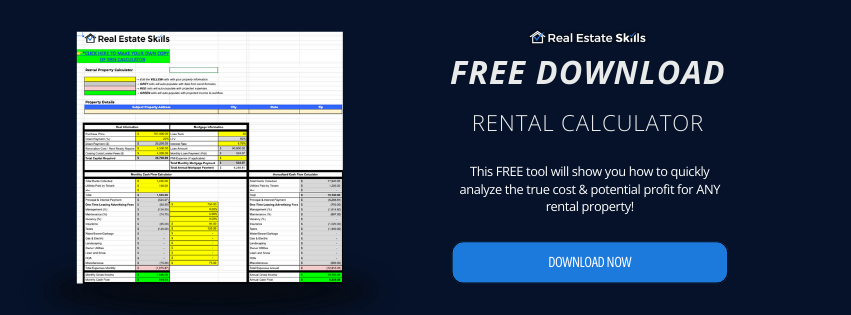
A Section 8 deal lives or dies on the math after expenses — the mortgage, management, maintenance, and vacancy that the "guaranteed rent" pitch leaves out. Don't take any tool's projected cash flow at face value. We built a professional-grade rental property calculator that lets you plug in a property's voucher rent and your real expenses to see whether it actually cash flows before you make an offer. Download the same tool we use to underwrite our own deals.
Do those five things and the tool earns its place. Skip them and no software, this one included, will save a poorly-vetted deal.
Before you spend four figures on any program, it's worth knowing whether you can build the same foundation yourself first. The fundamentals that make any Section 8 tool work — how to analyze a deal, fund it, and manage it — are learnable, and they're what let you judge whether a product like this is worth it for you. That's exactly what our FREE Training covers.
Learn the fundamentals first — how to find deals, fund them, and build rental income from the ground up — then decide what tools you actually need.
Section 8 Pro FAQs
Final Thoughts On Section 8 Pro
Section 8 Pro is worth it for a specific buyer: a beginner with real capital who wants a guided, Section-8-only path and values community and hand-holding over price. It's a poor fit for experienced investors who already underwrite deals, and for anyone without the $10,000 to $15,000 in capital the strategy requires.
After all of it, the verdict is conditional, not a thumbs up or down — because the right answer genuinely depends on who's asking.
Buy it if you're new to voucher rentals, you have capital ready to deploy, and you'd rather pay for a packaged system and a community than assemble your own tools and learn by trial and error. The Deal Finder is a real asset, the training is genuinely beginner-friendly, and the support is the part users praise most. For that person, the coaching can shorten the timeline meaningfully.
Skip it if you already own rentals and know how to analyze a deal — you'll likely get more value from modular tools (data, management, a CRM) at a fraction of the cost. Skip it too if the four-figure coaching price would itself strain the capital you need for actual down payments. And go in clear-eyed regardless: get the full price in writing, verify the Deal Finder's data yourself, and treat the "guaranteed rent" pitch as one factor, not the whole picture.
The honest bottom line: the product isn't a scam and it isn't a shortcut. It's a paid head start in one specific niche — valuable to the right beginner, unnecessary for the seasoned investor, and never a substitute for doing your own due diligence on every deal.
Whether or not Section 8 Pro is right for you, the fundamentals come first. The investors who succeed aren't the ones who bought the priciest course — they're the ones who learned how to find, fund, and manage a deal before spending a dollar on tools. Our FREE Training shows you exactly that.
Learn the system thousands of our students use to find deals and build rental income — then choose the tools that fit your plan.
About The Author
Founder & CEO, Real Estate Skills
Alex Martinez is the Founder and CEO of Real Estate Skills. With more than a decade of investing experience and 33+ residential properties acquired, he has personally wholesaled and flipped houses across the country. Through Real Estate Skills, Alex and his team have helped thousands of students learn how to find deals, evaluate the right tools, and close profitable real estate transactions.
Real Estate Skills is not a law firm, and the information in this article is provided for educational purposes only — it does not constitute legal, tax, or financial advice. Section 8 Pro is a third-party product not affiliated with Real Estate Skills, and pricing, features, and program terms vary and change over time. Real estate investing carries risk, and past or claimed results do not guarantee future outcomes. Always confirm current product details directly with the provider and consult a licensed professional and your own financial advisor before making a purchase or investment decision.

👉FREE Training
How To Consistently Wholesale, Flip Houses, & Invest In Rental Properties From The MLS
(Without Spending $1 On Marketing)

Alex Martinez, the founder of Real Estate Skills, is known for his strong, practical expertise in real estate, starting from a beginner with no family connections in the industry to acquiring over 55 real estate deals, including wholesale and flips, within his first year.
He has dedicated his career to providing cutting-edge education and resources for real estate professionals. He emphasizes the importance of self-taught knowledge through mentors, books, and hands-on experience.
His journey from earning a modest income to becoming a successful real estate entrepreneur and educator showcases his expertise and dedication to the field.

Ryan Zomorodi, co-founder and COO of Real Estate Skills, leverages his experience from a diverse background in real estate investment, construction management, and entrepreneurship to provide comprehensive education in the real estate sector.
His expertise is rooted in hands-on experience, extensive industry knowledge, and a commitment to empowering others through education.
Ryan's journey reflects a blend of practical experience and entrepreneurial success, contributing to his role in developing a platform that educates and supports aspiring real estate professionals.
Read Ryan's Full Bio >>
