
House Flipping Project Management: The "Daily Burn" System (2026)
Feb 18, 2026
Key Takeaways: House Flipping Project Management
- The Opportunity: You can save $20,000+ per flip by managing the contractor draw schedule yourself rather than hiring a General Contractor.
- The "Trap": Paying contractors 50% upfront. This destroys your leverage and often leads to project abandonment.
- The Strategy: Use a "Performance-Based" draw schedule where funds are only released after milestones are verified and lien waivers are signed.
What You’ll Learn: How to control capital velocity and prevent the "Daily Burn" from eating your profits.
If you are borrowing hard money at 12%, you could be paying as much as $150 a day just to hold the keys. That is, before you pay a contractor or buy a single nail. Most beginners think house flipping project management is about picking nice finishes or finding the cheapest labor. It isn't. It is about speed. If your project sits empty for two weeks because a plumber didn't show up, you didn't just lose time. You lost profit that you can never get back.
The "Daily Burn" Framework: Why Speed is the Only KPI
Successful house flipping project management requires understanding that time is literally money. Every day a house sits unfinished, you pay interest and taxes. This daily expense is called the daily burn rate, and it determines whether you make a profit or lose money on your investment.
If you are new to real estate investing, you might think the goal is just to fix the house. It is actually to fix the house as fast as possible. Most beginners fail here because they treat a flip like a weekend DIY project. They focus on finding the cheapest materials while ignoring the fact that the loan they used to buy the house is charging them interest every single second.
Many beginners forget that the daily burn continues even after the renovation is done. You are still burning cash while the house is listed, while you are in escrow, and right up until the day the deed transfers. If a buyer asks for a 30-day close, that request is effectively asking you for an additional $4,500 discount at a $150/day rate.
Related Reading: How to Flip Houses for a Living

The hardest part is realizing that a cheap contractor who takes two months is actually more expensive than a pricier contractor who finishes in three weeks. On a standard project where you borrowed $300,000 at a 12% interest rate, you are paying about $100 per day just in interest. When you add in property taxes, insurance, and the water bill, you are likely losing $150 every day. If the house sits empty for 10 extra days, you just lost $1,500 of your profit.
Related Reading: How To Choose The Best General Contractor? The ULTIMATE GUIDE
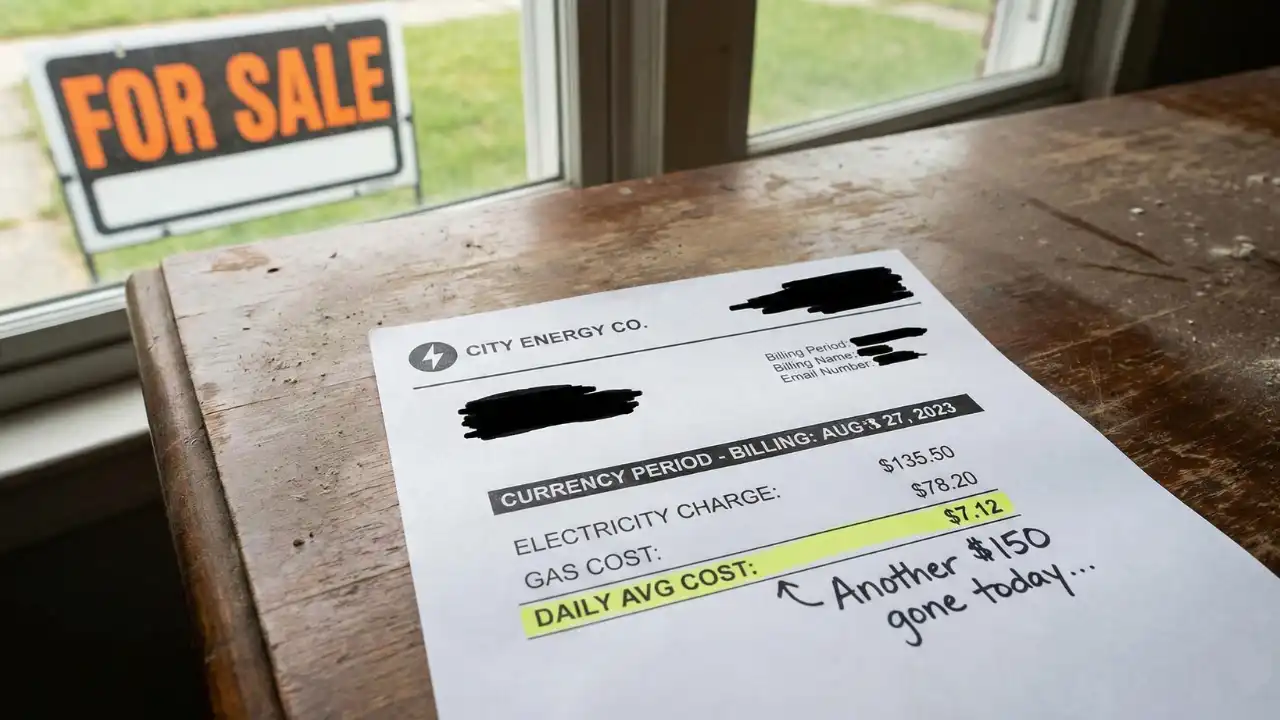
Velocity must be disciplined. You want to move fast, but you cannot be reckless. If you rush a plumber to save one day but the plumbing fails a city inspection, you will have to tear out the walls and start over. This mistake would add a week to your timeline and increase your burn rate. You need a schedule that keeps people working every day without cutting corners on the quality of the work. The clock is your most expensive partner in this business.
- Daily Interest: This is the fee the bank charges you every day for the money you borrowed.
- Taxes and Insurance: These costs never stop, even if no one is working on the house.
- Utilities: You must keep the lights and water on so the crew can work.
- Opportunity Cost: Every day you spend on this house is a day you cannot spend on your next deal.
Calculate your daily burn right now. Monthly interest + taxes + insurance divided by 30. If that number is $150, and you hold up the project for three days over a $200 paint issue, you actually lost $450. You spent $450 to save $200. That is how beginners go broke. Pick the speed, not the fight.
How To Find The BEST Contractors For Flipping Houses!
Your renovation is only as good as the team building it. In this training, we break down the "3-Quote Rule" for vetting GCs and the 6 essential legal documents you must have before demolition starts.
Watch as we detail the 6 essential documents—including the Independent Contractor Agreement and Lien Waivers—required to secure your renovation.
The Ironclad Scope of Work (SOW): Your Legal Safety Net
One of the biggest mistakes a new investor makes is telling a contractor, "Just fix the kitchen." Without a detailed scope of work template, the contractor might install the cheapest cabinets available, while you were expecting high-end shaker style. This confusion leads to "change orders," which are extra charges that contractors add mid-project, destroying your budget.
Think of the scope of work as a highly detailed shopping list for your entire house. It is a document that lists every single task, material, and finish that needs to be completed. When you are specific, there is no room for "I didn't know you wanted that." A professional scope of work for house flipping must be itemized by trade and material SKU number, serving as a binding legal attachment to the Independent Contractor Agreement (ICA).
Stop Guessing and Start Building Like a Pro
If you want to manage your renovation with surgical precision and avoid the expensive "change orders" that bankrupt most beginners, you need a master plan. Download our free scope of work template today to ensure you do it right from the very first day. This itemized checklist allows you to list every single repair—from the electrical wires to the kitchen tiles—so you can hold your contractors accountable and protect your profit margins throughout the entire project.

The hardest part is the time it takes to be this specific. Writing an ironclad SOW can take days of measuring and researching. Some investors argue it is faster to do a "time and materials" contract where you just pay for whatever the contractor uses, but this exposes the investor to uncapped risk. If the contractor is slow or wasteful, you pay the price. Taking the time to write a detailed renovation list protects your profit from the very beginning.
- Itemized by Trade: Group your tasks by plumber, electrician, and painter so each professional knows exactly what they are responsible for.
- Material SKU Numbers: Don't just say "grey tile." List the specific brand and SKU number from the store so the exact material is ordered.
- Fixed-Price Only: Use your SOW to get a "firm bid" rather than an estimate, so the price doesn't change halfway through the job.
- Legal Protection: By attaching the SOW to your independent contractor agreement, you have a legal document to point to if a contractor tries to charge you more for something already on the list.
The Draw Schedule: How to Control Contractor Behavior
In the world of real estate, money is your only real leverage. Once you give a contractor a large sum of cash, you lose your ability to control the speed or quality of their work. This is why professional investors use a construction draw schedule—a pre-set plan that determines exactly when and how people get paid.
The "draw schedule" is the most critical tool in house flipping project management, where payments are released only upon the verified completion of specific milestones, never based on dates or contractor requests. If you are paying contractors based on a calendar rather than their actual progress, you are inviting delays and "disappearing" crews.
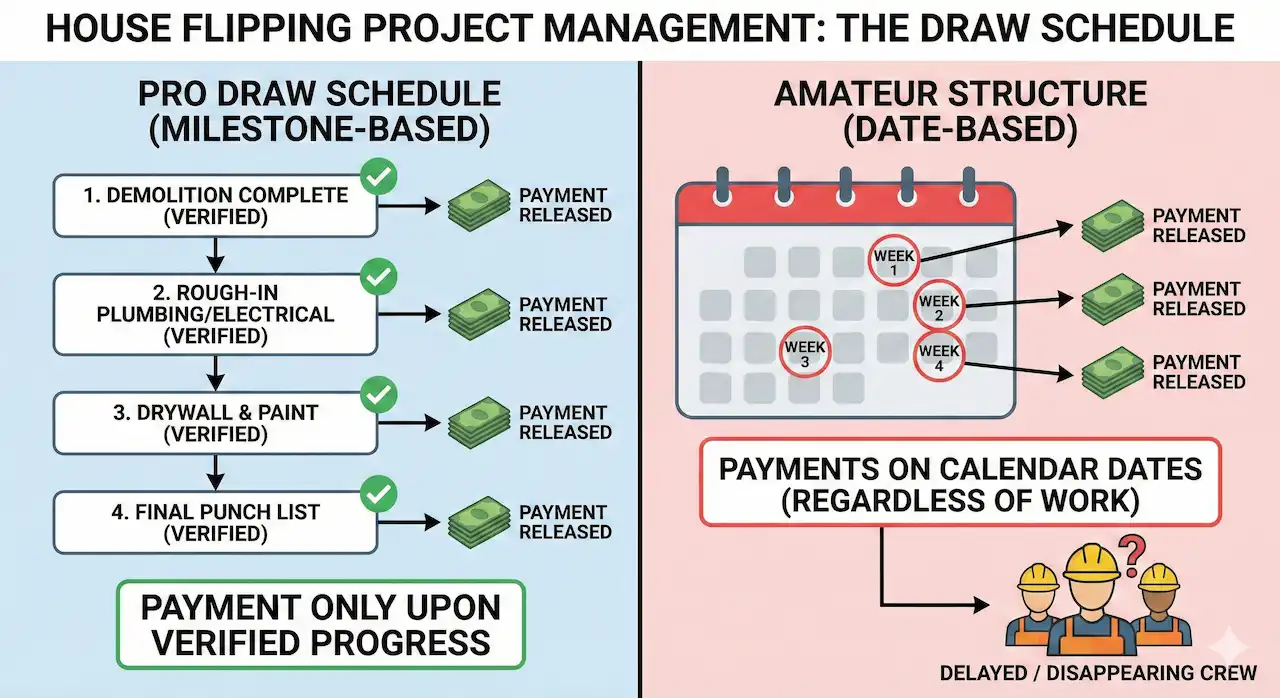
The hardest part is managing a contractor who has cash flow issues. Many beginners feel pressured to give large deposits just to get the work started. The "Steel Man" argument here is that in a tight labor market, you might have to pay a small deposit to secure a crew's time. However, a contractor who demands 50% upfront is often using your money to finish a previous job. It is better to negotiate milestone payments that keep the contractor motivated to finish the current phase so they can unlock their next check.
| Feature/Metric | Amateur Structure | Pro Draw Schedule |
|---|---|---|
| Initial Deposit | 50% Upfront | 10% or Materials Only |
| Payment Trigger | Specific Dates | Verified Milestones |
| Risk Level | Extreme (Crew may leave) | Low (Performance Based) |
| Lien Protection | None | Mandatory Lien Waivers |
- Milestone Triggers: Payments should only happen after a specific phase is 100% complete, such as "demolition finished" or "drywall hung and taped."
- Physical Verification: Never send a payment until you or a trusted partner has physically walked through the house to verify the work is done.
- Lien Waivers: Every time you hand over a check, the contractor must sign a document stating they have been paid and cannot put a legal claim (a lien) on your property.
- Retention Fund: Professionals often keep 10% of the total budget until the very end of the project to ensure the contractor finishes the "punch list" of small details.
The "Lien Waiver" Protocol: Protecting Your Title
One of the most dangerous risks in house flipping project management is the "hidden" debt that can attach to your property even after you have paid your bills. This happens through something called a mechanic's lien. If a contractor or a supplier (like a lumber yard) claims they weren't paid, they can file a legal claim against your house, creating a "cloud on title" that prevents you from selling the property until they are paid off, even if you already paid your main contractor in full.
To prevent mechanic's liens from clouding the property title, sophisticated house flippers require contractors to sign a "Conditional Waiver and Release on Progress Payment" before exchanging any check. This document is essentially a legal receipt where the contractor agrees that, once the check clears, they give up their right to file a lien for that specific amount of work.
The hardest part of this process is the administrative burden and friction it creates. Small handymen or "mom and pop" crews may not understand these legal forms and might even walk off the job if they feel the paperwork is too heavy. The "Steel Man" argument for skipping this is that it slows down the project and can damage your relationship with workers who prefer a "handshake" culture. However, for contractor legal protection, you must insist on these documents; a single disgruntled subcontractor can hold your entire $50,000 profit hostage over a small unpaid bill.
Expert Note: The "Check Exchange" Ritual
You need to do your due diligence every time you hand a check to a contractor. Never release payment without getting a signature first. If you don't get that paper trail right then and there, you're exposing yourself to major risk later.
- Conditional Waiver: Used during the project. It says "I waive my lien rights *on the condition* that this check clears the bank."
- Unconditional Release: Used at the very end of the job once all money has successfully changed hands.
- Subcontractor Protection: Always ask your main contractor for "lien releases" from their suppliers and helpers as well, as they also have the right to lien your property.
- Digital Storage: Keep a digital folder of every signed waiver so you can provide them to your title company or a future buyer if any disputes arise during escrow.
The 2026 Tech Stack: Managing Flips from Your Phone
Gone are the days when house flipping software meant a messy stack of receipts in a shoebox or scribbled notes on the back of a drywall scrap. To survive in today’s market, you need to move your operations into the cloud. In the cloud and on your phone just makes things easier; you can catch errors in real-time and communicate more effectively. These tools allow for remote renovation management, where you can see exactly when the plumbing rough-in is finished and automatically trigger the next task for the drywall crew without making a single phone call.
The "Steel Man" argument against high-tech tools is that software requires disciplined data entry. If you do not take the time to input the data, the tool is useless. For a single, simple flip, a physical whiteboard and a basic Excel spreadsheet might actually be superior because they are easier to maintain and require zero learning curve. However, if you plan to scale your business, project management apps for investors are the only way to maintain a "source of truth" that prevents expensive scheduling overlaps and miscommunications.
Pro Tip: The Digital Paper Trail
Use your tech stack to create an indisputable record of the project. Require every contractor to upload a "daily log" with photos of their progress before they leave the job site. This not only keeps them accountable but provides you with a library of "behind the walls" photos that can be incredibly valuable during a buyer’s home inspection or for your own marketing materials.
- Asynchronous Communication: Use dedicated channels for each project so you can search for specific conversations about electrical or HVAC without scrolling through endless text threads.
- Cloud Document Storage: Keep your independent contractor agreement, permits, and insurance certificates in one folder that is accessible to you and your project manager at all times.
- Critical Path Tracking: Use software to identify which tasks must be finished before others can start, ensuring you never have a flooring crew showing up while the painters are still spraying the ceilings.
- Automated Notifications: Set up alerts to remind you when a permit is about to expire or when a specific construction draw schedule payment is approaching.
FAQ: Project Management & General Contracting
Navigating the legal and logistical side of a renovation is key to a successful exit. Here are the most common questions regarding house flipping project management and working with contractors.
Mastering the Art of the Flip
You don't need a fancy degree to run a job site. You just need to be the one holding the checkbook. If you pay a contractor before the work is verified, you are giving away your only leverage. Don't do it. Keep the schedule tight, demand the lien waiver every single time, and stop trying to be their friend. You are there to make a profit, not to be popular.
- Systematize Everything: Don't rely on your memory; document every change and every payment in your project management system.
- Protect Your Title: Never exchange money without a signed lien waiver to ensure your property remains clear for a smooth sale.
- Stay Objective: Use your 2026 tech stack to manage the project based on data and milestones rather than emotions or contractor requests.
- Finish Strong: Use a rigorous punch list to ensure the final 5% of the work is completed to the highest standard before hitting the market.
Ready to Systematize Your Flipping Business?
You have the systems to manage the project—now you just need the deal. Join our next free training to learn the exact step-by-step process we use to find, fund, and flip houses without using our own cash or credit. Stop guessing and start scaling with a proven roadmap.
Watch for the FREE Training*Disclosure: Real Estate Skills is not a law firm, and the information contained here does not constitute legal advice. You should consult with an attorney before making any legal conclusions. The information presented here is educational in nature. All investments involve risks, and the past performance of an investment, industry, sector, and/or market does not guarantee future returns or results. Investors are responsible for any investment decision they make. Such decisions should be based on an evaluation of their financial situation, investment objectives, risk tolerance, and liquidity needs.

👉FREE Training
How To Consistently Wholesale, Flip Houses, & Invest In Rental Properties From The MLS
(Without Spending $1 On Marketing)

Alex Martinez, the founder of Real Estate Skills, is known for his strong, practical expertise in real estate, starting from a beginner with no family connections in the industry to acquiring over 55 real estate deals, including wholesale and flips, within his first year.
He has dedicated his career to providing cutting-edge education and resources for real estate professionals. He emphasizes the importance of self-taught knowledge through mentors, books, and hands-on experience.
His journey from earning a modest income to becoming a successful real estate entrepreneur and educator showcases his expertise and dedication to the field.

Ryan Zomorodi, co-founder and COO of Real Estate Skills, leverages his experience from a diverse background in real estate investment, construction management, and entrepreneurship to provide comprehensive education in the real estate sector.
His expertise is rooted in hands-on experience, extensive industry knowledge, and a commitment to empowering others through education.
Ryan's journey reflects a blend of practical experience and entrepreneurial success, contributing to his role in developing a platform that educates and supports aspiring real estate professionals.
Read Ryan's Full Bio >>
