
Best Cities for Multifamily Investing (2026): The "Aggressive Buy" & "Hold" List
Dec 18, 2025
Key Takeaways: Best Cities for Multifamily Investing
- What: We broke down the US map into three specific categories for 2026: "Aggressive Buy," "Moderate Buy," and the "Do Not Touch" list.
- Why: The "easy" money in the Sunbelt is gone. Those markets are flooded with empty units, so smart capital is moving to boring, high-yield hubs like Columbus and Kansas City.
- How: We ignored generic population headlines and ranked 50 MSAs by the metrics that actually pay the bills: Cap Rates and Absorption.
What You’ll Learn: We’ll show you which uncrowded markets are quietly printing money right now and which "hot" cities are about to burn investors.
If you are still following the "Sunbelt or Bust" playbook from five years ago, you are going to get crushed.
Back then, finding the best cities for multifamily investing was easy. You just followed the moving trucks. If people were heading to Phoenix, you bought in Phoenix. You didn't care about cash flow because rents were jumping 10% a year. It covered up every mistake.
That era is gone.
The problem in 2026 isn't demand; it's supply. Developers read those same headlines and flooded cities like Austin, Nashville, and Atlanta with way too many luxury apartments. Now? They are stuck offering months of free rent just to get bodies in the door, and rent growth has hit a wall.
To win right now, you have to stop following the herd.
What We Cover in This Guide:
- The New Rules: Finding the Best Cities for Multifamily Investing
- The "Aggressive Buy" Zones (Columbus, KC, Indy)
- The "Moderate Buy" Zones (Dallas, Charlotte, Tampa)
- The "Hold/Wait" Zones (Austin, Phoenix, Boise)
- The "Hidden" Metrics: How to Pick Your Own City
- Frequently Asked Questions
Location is just the starting line. You can find the best places to buy a rental property, but even a hot market can't fix a bad deal. If you overpay or ignore "Hidden Killers" like Vacancy and CapEx, you can lose money in the best city in America.
Get the instant truth about your numbers. Our Free Rental Property Calculator handles the complex math for you. Plug in your Purchase Price and Rent Roll, and it instantly reveals your Exact Cash-on-Cash Return.
The New Rules: Finding the Best Cities for Multifamily Investing
Most investors are still looking at the wrong map.
If you ask an average investor to name the best cities for multifamily investing, they will likely rattle off the usual suspects: Phoenix, Austin, Nashville. Five years ago, they would have been right. Those markets had double-digit rent growth that made everyone look like a genius.
But in 2026, those specific markets are drowning in inventory.
We are currently seeing a massive divergence between "Population Growth" (where people are moving) and "Rent Growth" (where landlords are actually making money). Because developers built thousands of luxury units in the Sunbelt, competition there is fierce. You might have tenants, but you won't have pricing power.
To find yield this year, you have to ignore the hype and follow the absorption data.
We audited the top pockets where supply is low and demand is steady. This isn't about guessing; it's about looking at Cap Rates, Employment Diversity, and Construction Pipelines to categorize every city into one of three action plans:
- The "Aggressive Buy" (Cash Flow): Boring, stable markets where rent immediately covers the mortgage (e.g., the Midwest).
- The "Moderate Buy" (Appreciation): High-growth cities that are temporarily overbuilt but will bounce back in 2028.
- The "Hold/Wait" (Value Traps): Markets where rents are currently dropping, and the bottom hasn't fallen out yet.
Here is the data-backed roadmap for where to deploy capital right now.
Read Also: How To Buy Your First Rental Property: A Step By Step Guide
The "Aggressive Buy" Zones: High Cash Flow, Low Supply
These are the markets most investors ignore because they aren't "sexy." They don't have beaches or mountains. But if you are looking for the best cities for multifamily investing where the math actually works on Day 1, this is your list. These cities have strong manufacturing job growth, affordable entry prices, and most importantly, a lack of new supply.
This is the essence of Midwest real estate investing in 2026: buying stability while the coasts ride a rollercoaster.
📍 Kansas City, MO (The Logistics King)
While the rest of the country sees rent growth flatten, Kansas City multifamily is posting impressive numbers. It recorded 3.9% year-over-year rent growth entering 2025, one of the highest in the nation. Why? It is the geographic center of the US logistics boom.
- Cap Rate Range: 6.0% – 7.0%
- The Catalyst: The Panasonic EV battery plant ($4 billion investment) is creating thousands of downstream jobs, boosting demand for Class B workforce housing.
- Why Buy Now: Supply is tight. Unlike Texas, developers haven't overbuilt here. Occupancy is holding steady at 94.5%.
📍 Indianapolis, IN (The Supply Shortage Play)
Indianapolis is setting up for a massive supply squeeze. In 2024, new multifamily construction starts dropped by nearly 70%. This means that by late 2025 and 2026, there will be almost no new units coming online.
- Cap Rate Range: 6.5% – 7.5%
- The Catalyst: With supply dropping off a cliff and steady population growth, landlords will regain pricing power. Rent growth is forecast to hit 3.5% by year-end.
- Why Buy Now: You can buy assets here for $100k–$130k per unit, which is well below replacement cost.
📍 Columbus, OH (The "Silicon Heartland")
Investing in Columbus real estate is no longer a secret; it is a strategic play on the reshoring of American technology. The $20 billion Intel semiconductor factory is the single largest economic development project in Ohio history.
- Cap Rate Range: 6.2% – 7.0%
- The Catalyst: Institutional capital is noticing. In the last 12 months, "Big Money" buyers made up 40% of the market volume here.
- The Risk Note: Vacancy has temporarily ticked up to ~9% due to a wave of new deliveries. However, absorption is surging (40% above average). This is a long-term appreciation play disguised as a cash-flow market.
The "Moderate Buy" Zones: High Growth, High Supply
These are the best cities for multifamily investing for a 10-year hold, provided you can survive the supply crunch.
These markets—often called the "Sunbelt Darlings"—have the best population growth stories in America. Everyone wants to live there. The problem is that every developer in the country knows this, and they have all built apartments at the same time. This has created a temporary "air pocket" where vacancy is rising despite strong demand.
If you buy here, you need deep pockets. You are betting that the population growth will eventually eat up the oversupply. Here is the nuanced reality for 2026.
| City | The Opportunity (Long Term) | The Risk (Short Term) | 2026 Strategy |
|---|---|---|---|
| Dallas-Fort Worth, TX | Leading the nation in job creation. The Dallas multifamily market 2026 outlook remains positive for the next decade due to corporate relocations. | Oversupply: DFW has one of the largest construction pipelines in the US. Rent growth will be flat (0–1%) this year as new units come online. | Buy Class B/C. The supply glut is almost entirely "Luxury Class A." Workforce housing is still undersupplied. |
| Charlotte, NC | A financial fortress. As the second-largest banking hub in the US, Charlotte rental market analysis shows incredible income stability. | Urban Core Saturation: Uptown and South End are flooded with units, forcing concessions of 4–6 weeks free rent. | Go North. Avoid the city center. Target northern suburbs like Concord and Huntersville where inventory is tighter. |
| Tampa, FL | Unmatched migration. People are still fleeing the Northeast for Florida's tax benefits and lifestyle. | The Insurance Killer: The Florida multifamily insurance crisis is real. Premiums have tripled, destroying cash flow for unprepared buyers. | "X Zone" Only. Only buy properties in Flood Zone X (non-flood). If you buy in a flood zone, the insurance will eat your profit. |
*For in-depth training on real estate investing, Real Estate Skills offers extensive courses to get you ready to make your first investment! Attend our FREE training and gain insider knowledge, expert strategies, and essential skills to make the most of every real estate opportunity that comes your way!

The "Hold/Wait" Zones: The Value Traps
These were formerly the best cities for multifamily investing, but in 2026, they are dangerous value traps.
These markets are not "bad" permanently—they are just "bad" right now. They are currently suffering from a severe hangover after the post-pandemic binge. Developers built too many units assuming the 2021 growth rates would last forever. They didn't. Now, landlords are fighting a price war to fill vacancies, driving effective rents into the floor.
⚠️ Austin, Texas (The Falling Knife)
Austin is the poster child for the Austin rental market crash. For years, it was the hottest market in America, which attracted every developer in the country. Now, the bill has come due.
- The Reality: Inventory has exploded, causing rents to drop by nearly 6–10% in some submarkets. Landlords are offering 2–3 months of free rent just to get leases signed.
- The Verdict: Do not buy yet. We have not hit the bottom. Wait for the distressed sales to hit the market in late 2026 before you jump in.
⚠️ Phoenix, Arizona (The Bust Phase)
Phoenix has always been a "Boom/Bust" town, and we are firmly in the "Bust" phase. The Phoenix multifamily oversupply is historic, with tens of thousands of units delivering into a slowing economy.
- The Reality: While population growth is still positive, it cannot keep pace with the construction crane activity. Vacancy rates are creeping toward 10% in Class A assets.
- The Verdict: Hold. Prices are correcting, but sellers are still clinging to 2022 valuations. Let the housing market correction 2026 do its work and soften prices further before you strike.
⚠️ Boise, Idaho (The Zoom Town Hangover)
Boise was the darling of the "Work From Home" era. But as companies force "Return to Office" mandates, the migration that fueled Boise's explosion has cooled significantly.
- The Reality: Home prices and rents skyrocketed so fast that locals were priced out. Now that the Californian migration has slowed, the market has no local income base to support the high rents.
- The Verdict: Avoid. This market needs a multi-year correction to realign rents with local wages.
The "Hidden" Metrics: How to Pick Your Own City
You do not need a guru to tell you where to buy. To find the best cities for multifamily investing in your own backyard, ignore the headlines and track these three metrics.
Most novice investors only look at "Job Growth" and "Population Growth." While those are important, they are lagging indicators. By the time a city makes the "Top 10" list on a major news site, the institutional money has already bought the best deals. To find the next boomtown before the crowd arrives, you need to use the same real estate market analysis metrics the pros use.
- Metric 1: Absorption Rate: This is the single most important number in 2026. It measures how fast tenants are moving into new units compared to how fast developers are building them.
If a city is building 10,000 units but only absorbing 5,000, you will see vacancies spike, and rents crash. You want a market where absorption is outpacing delivery. This ensures your units stay full without you having to offer free rent. - Metric 2: Rent-to-Income Ratio: This tells you if the locals can actually afford your property. Multifamily underwriting standards generally look for a ratio below 30%.
In markets like Miami or New York, this ratio often exceeds 40%, which puts a "ceiling" on how much you can raise rents. In the Midwest, this ratio is often closer to 20-25%, giving you a massive runway to increase rents for years without pricing out your tenant base. - Metric 3: Job Diversity: Never buy in a "One-Industry Town." If you buy in a city that relies entirely on one tech company or one military base, you are not an investor; you are a gambler. You want to see a diverse pie chart of employment: healthcare, education, logistics, and manufacturing. If one sector takes a hit, the others keep your tenants employed and paying rent.
The Fast Track: Don't Guess, Verify
Stop buying based on headlines.
You can pick the perfect city, but if you overpay for the property, you still lose. Pros rely on math, not hype.
You shouldn't have to be an Excel wizard to know if a deal cash flows. One missing expense—like forgetting to account for higher vacancy rates in a new market—can turn a "winning" investment into a monthly liability.
We have already built the engine for you.
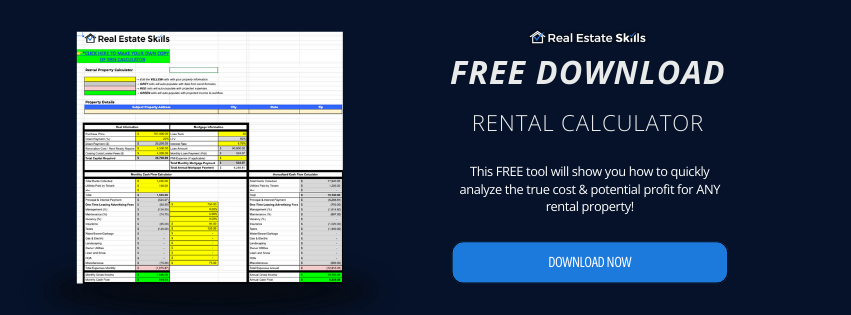
Our professional-grade Rental Property Spreadsheet comes pre-loaded with every IRS Schedule E category, ROI formula, and Cash Flow metric you need. It is 100% plug-and-play.
Skip the headache and start analyzing deals instantly. Download our Free Rental Property Calculator and get the exact template we use to manage our own portfolio.
Frequently Asked Questions on the Best Cities for Multifamily Investing
Here are the answers to common questions about finding the best cities for multifamily investing to help you navigate the 2026 market.
Final Thoughts: The Window of Opportunity
The days of throwing a dart at a map of the Sunbelt and making money are over.
In 2026, real estate is no longer a "growth" game; it is an "absorption" game. The investors who will win this year are not the ones chasing the hottest headlines in Austin or Phoenix. The winners will be the ones who recognize that boring, steady markets like Kansas City and Indianapolis offer the safety and cash flow that the coastal markets currently lack.
Do not let the headlines about "oversupply" scare you out of the asset class entirely. Oversupply is a temporary problem that creates a permanent opportunity for those with capital. While amateur syndicators are forced to sell their Class A buildings at a discount, you have the chance to pick up institutional-grade assets at Main Street prices.
Pick your market, run the math, and ignore the noise.
Location is just the starting line. You can find the best places to buy a rental property, but even a hot market can't fix a bad deal. If you overpay or ignore "Hidden Killers" like Vacancy and CapEx, you can lose money in the best city in America.
Get the instant truth about your numbers. Our Free Rental Property Calculator handles the complex math for you. Plug in your Purchase Price and Rent Roll, and it instantly reveals your Exact Cash-on-Cash Return.
*Disclosure: Real Estate Skills is not a law firm, and the information contained here does not constitute legal advice. You should consult with an attorney before making any legal conclusions. The information presented here is educational in nature. All investments involve risks, and the past performance of an investment, industry, sector, and/or market does not guarantee future returns or results. Investors are responsible for any investment decision they make. Such decisions should be based on an evaluation of their financial situation, investment objectives, risk tolerance, and liquidity needs.

👉FREE Training
How To Consistently Wholesale, Flip Houses, & Invest In Rental Properties From The MLS
(Without Spending $1 On Marketing)

Alex Martinez, the founder of Real Estate Skills, is known for his strong, practical expertise in real estate, starting from a beginner with no family connections in the industry to acquiring over 55 real estate deals, including wholesale and flips, within his first year.
He has dedicated his career to providing cutting-edge education and resources for real estate professionals. He emphasizes the importance of self-taught knowledge through mentors, books, and hands-on experience.
His journey from earning a modest income to becoming a successful real estate entrepreneur and educator showcases his expertise and dedication to the field.

Ryan Zomorodi, co-founder and COO of Real Estate Skills, leverages his experience from a diverse background in real estate investment, construction management, and entrepreneurship to provide comprehensive education in the real estate sector.
His expertise is rooted in hands-on experience, extensive industry knowledge, and a commitment to empowering others through education.
Ryan's journey reflects a blend of practical experience and entrepreneurial success, contributing to his role in developing a platform that educates and supports aspiring real estate professionals.
Read Ryan's Full Bio >>
