
Menards vs. Home Depot: The 2026 Investor's Guide To Material Margins
Jan 21, 2026
Key Takeaways: Menards vs Home Depot for Investors
- The Rebate Game is Over: As of 2024, Home Depot officially stopped matching the Menards 11% rebate. You can no longer get Home Depot convenience at Menards prices. You must now choose between the rebate (Menards) or the Bid Room volume pricing (Home Depot).
- The "Hockey Stick" Factor: Menards stores pressure-treated lumber in open-air pole barns, which keeps the wood acclimated to humidity. Home Depot stores it indoors in arid A/C, often causing "hockey stick" warping the moment it hits your job site.
- The Receipt Trap: Home Depot's Pro Xtra account digitally tracks receipts for 365 days. Menards, on the other hand, has developed a reputation for being a little stingy with its return policy, leaving flippers holding the bag.
What You’ll Learn: We break down the math between Menards' "store credit" ecosystem vs. Home Depot's "bid room" cash discounts, and which will serve your flipping efforts the best.
If you are flipping houses in the Midwest, you are constantly fighting the Menards vs Home Depot battle. It is not just about who has the cheaper 2x4; it is about the "friction costs" that eat away at your margins. Menards offers the attractive "11% Rebate," which can add thousands to your bottom line, but only if you have the discipline to mail in physical receipts and wait for a postcard. While Home Depot is more expensive upfront, its Pro Xtra ecosystem comes in handy when trying to avoid administrative headaches. The answer will really depend on your personal style, but to help you make a decision on your own, here's what we'll cover:
➢ The "Pro" Ecosystems: Rebates vs. Volume Pricing
➢ Lumber & Material Quality: The "Pole Barn" Reality
➢ The Checkout & Return Experience: Friction Analysis
➢ Menards vs Home Depot Credit Cards: Buying the Float
➢ Competitor Comparison: Where Lowe's Fits In
➢ FAQ: Shipping, Special Orders, and "Ray's List"
➢ Conclusion: The Final Verdict
If you’re serious about doing your first real estate deal, don’t waste time guessing what works. Our FREE Training walks you through how to consistently find deals, flip houses, and build passive income—without expensive marketing or trial and error.
This FREE Training gives you the same system our students use to start fast and scale smart. Watch it today—so you can stop wondering and start closing.
Pro-Tip for Rehabbers: Sourcing materials is just one piece of the puzzle. This step-by-step masterclass walks you through the entire renovation workflow—from estimating repair costs to managing contractors—so you can see exactly where your Menards or Home Depot runs fit into the bigger picture.
The "Pro" Ecosystems: Rebates vs. Volume Pricing
This is where the battle is actually won or lost. Most beginners look at the sticker price on a stud and think that's the cost. Experienced investors look at the net effective cost after rebates and volume discounts.
For years, the ultimate "hack" was to buy at Home Depot and ask them to match Menards' 11% rebate. That game is over. As of 2024, Home Depot killed the 11% rebate match policy. You can no longer get Home Depot convenience at Menards prices. You have to pick a side.
The Menards Math: The "Golden Handcuffs"
The Menards 11% rebate is legendary, but it has a catch that traps rookies: It is not cash back. It is store credit.
If you spend $10,000 on a rehab package, you get a certificate for $1,100. That sounds great, until you realize you must spend that $1,100 at Menards. The fewer flips you do, the less relevant this discount is to you. High-volume flippers, on the other hand, may find this discount and store credit incredibly useful.
Home Depot Pro Xtra: The Bid Room Reality
Home Depot doesn't want you mailing in receipts; they want you building cart volume. Their system relies on the perks of Pro Xtra and bulk pricing.
Here is how it works: If your checkout cart totals more than $1,500 (sometimes $2,500 depending on the region), you don't pay the shelf price. You send the list to the Pro Desk, and they run it through the Bid Room. Depending on the commodities market, you might get 5% to 20% slashed off the total instantly. This is cash savings, not future credit.
| Feature | Menards (11% Rebate) | Home Depot (Pro Xtra) |
|---|---|---|
| The "Discount" Mechanism | Mail-In Rebate (Postcard) | Volume Pricing (Bid Room) |
| Currency Type | Store Credit Check (Must spend at Menards) |
Instant Cash Off (Net reduction at checkout) |
| Friction Level | High. Must mail physical receipt. | Low. Automatic at Pro Desk. |
| Minimum Spend | $0 (Applies to almost everything) | $1,500+ (To trigger Bid Room) |
| Best For... | The Grinder: Willing to chase paper for max margin. | The Scaler: Needs speed and cash flow now. |
Lumber & Material Quality: The "Pole Barn" Reality
Ask any framing carpenter where they prefer to buy studs, and you will get the same answer: Menards. But it isn't just about price. It is about physics.
The "Hockey Stick" Effect
Home Depot stores its lumber indoors, usually in climate-controlled aisles. While this makes for a comfortable shopping experience, it is terrible for the wood. The dry, air-conditioned air sucks the moisture out of the pressure-treated lumber too quickly. The moment you strap that dry wood to your truck and drive it into the humid Midwest summer air, it warps. You end up with "hockey sticks"—studs so twisted they are unusable for framing a straight wall.
The Menards Pole Barn Advantage
Menards stores its bulk lumber in massive, open-air "pole barns" behind the store. The wood is covered but exposed to ambient humidity and temperature. This means the 2x4 you buy is already acclimated to the environment where you are building. It stays straighter.
The Loading Factor
There is also the "back-breaking" factor. At Home Depot, you have to load 50 studs onto a wobbly orange cart, push it through the store, stand in line, pay, push it to the parking lot, and load your truck. At Menards, you just drive your truck right into the warehouse. You back up to the stack, toss them in the bed, and drive off. For a serious rehabber, that convenience alone is worth the trip.
Stock Finishes: Rental Grade vs. Flip Grade
While Menards wins on raw lumber, they lose hard on aesthetics. This is the clearest dividing line for construction materials when choosing the best place to buy lumber for flipping versus finishing.
Menards is for Rentals (C-Class): Their in-house lighting and vanity brands (like Patriot Lighting) often feel stuck in the early 2000s. They are cheap, functional, and perfect for a $900/month rental unit where durability matters more than style. But if you put a Menards vanity in a $400k flip, buyers will notice.
Home Depot is for Flips (A-Class): Home Depot is in touch with what I like to call "Pinterest trends." Their go-to brands, like Glacier Bay and Hampton Bay, offer the look most people want at the price they need. If you are rehabbing a property for resale, Home Depot’s finish materials simply photograph better.
The Checkout & Return Experience: Friction Analysis
If you value your time at $100/hour, the "cheap" lumber at Menards might actually be the most expensive material you buy. The checkout process is where the two business models completely diverge.
The Menards "Gate Tax"
While driving into the Menards yard is convenient for loading, leaving is a bottleneck. You have to pass through a literal guard shack. A gate guard will stop your truck, take your receipt, and manually count every single item in your bed to ensure it matches the paper.
If you have a complex order with 50 different SKUs (trim, PVC, lumber), this process can easily add 15 to 20 minutes to every trip. If the cashier miscounted inside? You have to park, walk back in, and fix it while your crew is waiting on the job site.
The Receipt Nightmare vs. The Digital Pro
This is the single biggest reason why high-volume "Scalers" eventually switch to Home Depot.
Menards (Paper World): Menards has a notorious "No Receipt, No Return" policy. If you paid cash or lost the receipt, you are often out of luck. Best case scenario? They look up your credit card (if you used one) at a special kiosk, print a slip, and give you store credit for the lowest selling price of the item in the last 90 days. It is a punitive system designed to discourage returns.
Home Depot (Digital World): The Home Depot return policy for contractors is effortless. If you scan your Pro Xtra Virtual ID at checkout (or just use the registered credit card), the transaction is saved forever. You can walk in with a faucet you bought 8 months ago, scan your phone, and get a refund to your card. No paper. No arguments.
⚠️ The "Lost Receipt" Cost: A $300 Lesson
Imagine you have three boxes of leftover mosaic tile worth $300. You finish the flip, clean out the van, and realize you threw away the paper receipt.
- At Home Depot: You scan your app. They refund $300 to your Amex. You use that cash to pay your plumber.
- At Menards: Without the receipt, they might deny the return entirely. Or, they give you store credit for the "sale price" ($200). You are now out $100 cash, and you have $200 in "Menards Money" you can't use to pay your labor.
Accurate Rehab Budgeting: Beyond the Sticker Price
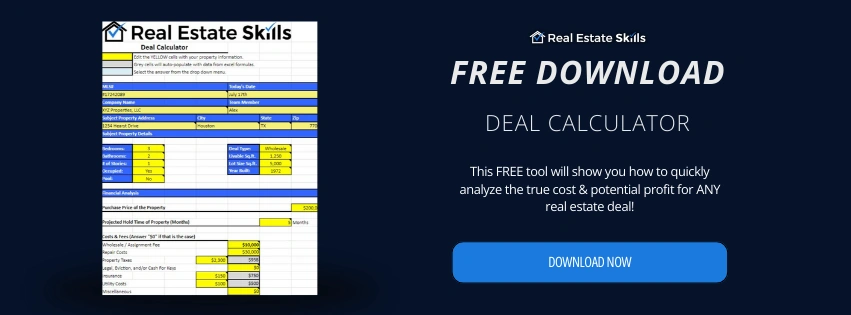
You can argue about rebates versus volume pricing all day, but if your initial rehab budget is off by $10,000, no amount of "store credit" will save your profit margin. The choice between Menards and Home Depot is just one variable in the equation. You need to plug these real-world material costs into a comprehensive deal analyzer to ensure the math actually supports your investment goals before you buy.
Will Your Material Costs Kill Your Profit Margins?
Saving 11% on lumber is great, but it means nothing if the overall deal doesn't pencil out. We have built a professional-grade calculator that lets you plug in your exact renovation budget—whether sourced from Menards or Home Depot—to see how those material costs impact your final ROI. Download the tool we use to reverse-engineer our rehab budgets and ensure your next flip is actually profitable before you buy a single stud.
Menards vs Home Depot Credit Cards: Buying the Float
For a homeowner, a store credit card is about saving 5% on a dishwasher. For a house flipper, it is about buying the float. You are trying to delay cash outflows until the property sells, or at least until the next draw release from your hard money lender.
Menards BIG Card: The Margin Play
The Menards BIG Card is simple: You get a 2% rebate on every purchase. This stacks on top of the 11% rebate, meaning you can theoretically hit a 13% discount.
The Trap: Just like the 11% rebate, that 2% comes back as store credit. It improves your profit margin on paper, but it does not improve your liquidity. You cannot use Menards certificates to pay your electrician.
Home Depot Project Loan: The Cash Flow Play
This is the secret weapon for scaling. The Home Depot Project Loan is not a standard credit card; it is a fixed-rate consumer loan. You can get approved for up to $55,000 to buy materials for a specific project. You have 6 months to buy, and then you pay it off over huge terms (up to 84 months) at a fixed rate.
The Strategy: Use the Project Loan to fund 100% of your material costs. This keeps your actual cash in the bank to pay labor (which you can't put on a credit card). When the house flips, you pay off the loan in full.
The "365-Day Float" Strategy
This is where Home Depot wins for professionals. Because the Pro Xtra system allows for returns up to 365 days later, you can buy bulk materials (faucets, lighting, flooring) on a commercial credit line. If you have leftovers, you don't have to rush back to the store. You can return them 11 months later—effectively "floating" that inventory on the store's books, not yours.
| Feature | Menards BIG Card | Home Depot Project Loan |
|---|---|---|
| Primary Benefit | 2% Rebate (Stacked with 11%) | Large Credit Line (Up to $55k) |
| Liquidity Impact | Low. Returns value as store credit. | High. Acts like a cash loan. |
| Best Use Case | Maximizing gross margin on small flips. | Funding an entire rehab without touching cash reserves. |
| Return Window | 90 Days (Strict) | 365 Days (with Commercial Card) |
Competitor Comparison: Where Lowe's Fits In
If Menards is the "Walmart" of building materials (low price, high chaos) and Home Depot is the "Costco" (bulk volume, pro focus), then Lowe's is trying to be the "Target."
The "White Glove" Pro Experience
Lowe's isn't really fighting for the lumber contractor anymore; they are chasing the finish work. Their MVPs Pro Rewards program focuses heavily on the "pretty" stuff. If I am doing a higher-end flip and need a vanity that doesn't look like it came from a college dorm, I go to Lowe's. The aisles are cleaner, the lighting is better, and honestly, it is just less stressful than the mosh pit at a Home Depot Pro Desk at 7:00 AM.
The Verdict: Go to Menards for the rough materials (lumber, roofing, concrete). Go to Lowe's for the "jewelry" of the house (appliances, smart home tech, patio doors), where you need the item to look pristine out of the box.
How to Price Check Your BOM
Amateurs drive to the store to see how much a 2x4 costs. Pros build a digital "Bill of Materials" (BOM) and force the suppliers to compete. Here is the exact 3-step process we use to vet Menards vs Home Depot price comparisons before we start a rehab.
- Step 1: The "Digital Cart" Stock Check
Build your entire material list in the online cart for both stores. Do not just look at the price; look at the inventory count.
The Insider Reality: Menards' online inventory counts are generally reliable because their "Yard" system is strictly managed. Home Depot's inventory is often "ghost inventory"—the app says they have 40 sheets of drywall, but they are actually sitting on a pallet in the overhead rafters that no one can reach. If Menards says they have it, they usually have it. - Step 2: Run the "Bid Room" Play
Take your Home Depot cart (must be over $1,500) to the Pro Desk. Do not check out. Ask them to "Run this through the Bid Room."
The Math: You need to see if the Volume Pricing Program (VPP) discount beats the Menards shelf price minus the 11% rebate. Often, the Bid Room will come back with a 15% discount on specific commodities like drywall or insulation, instantly beating the Menards rebate without the hassle of mailing in a receipt. - Step 3: Calculate the "Run Rate"
This is where most investors fail construction estimating. If Menards is 25 minutes further away than Home Depot, you have to factor in the "Run Rate."
The Calculation: A 50-minute round trip for two guys in a truck costs you roughly $60 in labor and fuel. If you are only saving $40 on the materials by driving to Menards, you effectively paid $20 to get the rebate. Always buy where the time cost is lowest.
FAQ: Shipping, Special Orders, and "Ray's List"
There are dozens of small nuances that can impact your bottom line when choosing between Menards vs Home Depot. Here are the answers to the most common questions we get from investors navigating these two supply chains.
The Final Verdict
When deciding which store is cheaper, Menards vs Home Depot, the answer depends entirely on the scale of your operation. For the "Starter" doing 1-2 flips a year, Menards is the clear winner. The shelf prices are generally lower, and if you have the discipline to play the 11% rebate game, you will squeeze more cash flow out of every project. At this stage, you have more time than money, so driving the extra 20 minutes to save $300 is worth it.
However, for the "Scaler" managing multiple job sites, Home Depot takes the crown. The operational efficiency of the Pro Xtra digital tracking, the speed of the Bid Room, and the lenient return policy save you something far more valuable than 11%: your time. As you grow, you stop buying based on sticker price and start buying based on speed. Choose the partner that fits the business you are building today.
If you’re serious about doing your first real estate deal, don’t waste time guessing what works. Our FREE Training walks you through how to consistently find deals, flip houses, and build passive income—without expensive marketing or trial and error.
This FREE Training gives you the same system our students use to start fast and scale smart. Watch it today—so you can stop wondering and start closing.
*Disclosure: Real Estate Skills is not a law firm, and the information contained here does not constitute legal advice. You should consult with an attorney before making any legal conclusions. The information presented here is educational in nature. All investments involve risks, and the past performance of an investment, industry, sector, and/or market does not guarantee future returns or results. Investors are responsible for any investment decision they make. Such decisions should be based on an evaluation of their financial situation, investment objectives, risk tolerance, and liquidity needs.

👉FREE Training
How To Consistently Wholesale, Flip Houses, & Invest In Rental Properties From The MLS
(Without Spending $1 On Marketing)

Alex Martinez, the founder of Real Estate Skills, is known for his strong, practical expertise in real estate, starting from a beginner with no family connections in the industry to acquiring over 55 real estate deals, including wholesale and flips, within his first year.
He has dedicated his career to providing cutting-edge education and resources for real estate professionals. He emphasizes the importance of self-taught knowledge through mentors, books, and hands-on experience.
His journey from earning a modest income to becoming a successful real estate entrepreneur and educator showcases his expertise and dedication to the field.

Ryan Zomorodi, co-founder and COO of Real Estate Skills, leverages his experience from a diverse background in real estate investment, construction management, and entrepreneurship to provide comprehensive education in the real estate sector.
His expertise is rooted in hands-on experience, extensive industry knowledge, and a commitment to empowering others through education.
Ryan's journey reflects a blend of practical experience and entrepreneurial success, contributing to his role in developing a platform that educates and supports aspiring real estate professionals.
Read Ryan's Full Bio >>
