
How To Talk To Hard Money Lenders: Scripts & Questions (2026)
Jun 05, 2026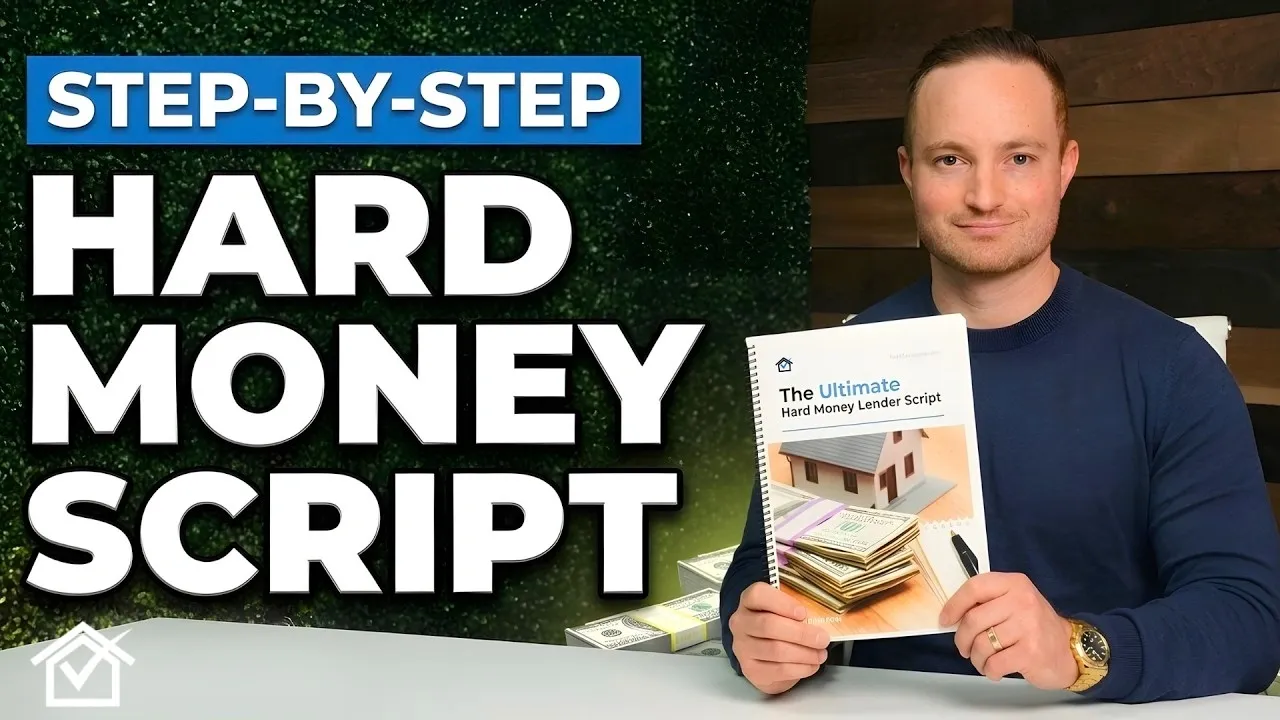

Written by
Alex Martinez — Founder & CEO, Real Estate Skills. Has wholesaled and flipped houses for over a decade and borrowed millions in private and hard money financing.
Reviewed by
Ryan Zomorodi — Co-Founder & COO, Real Estate Skills. Reviewed and verified the lender questions, loan terms, and financing guidance in this guide before publication.
Publication history: Published June 2026. This guide is based on the Real Estate Skills hard money lender script walkthrough by Ryan Zomorodi, Co-Founder & COO of Real Estate Skills, who reviewed and verified the loan terms and financing guidance before publication.
Learning how to talk to hard money lenders comes down to asking the right questions in the right order: confirm they're a direct lender, understand their LTV and LTC, pin down rates, points, and fees, clarify the draw process, and ask how fast they can close. Do that, and you'll secure better terms, faster funding, and the respect of a lender — because in real estate financing, capital respects competence.
You found a hard money lender — maybe at an investor meetup, maybe from a video on finding lenders online — and now you're staring at your phone wondering what to actually say when you call. Will they know you're inexperienced? Could you get talked into a bad loan because you don't know the right questions? Those worries are normal, and they're worth taking seriously, because hard money lenders can read inexperience fast.
Here's the reality Alex Martinez has seen over a decade of buying and flipping dozens of houses and borrowing millions in private and hard money: a lender can spot a green borrower in the first 30 seconds of a call. When that happens, you don't get the best terms, you don't get speed, and you don't get respect. In real estate financing, capital respects competence — and competence mostly comes down to knowing which questions to ask and in what order.
This guide breaks down exactly that. It's built on the hard money lender script Ryan Zomorodi walks through in the video below: how to open the conversation, the specific questions that reveal how much a lender will actually lend and how fast they can move, the red flags that should make you walk, and how to close the call so you're someone the lender wants to fund. Plug in the questions, and you'll sound like a seasoned investor on your very first call — even if it is your first call.
How To Talk To Hard Money Lenders (FREE SCRIPT)!
Ryan Zomorodi walks through the exact hard money lender script — the questions to ask, how to position yourself, and how to speak with lenders like a serious investor.

Download The Free Hard Money Lender Script
Walk into any lender conversation with confidence. Our Hard Money Lender Script gives you the exact questions and conversation structure — opener to close — so you can compare lenders, uncover hidden fees, and lock in better terms. It includes even more questions and context than we could fit in this guide.
What Questions To Ask Hard Money Lenders
The questions that separate pros from beginners go far beyond "What's your rate?" Ask whether they're a direct lender, whether they lend on ARV or as-is value, their LTV and LTC, their points and total fees, how draws work, and how fast they can close. Those answers tell you how much they'll lend, what it really costs, and whether they can perform.
Most beginners call a lender, ask "What's your interest rate?", and stop there. Experienced investors ask better questions — the kind that reveal how much a lender will actually fund, how their capital works, how fast they can move, and whether they're the right partner at all. The goal of the call isn't to get a number; it's to qualify the lender before you ever have your own money on the line.
That matters because the worst position to be in is getting a deal under contract and only then discovering you're working with the wrong lender — or one who can't perform. Whether you're buying to fix and flip or to add value and rent for long-term wealth, you want clarity and confidence in your financing partner before you rely on a dollar of their capital. The rest of this guide walks through the exact questions, in order, plus how to open and close the conversation.
How To Open The Conversation With A New Hard Money Lender
Open by introducing yourself as an active investor looking to build a lending relationship for upcoming deals, then ask permission to run through a few questions. This signals you plan to do multiple deals and want a long-term partner — exactly what a hard money lender wants to hear from a borrower.
The opener does a lot of quiet work. Here's a simple one you can adapt — just plug in your own name and city:
"Hi, this is [your name]. I'm a real estate investor in [your city]. I'm looking to establish a lending relationship for upcoming acquisitions and wanted to better understand how you structure your loans. Do you mind if I ask you a few questions?"
In two sentences, that opener tells the lender three things they want to hear: you're an active investor, you expect to acquire multiple properties (not a one-and-done deal), and you're looking to build an ongoing relationship. That's the kind of borrower a lender leans in for.
If they ask about you, be genuine — share where you live, what you're working on, and take a real interest in them as a person, too. If rapport-building isn't your strong suit (it isn't for a lot of people starting out), How to Win Friends and Influence People is a worthwhile read; it's a classic for a reason. Once they say yes and you've established a little rapport, you move into the questions — starting with the one that instantly tells you who you're dealing with.

Asking If They Are A Direct Lender Or Broker
Ask "Are you a direct lender or a broker?" first. A direct lender has the capital and makes the decisions — meaning more speed, transparency, and certainty. A broker is a middleman who shops your deal around and charges extra fees, so they're generally less reliable. For speed and clarity, go straight to the source.
This is the first real question to ask, because the answer changes everything that follows. A direct lender has the money and makes the lending decision — so they can move fast, quote you real pricing, and give you full transparency. A funding broker is a middleman: they take your deal, shop it to direct lenders, and charge fees on top. Because they don't control the funds or the decision, they're inherently less reliable, and in practice some are less than upfront about it.
There may be quality brokers who can shop a deal and occasionally find wholesale pricing — but there are plenty of direct lenders out there, so for most investors it's simpler and faster to build the relationship directly with the source. Here's the difference at a glance:
| Direct Lender | Funding Broker | |
|---|---|---|
| Who holds the capital | They do — it's their money | They don't — they shop it to lenders |
| Who makes the decision | The lender, directly | A third party you never talk to |
| Fees | Lender's pricing, stated directly | Adds broker fees on top |
| Speed & certainty | Faster, more certain | Slower, less reliable |
| Best for | Most investors who want speed | Niche cases worth shopping around |
The best approach is to check their website, talk to them directly, and simply ask. If they give you a vague answer or can't speak with confidence about whether they're direct, treat that as a red flag. While you're at it, confirm they actually lend in your state and are properly licensed there — if you're doing a deal in Arizona, ask directly, "Do you lend in Arizona, and are you licensed in that state?" That information is often on the website, but ask anyway in case anything has changed.
Asking Whether They Lend On ARV Or As-Is Value
Ask whether they lend on after repair value (ARV) or as-is value. ARV-based loans use the property's projected post-renovation value, which means higher leverage and less cash out of your pocket. As-is loans use today's value, so the loan is smaller. Then ask what percentage they'll lend and how they calculate it.
The second question to ask is whether the lender bases the loan on after repair value (ARV) or as-is value — and the difference is real money. ARV is the property's projected value once renovations are complete; as-is value is what it's worth today, before any work. A lender who lends against ARV is lending against the higher future number, which gives you more leverage and lets you bring less cash to the table. A lender who only lends against as-is value will, by definition, give you a smaller loan for the same property.
Once you know which one they use, two follow-ups matter: what percentage of ARV will they lend up to, and how do they calculate the value? That second question is sneaky-useful, because how they value a property tells you how fast they can move:
- Formal appraisal — they hire a third party to visit the property and pull comps into a full report. Most thorough, but it can take days, sometimes over a week.
- Desktop appraisal — they run the comps and data remotely, the same way investors analyze deals, without visiting. Faster.
- Broker price opinion (BPO) — they lean on a licensed local agent to estimate value.
- In-house valuation — someone on their own team runs the comps. Often the most efficient and time-saving option.
A lender who values in-house or runs efficient desktop numbers can usually fund faster — which is exactly what you want when a good deal needs to close quickly.
Understanding LTV And LTC Before Comparing Lenders
LTV (loan-to-value) is the percentage of a property's value the lender will finance; LTC (loan-to-cost) is the percentage of total project cost (purchase plus rehab) they'll fund. Most hard money lenders cap both — commonly 70–75% LTV and 80–90% LTC — so understanding how they interact tells you exactly how much cash you'll bring.
Next, ask what LTV and LTC they offer — two terms you have to understand cold before you can compare one lender to another. LTV, loan-to-value, is the percentage of a property's value the lender will finance. Most hard money lenders land around 70–75% LTV. The critical detail: confirm whether that percentage applies to ARV or as-is value, because it makes an enormous difference in the loan amount.
LTC, loan-to-cost, is the percentage of your total project cost — purchase price plus rehab budget — the lender will fund. Most hard money lenders apply both caps at once: an LTV ceiling (often 70–75%) and an LTC ceiling (often 80–90%). Many also split it further, lending one percentage of the purchase price and a different percentage of the rehab cost, so ask exactly how they structure it. Here's how the numbers play out:
💡 LTV vs. LTC: Worked Examples
- LTV example: A lender offers 70% LTV on a property valued at $500,000 → they'll lend up to $350,000, and you bring the rest.
- ARV vs. as-is, same property: Current value $100,000, ARV $200,000. At 80% of as-is value, you get $80,000. At 70% of ARV, you get $140,000 — a huge difference for the exact same house.
- LTC example: Purchase $300,000 + rehab $100,000 = $400,000 total cost. At 85% LTC, the lender funds $340,000, and you bring the other $60,000 (plus holding and closing costs).
Why does this matter so much? Because your lender's caps determine how much cash you bring per deal — and that determines how many deals you can run at once. A lender funding 100% of project cost means nothing out of pocket; one capping at 85% LTC means 15% out of pocket on every project. Understanding each lender's criteria lets you spread your capital across multiple deals and maximize your returns.
How To Present Your Experience And Credibility
While you're evaluating the lender, they're evaluating you. Be ready to speak confidently and honestly about your experience, number of deals, and liquidity — and remember that relevant experience counts even if you've never flipped a house. Then be crystal clear about your exit strategy: how you'll repay the loan through a sale or refinance.
Here's something easy to forget: the evaluation goes both ways. While you're vetting the lender, they're sizing you up too — they'll ask how many deals you've done, your real estate experience, and your liquidity position. Answer confidently and honestly. Don't pretend; that's not the reputation you want with a financing partner.
If you've never flipped a house, that's okay — experience isn't only completed flips. Completed deals are the gold standard (a lender may ask how many exits you've had in the past three years), but plenty of relevant experience counts. Have you managed contractors? Purchased a primary residence? That means you've been through an escrow, gotten a mortgage, and made payments — a lender values that. Have you worked in sales or project management? Are you part of a real estate investing community like Real Estate Skills? Do you have a partner who's flipped or developed before whose track record you can lean on? Bring all of it to the table. If you're already in the industry — a licensed agent, conventional lender, title officer, escrow, or insurance professional — surface that, too. Confidence backed by preparation goes a long way.
One more thing lenders care about above almost everything else: how you'll pay them back. At the end of the day, a lender wants to earn their interest and fees and get their principal back. So be clear about your exit strategy — whether you're repaying through a sale or a refinance. Giving them confidence in your exit is a big part of earning their confidence in you.
Rates, Points, Origination Fees & Total Hard Money Loan Cost
Ask for their rates, points, and total origination fees. The interest rate is annualized and time-sensitive — the longer you hold, the more you pay. Points are upfront fees (one point = 1% of the loan). Origination fees pile on application, underwriting, draw, and other charges. Ask for a sample term sheet so you can see your all-in cost.
Now ask: "What are your rates, points, and total origination fees?" This is where you find your real cost of capital, so break it into its three parts.
The interest rate is the percentage you pay annually on the money you borrow, and it's time-sensitive — every day you hold the loan, you're paying interest. Once that clicks, you understand why time is money in this business. An example: if a lender quotes 10% interest-only, that doesn't mean 10% paid upfront — it's an annualized rate. Borrow $500,000 at 10% and you'd pay $50,000 in interest over 12 months, which is about $4,167 a month. Divide that by 30 and you can see what each day of holding actually costs you.
Points are upfront fees paid to the lender at closing — not time-sensitive, just due immediately. One point equals 1% of the loan amount, so on that same $500,000 loan, one point is $5,000.
Origination fees can include points plus a long list of others: application and appraisal fees, underwriting and processing fees, draw fees, inspection fees, even document fees. There can also be prepayment penalties, extension fees, and exit fees, plus assorted junk fees. You have every right to know these upfront, so the move I recommend is to ask the lender for a sample term sheet or closing statement that itemizes every fee line by line. You do not want surprises at the closing table.
A few follow-up questions worth asking here:
- Are payments interest-only, and are they paid monthly?
- Can you accrue the interest and pay it as a lump sum at the end, when you sell or refinance? (Most lenders prefer monthly interest, but if you find one who allows accrual, it can do wonders for your cash flow mid-project — many investors will pay a slightly higher rate for that flexibility.)
- Can the interest payments be rolled into the loan itself, so you're borrowing enough to cover them?
- Do they require reserves — interest reserves or a minimum liquidity balance in your account after funding?
That last one matters more than beginners realize: you don't want a great deal under contract, only to have the lender deny the loan at the last minute because you're short on required liquidity. The interest rate alone doesn't matter if the overall structure kills the deal — so run an example six-month hold and ask the lender exactly what it will cost you in points, interest, and every other fee. Knowing your all-in cost is the only honest way to compare one hard money lender to the next.
Rehab Funds: Interest Charges, Draw Process & Reimbursement Timing
Ask whether they charge interest on the full committed rehab budget or only on funds actually disbursed — it's a big cost difference. Then clarify how draws work: many lenders make you front the first phase and reimburse you, so confirm draw sizes, timelines, and fees. Fast, smooth reimbursement is a green light.
Rehab funding has its own set of questions, and the first one saves you real money: do they charge interest on the committed rehab funds or only on the funds actually disbursed? Say you have a $100,000 rehab budget. Many lenders charge interest on the entire $100,000 from closing, even though they release it in stages and you haven't touched most of it. Others only charge interest on the funds actually in use. Same budget, very different cost — so you want to know which, both to compare lenders and to run your numbers accurately.
Next, clarify how the draw process works, because most hard money lenders don't hand you the rehab budget up front — they reimburse you. Typically you create a draw schedule before the loan funds, breaking the rehab into phases and milestones. You pay for the first phase out of pocket, the lender inspects or verifies the work, then releases that draw. So even when a lender advertises "100% of rehab," be ready to front that first tranche yourself.
From there, a few questions sharpen the picture: How large are the draws — will they release a $100,000 budget in two or three tranches, or many small ones? (Bigger draws give you more flexibility and keep the money moving.) How fast is the reimbursement timeline once you request a draw? And what are the draw fees — do they charge inspection fees each time? A lender who describes a quick, seamless draw-and-reimbursement process is a green light; one who drags it out with third-party inspectors that take days or weeks will choke your project's cash flow.
How Fast Can They Close? (Why Speed Matters)
Ask how fast they can realistically close once you send a deal. Strong hard money lenders close in roughly 5 to 10 days, or 10 to 14 at most. If they need three weeks or more, walk — at that point they're not really fast hard money, just expensive, slow capital. Speed is leverage, and it wins you better deals.
Then ask plainly: "Realistically, how fast can you close once I send you a deal?" You want to understand their approval process, what their underwriting looks like, and exactly what they need in place to fund. In real estate, speed is leverage — the faster you can close, the better the deals you can win, because sellers and agents favor a buyer who can actually perform quickly.
What you want to hear is 5 to 10 days, ideally less, and 10 to 14 days at the very most. As long as the timeline is realistic and they're not overpromising, that's the answer you're looking for. If a lender tells you they need three weeks or more, walk away — at that point they're not real hard money, they're just expensive, slow capital, and slow capital loses deals.
Loan Terms, Extensions, Recourse, Guarantees & Borrower Qualifications
Ask about the loan term (often 6, 12, or 24 months) and what happens if your project runs long — extension fees or rate bumps. Clarify whether the loan is recourse or non-recourse, whether a personal guarantee is required, and whether you close in an LLC. Then confirm borrower qualifications like liquidity, credit, and net worth so nothing surprises you.
Loan terms come next. By "term" we mean the length of the loan — hard money lenders commonly lend for 6, 12, or 24 months. Understand how long you can actually borrow the money, then ask the question most beginners skip: what happens if the project runs long? Say your loan is for 12 months but the work spills into 14, 16, or 18. Do they charge extension fees, and how much? Does the rate increase because the risk has gone up? Projects run over more often than anyone plans for, so get the extension policy and fees upfront.
Next, ask whether their loans are recourse or non-recourse. A recourse loan lets the lender pursue you personally — seizing other assets — if you default. A non-recourse loan limits the lender to the collateral the loan is pledged against. Related to that, ask whether a personal guarantee is required, meaning you're personally guaranteeing repayment with your own assets. That's common in real estate, and on a deal you genuinely believe in it usually isn't a dealbreaker. Also ask whether you can close in an LLC or corporate entity versus your personal name — most hard money lenders will require you to close under an LLC.
Then get clear on how you actually qualify. Ask what borrower qualifications you should be aware of — liquidity, credit score, and net worth. This isn't just a beginner concern; serious operators who are scaling get caught here too. You don't want a great deal in hand only to discover a liquidity requirement you can't meet. Low liquidity doesn't mean you're broke — you might have capital spread across several deals and plenty of assets, just not much liquid cash — so ask the requirement and earmark enough cash to get the loan approved. Some lenders also want a minimum net worth roughly equal to the loan amount (protection if they ever have to pursue repayment), and credit-score requirements vary lender to lender. Ask, so you know where you stand.
A few final, high-value questions in this stretch:
- Track record in your market. Is the lender actively funding deals in your area? One who is knows the property types, neighborhoods, submarkets, and which investors are winning — and can often introduce you to other investors and contractors. If they can't point to specific local deals, they may not be active in your market (or may be a broker). Not necessarily a dealbreaker, but telling.
- Loan size and concurrent loans. Ask their minimum and maximum loan size, and whether you can have multiple (concurrent) loans out with them at once — that's what lets you run several projects in parallel.
- Proof of funds. Ask whether they'll issue a proof of funds letter or pre-approval before you have a deal. A POF makes every offer more competitive and legitimate — it can be the difference between a seller taking you seriously and brushing you off for a competitor. If they won't provide one, make sure you have access to a POF some other way.

Red Flags To Watch For & A Smart Bonus Question To Ask
The biggest red flag is vagueness — a lender who won't give specific terms, pricing, or loan structures, or who overpromises and underdelivers. You want clarity and real numbers. And a great bonus question: "What types of deals are you most excited to lend on right now?" It builds rapport and reveals what's actually getting funded.
Not all hard money lenders are created equal, so listen closely to how they answer. If a lender is vague, dodges specific terms, pricing, or percentages, or can't communicate confidence in their own loan structures and fees, treat it as a red flag. There are lenders who overpromise and underdeliver, and that's the last thing you want when your capital and a live deal are on the line. You want clarity, specificity, and real numbers — not fluff. This is exactly why you vet lenders upfront, before you actually need to borrow.
Then end your questioning with a bonus question worth its weight: "What types of deals are you most excited to lend on right now, and what's working for your most successful clients?" It does double duty. It builds rapport, and it pulls insight from someone watching deals close across many markets — what their best clients are doing to win, scale, and profit, ideally in your area. Suddenly you're not just talking loan terms; you're talking strategy, and learning where their capital is actually flowing right now.
How To End The Call Professionally With Hard Money Lenders
Close by thanking them, asking how to submit a deal, and what they'd need from you upfront to move quickly. Then request a term sheet outlining their rates, points, loan options, and fees in writing, so you can compare clearly before you commit. How you end the call decides whether you're just another borrower or someone they're ready to fund.
How you wrap up matters as much as how you open, because it decides whether you're just another borrower in the lender's inbox or someone they're genuinely prepared to do business with. Close it out clean and professional. You might say:
"Thank you for walking me through your loan program — I appreciate the clarity and enjoyed the conversation. When I have a deal that needs funding, what's the best way to submit it to you?"
Pause and listen. Then follow up with what they'd need from you to move fast: "What would you need from me upfront to move quickly once I send a deal over?" Listen again. Finally, lock in the most important takeaway in writing:
"And just so we're aligned, can you email me a term sheet outlining your rates, points, loan options, and fees, like we discussed? That way I can review everything clearly before we move forward."
Then close warmly: thank them for their time, tell them it was great connecting, and that you look forward to doing business soon. Requesting that written term sheet is the single most useful thing you can do at the end of the call — it gives you an apples-to-apples document to compare against every other lender you talk to.
Frequently Asked Questions About Talking To Hard Money Lenders
Below are clear, direct answers to the most common questions about how to talk to hard money lenders, covering openers, key questions, loan terms, and closing speed.
Final Thoughts On Talking To Hard Money Lenders
That's how you talk to hard money lenders the right way. With this opener, this set of questions, and this structure, you walk into every conversation with the weight of a seasoned investor behind you — even on your first call. You can go deeper with the free hard money lender script, which packs in even more questions and context than this guide covers.
The mindset is the real takeaway: you're not begging for money, you're evaluating financial partners for your deals. You ask structured questions, you listen for clarity, you filter out the weak lenders, and you position yourself as someone who gets deals done. Because capital respects competence — and when you show up prepared, calm, and able to speak intelligently about terms, you separate yourself from the vast majority of borrowers. What that earns you is better terms, faster funding, more leverage, and ultimately more profitable deals.
Knowing how to talk to lenders is powerful — but pairing it with knowing how to find and structure great deals is what makes this business scale. Our FREE Training shows you the exact blueprint we've used for over a decade to find, fund, and flip profitable deals — without cold calling, direct mail, or paid advertising.
Line up your capital, then go find the deals worth funding. Watch the free training today and put the whole system to work.
About The Author
Founder & CEO, Real Estate Skills
Alex Martinez is the Founder and CEO of Real Estate Skills. With more than a decade of investing experience and 33+ residential properties acquired, he has personally flipped and wholesaled houses across the country and borrowed millions in private and hard money financing. Through Real Estate Skills, Alex and his team have helped thousands of students learn how to find deals, secure funding, and close profitable real estate transactions.
Real Estate Skills is not a law firm or a financial advisor, and the information in this article is provided for educational purposes only — it does not constitute legal, tax, or financial advice. Loan terms, rates, fees, and lender requirements vary widely and change over time; the figures and ranges here are illustrative examples, not quotes or guarantees. All investments and borrowing carry risk, and past performance does not guarantee future results. Always review a lender's actual term sheet and consult your own attorney and financial advisors before signing any loan or entering into any transaction.

👉FREE Training
How To Consistently Wholesale, Flip Houses, & Invest In Rental Properties From The MLS
(Without Spending $1 On Marketing)

Alex Martinez, the founder of Real Estate Skills, is known for his strong, practical expertise in real estate, starting from a beginner with no family connections in the industry to acquiring over 55 real estate deals, including wholesale and flips, within his first year.
He has dedicated his career to providing cutting-edge education and resources for real estate professionals. He emphasizes the importance of self-taught knowledge through mentors, books, and hands-on experience.
His journey from earning a modest income to becoming a successful real estate entrepreneur and educator showcases his expertise and dedication to the field.

Ryan Zomorodi, co-founder and COO of Real Estate Skills, leverages his experience from a diverse background in real estate investment, construction management, and entrepreneurship to provide comprehensive education in the real estate sector.
His expertise is rooted in hands-on experience, extensive industry knowledge, and a commitment to empowering others through education.
Ryan's journey reflects a blend of practical experience and entrepreneurial success, contributing to his role in developing a platform that educates and supports aspiring real estate professionals.
Read Ryan's Full Bio >>
