
How To Find Houses To Flip On Zillow (The 2026 Investor Blueprint)
Feb 20, 2026
Key Takeaways: How To Find Houses To Flip On Zillow
- The Opportunity: Zillow is an engine for identifying listing agent fatigue and mispriced distressed inventory that retail buyers actively ignore.
- The "Trap": Relying on the Zestimate or treating the pre-foreclosure tab as an active inventory list will destroy your flip margins.
- The Strategy: Apply strict Days on Market (DOM) Zillow property filters, isolate specific repair-contingency keywords, and leverage the double dip strategy by calling the listing agent directly.
What You’ll Learn: A clinical, step-by-step framework to extract high-margin fix and flip opportunities from a retail real estate platform.
Most people will tell you that the MLS is a waste of time for investors. They think every good deal gets snatched up by a hedge fund before the listing even goes live. But here is the secret: most of those big buyers are looking for the same "perfect" houses as everyone else. If you want to learn how to find houses to flip on Zillow, you have to stop looking for the pretty ones. You are actually looking for the houses that have been sitting there for months, making the seller more and more nervous every day.
The hardest part is training yourself to ignore the flashy photos and focus on the houses that look like a mess. Most beginners fail here because they're looking for a house that only needs a quick coat of paint and a new rug. In the real world, the profit is hidden in the properties that regular buyers are too scared to touch. You have to be the one who sees the potential where everyone else just sees a headache. That said, we are here to teach you what we have been doing for years: finding the houses on Zillow that are worth flipping.
The Myth of "No Deals on Zillow" (Setting the Stage)
Zillow is widely dismissed by investors who search for move-in ready discounts that simply do not exist. To find profitable flips, you must shift your focus away from the physical property itself and look for systemic failure in the retail listing process.
Think about how a normal family buys a home. They want something they can move into on a Saturday and host a dinner party by Sunday. They need a house that smells like fresh cookies and, more importantly, a house that a bank will actually lend on. When a regular buyer sees a Zillow listing with a leaky roof, an old unpermitted back room, or a Section 1 termite report full of active infestations, they don't see a deal—they see a disaster.
This is great news for you. These houses end up sitting on the market for weeks, then months, while the seller starts to panic about their mortgage payments. The agent eventually gives up on holding open houses because nobody is showing up. This is the exact moment you've been waiting for. You aren't trying to outbid big corporations; you're just waiting for that seller to finally realize that a regular family is never going to buy their house, and they need a cash offer to make the problem go away.
Related Reading: Redfin Vs. Zillow
| Market Signal | Retail Buyer Reaction | Investor Flip Opportunity |
|---|---|---|
| 60+ Days on Market | Assumes hidden property defects. | Isolates extreme seller carrying costs. |
| Unpermitted Space | Fails conventional bank underwriting. | Deep discount; permit later for ARV. |
| Price Drop Loop | Wait for price to hit "bottom." | Signal to engage the listing agent. |
Most beginners fail here because they assume a property sitting for 90 days must have a fatal foundation issue. In reality, the flaw is often just a lazy pricing strategy or severe marketing fatigue. When you spot a listing where the price drops have become erratic, or the public description remains completely uninspired after three months, you have found a prime target for an unemotional cash offer.
- The Golden Rule: The hardest part of sourcing flips on retail platforms is realizing that you aren't looking for hidden properties; you are looking for listing agent fatigue. Properties sitting over 60 days on market with multiple price drops become de facto off-market deals due to retail buyer blindness.
- Why this might NOT work for you: If you are in a hyper-competitive, low-inventory micro-market, retail buyers will still overpay for severely distressed properties, effectively destroying your strict flip margins.
Expert Note: Jurisdictional Friction Drives Motivation
The Reality: Local disclosure laws heavily impact public listings and create artificial distress. For example, California Civil Code 1710.2 classifies any death on a property within the last three years as a material fact that must be disclosed to potential buyers. This mandatory disclosure instantly kills retail buyer demand in Southern California markets, artificially extending the DOM. It creates an immediate opening for a cash investor to secure a deep discount on a property that has absolutely zero physical defects.
The 4-Step Zillow Filter Setup for Flippers
Most people treat Zillow like a digital magazine, scrolling through high-res photos of beautiful homes. If you want to find deals, you have to treat it like a cold data processor. Your only goal is to strip away the retail noise so you can find the aging inventory that every other buyer is ignoring because it won't pass a basic home inspection.
In a fast-moving market like Southern California, you can waste weeks looking at houses that are already priced perfectly for families with a pre-approval letter. You need to intentionally search for the mess. The true value of the platform isn't the houses it shows you—it’s the ones you force it to hide. By setting strict parameters, you isolate properties with heavy deferred maintenance where the seller is starting to get desperate. The hardest part is trusting your filters enough to ignore the shiny, new listings and focus only on the stagnant ones. Most beginners fail here because they leave the default settings on and end up competing with a hundred other retail buyers for the same overpriced turnkey house.
- The Core Parameters: To isolate fix-and-flip opportunities on Zillow, investors must strip away retail noise by filtering for properties built before 2000, removing HOAs to avoid rental restrictions, and isolating listings with at least 45 Days on Market.
- Why this might NOT work for you: Heavy filtering can cause you to miss accidental deals where a listing agent poorly categorized the property or uploaded terrible photos on day one.
To execute this systematically, apply these exact four steps to your search profile:
- Step 1 (The DOM Filter): Set "Days on Zillow" to at least 45 days. This moves you past the initial wave of emotional bidding wars and finds the sellers who are starting to worry about their holding costs.
- Step 2 (The Year Built Cap): Set the maximum year to 2000. This forces the search to show you older homes that likely need major updates to the roof, HVAC, or plumbing—the exact areas where you can create forced appreciation.
- Step 3 (The HOA Eliminator): Select "No HOA." Association rules often include strict rental caps or lengthy approval processes that can completely kill your exit strategy or delay your flip.
- Step 4 (The Condition Shift): Ignore the standard "By Agent" checkboxes and use the keyword search bar to target properties with physical problems that won't meet traditional bank underwriting standards.
| Feature/Metric | Retail Buyer Filter | Investor Fix & Flip Filter |
|---|---|---|
| Days on Market (DOM) | 0 - 14 Days | 45+ Days |
| Year Built | 2010 - Present | Maximum 2000 |
| Homeowners Association | Any | No HOA |
| Property Condition | Turnkey / Remodeled | Keyword Specific (See Matrix) |
The "TLC" Keyword Search Matrix
If you're spending your nights scrolling through Zillow photos looking for ugly carpet, you've already lost. That is what every other amateur is doing. To find real margins, you have to stop looking and start filtering. You need to force the search bar to cough up the listings that agents are trying to warn regular families away from. The hardest part is realizing that the best deals are often hidden behind a single word in a three-paragraph description. Most beginners fail here because they rely on their eyes instead of using specific search syntax to find properties that won't qualify for a standard bank loan.
Real estate agents are legally bound to disclose major issues, but they usually bury them in the "public remarks" section using coded language. When a house is a total disaster, the agent doesn't want to waste time with FHA buyers who can't get past a home inspection. They use specific "investor-only" phrases to flag the property for cash buyers. By plugging these terms into the Zillow keyword box, you can skip the retail fluff and jump straight to the inventory that requires hard money or private capital.
- The Syntax Strategy: Zillow’s keyword search bar is the ultimate tool for flippers. Searching exact match terms like "TLC," "investor special," "as-is," "cash only," and "foundation" forces the algorithm to surface properties with high repair contingencies.
| Search Keyword | The Real Meaning | Investment Potential |
|---|---|---|
| Investor Special | The house is likely a "gut job" or has major structural issues. | Highest profit potential; zero retail competition. |
| Cash Only | Unfinanceable. Likely missing a kitchen or has a failed roof. | Quick close; perfect for hard money leverage. |
| TLC / As-Is | Agent shorthand for "this house is filthy and outdated." | Cosmetic flip; lower risk and faster turnaround. |
| Foundation | Major structural defect mentioned in the disclosures. | Deepest discounts; requires a specialized crew. |
Using Zillow's Pre-Foreclosure and REO Tabs
The "Pre-Foreclosure" blue dots on Zillow are easily the most misunderstood feature for new investors. Most people click that tab and think they’ve found a secret list of houses they can buy tomorrow. In reality, Zillow is just pulling public data from the county recorder's office. The property isn't actually "for sale" yet—it just means the owner has missed enough payments for the bank to file a legal warning.
The hardest part is realizing that by the time you see that blue dot, you are already in a race against the foreclosure auction clock. Most beginners fail here because they wait for these houses to hit the market, not realizing they need to be skip-tracing the owner and making an off-market offer immediately to stop the sale.
True REOs (Real Estate Owned) are different. These are properties the bank has already taken back and is now listing with a local agent. While these are active listings you can buy, they often come with a "highest and best" offer deadline that triggers a bidding war, which can quickly eat into your flip margins. To win here, you have to be ready to provide a proof of funds and a non-refundable earnest money deposit the moment the listing goes live.
- The Data Lag: Most beginners fail here because they treat Zillow's pre-foreclosure tab as an active inventory list. In reality, these are often Notice of Default (NOD) public records, requiring direct mail or skip-tracing to contact the owner before the bank takes title.
| Listing Status | What It Actually Means | Required Action |
|---|---|---|
| Pre-Foreclosure (NOD/LIS) | A legal notice of default has been filed by the lender. | Skip-trace the owner; offer a pre-foreclosure buyout. |
| Auction / Trustee Sale | The house is being sold on the courthouse steps for cash. | Bring a cashier's check; no inspections allowed. |
| REO (Bank Owned) | The bank failed to sell at auction and is now listing it. | Submit an unrepresented offer to the listing agent. |
Ready To Scale Your Flipping Business?
Mastering Zillow is just the beginning. Our FREE Training reveals the exact systems we use to bypass retail platforms entirely and source deeply discounted off-market deals before anyone else knows they exist.
Access the Free Training NowThe "Double Dip" Strategy: Calling the Listing Agent
Most people think that having their own buyer's agent is the best way to stay protected. In the world of retail flipping, it's actually the fastest way to get your offer thrown in the trash. When you submit a lowball offer through your own agent, the listing agent sees a lot of work for a tiny paycheck. They have to spend hours convincing a frustrated seller to take a 30% haircut, only to split that smaller commission with your agent. To them, the juice isn't worth the squeeze. The hardest part is realizing that if you want a listing agent to fight for your deal, you have to make sure they get paid enough to care. Most beginners fail here because they bring their own representation to a retail deal, effectively turning the person who controls the seller’s ear into an opponent rather than an ally. To win on Zillow, you need to turn the listing agent into your secret advocate. By reaching out directly and explaining that you’re unrepresented, you change the math.
| Transaction Component | Standard Offer (With Agent) | The Double Dip (Direct) |
|---|---|---|
| Purchase Price | $500,000 (Asking) | $425,000 (Investor Offer) |
| Total Commission (6%) | $30,000 | $25,500 |
| Listing Agent Share | $15,000 (Split) | $25,500 (Keeps All) |
| Agent Incentive | Low (Split Fee) | High (70% Pay Increase) |
- The Commission Incentive: When you find a stagnant listing on Zillow, calling the listing agent directly allows them to represent you as the buyer. This double dip on the commission creates a financial incentive for the agent to champion your lowball cash offer to the seller.
- Why this might NOT work for you: Dual agency is illegal in certain states and heavily frowned upon by some brokerages, requiring you to navigate local compliance carefully.
How To Pitch The Listing Agent
Watch our exact script breakdown for presenting unrepresented cash offers.
Watch as we demonstrate the technical communication required to execute the double dip safely.
Why You Must Ignore the Zestimate (Calculating True ARV)
Trusting a Zestimate to determine your profit margin is the fastest way to go broke in this business. These automated numbers are great for homeowners who want to brag at a dinner party, but they are useless for real estate investors. The algorithm doesn't know that the house next door was sold to a family member at a discount, or that the house across the street has a brand-new $50,000 kitchen. It just averages everything together.
To protect your capital, you have to do the manual work of finding "comps"—properties that actually match yours in size, condition, and location. The hardest part is being honest with yourself about what a house is really worth instead of inflating the number to make a bad deal look good. Most beginners fail here because they see a high Zestimate and assume they’ve found instant equity, only to realize later that no appraiser will ever agree with that number.
Mastering the Math: How to Comp Like a Pro
Before you make an offer, you must understand the "Big Three" numbers: ARV, repair costs, and your maximum purchase price. Watch our step-by-step breakdown to ensure you never overpay for a flip.
Key Takeaway: Developing the skill to manually verify data is what separates successful investors from those who rely on faulty automated estimates.
To find the true After Repair Value (ARV), you need to look at what has actually sold in the last 90 days within a half-mile radius. You aren't looking for "active" listings; you're looking for closed escrows. This is the only data that a bank or an appraiser will care about when your end-buyer tries to get a loan. If you don't control the valuation process, the market will eventually control you.
Related Reading: Free ARV Calculator: Instantly Estimate After Repair Value
| Valuation Source | Reliability for Flippers | Primary Data Flaw |
|---|---|---|
| Zestimate / AVM | Very Low | Cannot account for property condition or interior finishes. |
| Active Listings | Medium-Low | Represents seller "hopes," not actual market reality. |
| Sold Comparables (90 Days) | High | None; this is the metric appraisers use for underwriting. |
A Zestimate is a broad algorithmic average, not an appraisal. To calculate a true After Repair Value (ARV) on Zillow, investors must filter for recently sold properties within a half-mile radius, matching exact bed, bath, and square footage criteria from the last 90 days. In extremely rural markets with low turnover, recent comps might not exist, forcing you to rely on broader data models, expanding your distressed property search radius, or paying for professional appraisals.
Expert Note: The FHA 90-Day Flip Rule
When calculating your exit strategy, you must account for 24 CFR 203.37a. This rule states that if you resell a property within 90 days of acquisition, it is ineligible for FHA financing. Since most first-time buyers use FHA loans, you need to factor in at least three months of holding costs (taxes, insurance, and interest) into your ARV math to ensure you don't get stuck with a property you can't sell to the biggest pool of buyers.
Stop Guessing. Calculate Your Exact Offer in Seconds.
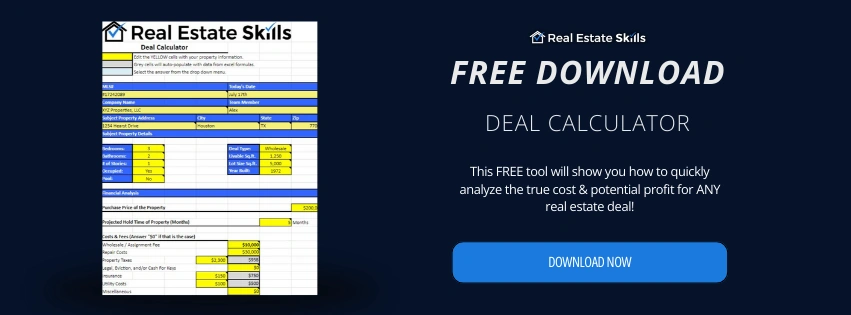
Don't let a "good feeling" about a Zestimate turn into a massive financial headache. Successful flippers don't guess—they calculate. Download our Free Deal Calculator Spreadsheet to take the emotion out of the equation. This tool helps you reverse-engineer your profit by locking in your ARV, accurately estimating repair costs, and determining your Maximum Allowable Offer (MAO) so you can pull the trigger with total confidence.
FAQ: Flipping Houses Using Zillow
Investors migrating to retail platforms face specific friction points regarding contracts and agent dynamics.
Next Steps: Executing Your Zillow Sourcing Strategy
Finding profitable flips on public platforms is an exercise in data manipulation and psychological leverage. By filtering out the retail noise, hunting for listing agent fatigue, and initiating the double dip strategy, you transform a conventional consumer app into a high-margin lead generation tool. And before you know it, learning how to find houses to flip on Zillow is a thing of the past and you are well on your way to your next deal.
The hardest part isn't finding the properties—it’s having the discipline to walk away when the numbers don't support your Maximum Allowable Offer (MAO). Most beginners fail here because they get "deal fever" and start inflating their ARV just to justify a purchase. In the real world, your profit is made the day you buy, not the day you sell.
Ready To Scale Your Flipping Business?
Mastering Zillow is just the beginning. Our FREE Training reveals the exact systems we use to bypass retail platforms entirely and source deeply discounted off-market deals before anyone else knows they exist.
Access the Free Training Now*Disclosure: Real Estate Skills is not a law firm, and the information contained here does not constitute legal advice. You should consult with an attorney before making any legal conclusions. The information presented here is educational in nature. All investments involve risks, and the past performance of an investment, industry, sector, and/or market does not guarantee future returns or results. Investors are responsible for any investment decision they make. Such decisions should be based on an evaluation of their financial situation, investment objectives, risk tolerance, and liquidity needs.

👉FREE Training
How To Consistently Wholesale, Flip Houses, & Invest In Rental Properties From The MLS
(Without Spending $1 On Marketing)

Alex Martinez, the founder of Real Estate Skills, is known for his strong, practical expertise in real estate, starting from a beginner with no family connections in the industry to acquiring over 55 real estate deals, including wholesale and flips, within his first year.
He has dedicated his career to providing cutting-edge education and resources for real estate professionals. He emphasizes the importance of self-taught knowledge through mentors, books, and hands-on experience.
His journey from earning a modest income to becoming a successful real estate entrepreneur and educator showcases his expertise and dedication to the field.

Ryan Zomorodi, co-founder and COO of Real Estate Skills, leverages his experience from a diverse background in real estate investment, construction management, and entrepreneurship to provide comprehensive education in the real estate sector.
His expertise is rooted in hands-on experience, extensive industry knowledge, and a commitment to empowering others through education.
Ryan's journey reflects a blend of practical experience and entrepreneurial success, contributing to his role in developing a platform that educates and supports aspiring real estate professionals.
Read Ryan's Full Bio >>
