
19 Highest Paying Real Estate Jobs In 2026 (Ranked By Income Potential)
Jul 20, 2026

Written by
Alex Martinez — Founder & CEO, Real Estate Skills. A full-time investor who has acquired 33+ residential properties and closed 50+ wholesale deals in his first year.
Reviewed by
Ryan Zomorodi — Co-Founder & COO, Real Estate Skills & Licensed Real Estate Agent (eXp Realty, CA). Reviewed and verified the income figures, career data, and investor examples in this guide.
Publication history: Originally published July 21, 2023. Updated July 2026 with a direct answer to the highest-paying role, current 2026 salary figures, first-hand investor deal breakdowns, a state-by-state income section, an expanded FAQ, and refreshed guidance throughout. Income figures and investor examples verified by Ryan Zomorodi, Co-Founder & COO of Real Estate Skills.
The single highest-paying real estate job is real estate investing — specifically wholesaling, house flipping, and buy-and-hold rental investing. These aren't salaried jobs with a ceiling; they're businesses where your income is capped only by the number of deals you close. A wholesaler can make $10,000 to $50,000 on a single deal without a license, a house flipper clears $30,000 to $60,000+ per property, and a buy-and-hold investor can build a rental portfolio that pays out for life. Among licensed careers, the commercial real estate broker earns the most — averaging about $196,000 a year, with top brokers clearing $290,000+.
The reason those investor paths top the list comes down to one idea — your income isn't tied to a salary or a commission split, it's tied to how many deals you do. The best way to see what that actually looks like is a real person who's lived it.
Real Estate Skills co-founder, and a friend of mine, Ryan Zomorodi, has a story most of you will want to hear (especially if you are looking for a career change): In 2015, he put $35,000 down on his first rental property. That property has generated 10% cash-on-cash returns every single year since. The original $35,000 equity stake is now worth over $200,000. And that was just the first one. He has since built a portfolio spanning dozens of units across 12+ states (no prestigious degree required, no corporate ladder climbed).
Buy-and-hold investing was Ryan's path. It might not be yours, and that is exactly the point. Real estate is one of the only industries where multiple completely different strategies can all lead to the same destination. Wholesaling, flipping, commercial brokerage, mortgage origination; the right path depends on your skills, your timeline, and how much risk you are willing to carry.
In this guide, we rank 19 real estate careers across four tiers, breaking down the income floor, income ceiling, barrier to entry, and honest friction points for each one, so you can find the path that actually fits you.
Top Real Estate Careers at a Glance
The highest-paying real estate careers reward performance over tenure. Investor roles (wholesaling, flipping, buy-and-hold) have no income ceiling, while the top licensed roles — commercial broker, attorney, and private equity associate — pay six figures with more predictable ramp-up. The table below shows what committed, full-time professionals actually earn, not the part-timer-dragged median.
Before diving into the details of each role, here is a snapshot of how the industry's top earners compare. When evaluating the highest paying real estate jobs, it is critical to look beyond the average salary and focus on two things: the Top 10% Potential and the Barrier to Entry. In real estate, averages skew low because they include part-timers, career-switchers, and people who quit in year one. The figures below reflect what committed, full-time professionals actually earn.
| Job Title | Avg. Income | Top 10% Potential | License Required? | Barrier to Entry |
|---|---|---|---|---|
| Real Estate Wholesaler | $50k – $150k+ | $1M+ (Uncapped) | No | Low |
| House Flipper | $60k+ per flip | $2M+ (Uncapped) | No | Medium (Capital) |
| Buy & Hold Investor | Varies (Cash Flow + Equity) | Generational Wealth | No | Medium/High (Capital) |
| Mortgage Loan Officer | $74,180 median | $265k+ | Yes (NMLS) | Medium |
| Commercial RE Broker | $196,249 | $292k+ | Yes | High |
| Real Estate Broker | $98,791 | $300k+ (with a team) | Yes (Broker Lic.) | High |
| Real Estate Agent | $99,288 | $500k+ (luxury/volume) | Yes (State Lic.) | Medium |
| New Home Sales Consultant | $119,439 | $178k+ | Varies by State | Medium |
| Real Estate Attorney | $140,845 | $288k+ | Yes (Bar Exam) | Very High |
| RE Associate (Private Equity) | $134,221 | $300k+ (with carry) | No (MBA preferred) | High |
| RE Investment Consultant | $92,419 | $150k+ | No (Lic. Preferred) | Medium |
| Property Accountant | $75,656 | $110k+ | No (CPA Preferred) | Medium |
| Compliance Specialist | $74,040 | $105k+ | No | Medium |
| Real Estate Manager | $74,284 | $141k+ | Varies by State | Medium |
| Real Estate Appraiser | $82,824 | $111k+ | Yes (Appraisal Lic.) | Medium |
| Escrow Officer | $58,389 | $75k+ | Low/Medium | Low/Medium |
| Property Manager | $66,700 | $141k+ | Varies by State | Low |
| Home Inspector | $72,120 | $112k+ | Yes (Certification) | Low |
| Foreclosure Specialist | $40,392 | $65k+ | No | Low |
Sources: U.S. Bureau of Labor Statistics (May 2024), ZipRecruiter (2025–2026), Salary.com (2025–2026). Investor income figures reflect deal-based earnings and are not salaried roles. Top 10% figures reflect 90th percentile where available.
Tier 1: The "Uncapped" Income Earners (Investors)
This is the tier that changes lives. These are not jobs in the traditional sense — they are businesses. There is no W-2, no employer salary cap, and no performance review standing between you and your next paycheck. Investors consistently hold the highest paying real estate careers because they create equity and value rather than simply servicing someone else's transaction. The tradeoff is that income is variable, especially in the early stages. But the ceiling? It does not exist.
Best of all, you generally do not need a license to operate in this tier. The barrier is not credentials — it is the skill to find discounted properties, analyze them accurately, and execute a transaction from start to finish. Build that skillset, and this tier is fully accessible regardless of your background, education, or starting capital.
1. Real Estate Wholesaler
- 💰 Average Deal Profit: $10,000 – $50,000+ per deal
- 🚀 Top Potential: $1M+ per year (fully scalable)
- 🚦 Barrier to Entry: Low — No License, No Degree, No Capital Required
Wholesaling real estate is the fastest path to your first real estate paycheck, and one of the highest-paying real estate jobs available to someone starting with zero experience. In my first year using this exact strategy, I closed over 50 wholesale deals and generated more than $12 million in revenue (all without spending a dollar on marketing or making a single cold call). The concept: find a distressed property, secure it under contract at a below-market price, and assign that contract to a cash buyer for a fee. You are not buying the house. You are flipping the paperwork, with minimal financial risk and startup costs close to zero.
Why does it pay so well? Because you are solving the single hardest problem in real estate: finding the deal. Cash buyers will pay a $15,000 to $50,000 assignment fee for a profitable opportunity they did not have to source themselves. The key is knowing how to find those opportunities consistently, which is where most beginners get stuck.
The income ceiling is a function of volume and systems. One deal per month at a $20,000 average fee equals $240,000 per year. Two deals per month equals $480,000. The most sophisticated wholesale operations run entirely virtually, targeting any market in the country from a home office, without driving for dollars or knocking on a single door.
📓 From The Field
Here's what the income numbers don't show you: the first deal is reachable from nothing. I closed my first wholesale deal at 20 years old, fresh off a minimum-wage job, and made $22,000 on it — a five-bedroom short sale in El Cajon I found on the MLS, put under contract at $328,000, and assigned to a cash buyer. It wasn't clean. The bank wanted the title seasoned, so I couldn't just step off the contract — I closed it as a tenants-in-common arrangement, holding 1% ownership for 30 days before the buyer took full title. Most beginners would have frozen at that wrinkle. On that deal, the cash buyer stood to make more — about $44,700 fixing and flipping it — but they carried all the renovation risk. I carried none. That asymmetry — real money for near-zero risk — is exactly why wholesaling tops this list as the entry point. Individual results vary; this reflects one deal and is not a guarantee of income.
Watch the full breakdown of that exact first deal, start to finish:
How I Got My First Wholesale Real Estate Deal ($22,000)
Alex Martinez breaks down exactly how he closed his first wholesale deal at 20 years old — finding it on the MLS, negotiating the short sale, and collecting a $22,000 check.

Real Student Results: What Wholesalers Actually Earn
The income figures above are not hypothetical. Below are three (technically four) real students — different backgrounds, different markets, different starting points — who used the same wholesaling strategy to generate five-figure paydays. The deals, the numbers, and the timelines are all real.
How Diana & Chase Made $40,000 on Their First Two Wholesale Deals in Southern California
Diana and Chase are documentary television producers and parents of two young kids in Los Angeles (not real estate professionals). Within months of joining the Real Estate Skills program, they closed two wholesale deals back-to-back in one of the most competitive and expensive markets in the country, without any prior investor experience. Here is how the numbers broke down:
| Metric | Deal 1 (Chase — Hillside Property) | Deal 2 (Diana — Comeback Deal) |
|---|---|---|
| Property Type | Abandoned hillside home, tennis court, severe mold & disrepair | Distressed residential, fell out of contract then came back |
| Market | Southern California | Southern California |
| Purchase Price | ~$2.1M | ~$145,000 |
| ARV | $3M – $5M+ | ~$350,000 (300K spread) |
| Gross Wholesale Fee | $60,000 | $20,000 |
| JV Partner Split | $30,000 | $10,000 |
| Net Profit | $30,000 | $10,000 |
| License Required | No | No |
| Prior Investor Experience | None | None |
| Combined Net Profit | $40,000 | |
How Robert Made $20,000 on His First Wholesale Deal with No Real Estate Background
Robert spent years in the automotive industry before discovering wholesaling through Real Estate Skills. With zero real estate experience, he navigated a title company dispute, a 5-person conference call on closing day, and four cancelled contracts before this, and still walked away with a $20,000 wire on a Monday morning that made him emotional enough to stop mid-sentence every time he tried to tell someone about it.
| Metric | Details |
|---|---|
| Deal Source | On-market MLS contact led to off-market referral from same agent |
| Property Situation | Inherited home — father passed away, seller needed time to remove sentimental items |
| Competing Offers | $100,000 (neighbor), $180,000, $190,000 (investors) |
| Seller's Target Price | $200,000 |
| Robert's Purchase Price | $210,000 (above ask — beat all competing offers) |
| Closing Terms | 30-day close (accommodated seller), 7-day inspection contingency |
| Cash Buyers Lined Up | 3 (found before getting under contract — Google + Facebook groups) |
| End Buyer Purchase Price | $230,000 |
| Assignment Fee | $20,000 |
| Capital Required | $0 — assigned before EMD was due, cash buyer funded the deal |
| Prior Real Estate Experience | None |
| Net Profit | $20,000 |
How Landon Made $20,000 Virtually Wholesaling in North Carolina While Working Full-Time
Landon lives in South Carolina but virtually wholesaled a property one state over in North Carolina — spending zero dollars on marketing to find the deal. He had tried Amazon FBA, dropshipping, insurance, solar, and roofing sales before discovering wholesaling. Every previous venture failed. This one didn't.
| Metric | Details |
|---|---|
| Deal Type | Virtual wholesale — Landon in South Carolina, property in Wilson, North Carolina |
| Deal Source | Off-market referral from agent relationship built through on-market cold calling — $0 marketing spend |
| Property Situation | 2 bed / 2 bath — seller mid-renovation when husband died and back gave out, forced to sell unfinished |
| Seller's Original Ask | $150,000 |
| Initial Purchase Price (Under Contract) | $100,000 |
| Estimated Repair Cost | $40,000 (3 contractor quotes) — buyer's inspector later quoted $60,000–$65,000 |
| Negotiation Move | Used buyer's higher repair estimate to negotiate $4,000 off seller price — final purchase price dropped to $96,000 |
| Original Wholesale Target Price | $120,000 |
| Final Sale Price to End Buyer | $116,000 (found via Facebook investor groups after original cash buyers passed) |
| Gross Wholesale Fee | $20,000 |
| Agent Referral Fee Paid | ~$1,000 |
| Marketing Spend | $0 |
| Employment Status During Deal | Full-time employed |
| Net Profit | ~$19,000 |
2. House Flipper
- 💰 Average Profit: $30,000 – $60,000+ per flip
- 🚀 Top Potential: Multi-Millions per year (Volume + Market)
- 🚦 Barrier to Entry: Medium — Requires Capital or Access to Private Money
House flipping earns its place among the highest-paying real estate jobs because it lets you manufacture equity on demand. The model: acquire a distressed property below market value, renovate it, and sell at full retail on the MLS (Multiple Listing Service). Television makes it look chaotic. Professional flipping is a calculated math equation, and the profit is locked in the day you buy, not the day you sell.
In June 2015, I bought my first flip in Poway, California: listed at $500,000, negotiated to $390,000 after the original buyer walked. A $42,000 cosmetic renovation was completed in under a month. We sold at $535,000 for a net profit of just over $61,000. My partners and I have since been part of well over 1,000 transactions using the same core principles.
The formula governing every successful flip is the 70% Rule: never pay more than 70% of the After Repair Value (ARV) minus repair costs. On a $350,000 ARV property needing $50,000 in repairs: ($350,000 × 0.70) − $50,000 = $195,000 maximum offer. After holding costs, commissions, and financing, net profit lands around $70,000 to $80,000. Run the math before you ever make an offer.
The hardest part is not the renovation; it is sourcing deals that actually meet the threshold. Most beginners fail because they overpay. They fall in love with a property and stretch the numbers to make it work on paper. Discipline at the offer stage is the single most important skill in the fix-and-flip business. If the numbers do not work at your maximum allowable offer, walk away.
📓 From The Field
The number that surprises new flippers most is this one: on Stephanie's four Minneapolis flips, she made more on her smaller first deal than on a later one with a far bigger spread. Her first flip — bought around $180,000, $102,000 in renovation — netted about $40,000. Her third, bought at $421,000 and sold at $705,000, looked like a much bigger deal on paper. She netted $35,000. The difference wasn't the spread. It was time. That third project stretched months past schedule, and on a hard-money loan, every extra week of interest and holding cost eats directly into profit. The friction that caused it is the most repeatable mistake in the business: she hired the same contractor to run two flips at the same time. He got overwhelmed, and both projects blew from a 16-week target to 28 and 32 weeks. By her fourth flip, she managed the project herself and pulled her own subcontractor bids. That's the real fix-and-flip skill curve — not swinging a hammer, but controlling time, budget, and the people doing the work. Individual results vary; these figures reflect one investor's deals and are not a guarantee of income.
Watch Stephanie's full four-deal breakdown, including how she funded flips with private money:
How Stephanie Made $150,000 Flipping 4 Houses in Minneapolis
A food-service business owner with no flipping experience who started out trying to wholesale. Four deals, four sets of hard lessons, and $150,000 in cumulative profit — all while running her other business full-time.

How Savvy — a Former NASA Project Lead — Made $65,000 on a San Jose Duplex Flip
Savvy spent years as a federal project lead at NASA before transitioning to full-time real estate investing. Her San Jose flip was the most distressed property she had ever taken on (in one of the most expensive cities in the country). She fired her contractor and her real estate agent mid-deal, survived a collapsed first contract, and still walked away with $65,000 in net profit. Here is how the numbers broke down:
| Metric | Details |
|---|---|
| Property Type | Duplex — 1,850+ sq ft total, 925 sq ft per unit, 2 bed / 1 bath each side |
| Market | San Jose, California — one of the most expensive cities in the US |
| Deal Source | Off-market — contractor referral to local realtor |
| Purchase Price | $900,000 (50–70K below asking price) |
| Renovation Budget | $162,000 estimated ($75/sq ft cosmetic renovation rule) |
| Actual Renovation Cost | ~$145,000 (came in under budget despite firing original contractor) |
| Funding | Hard money loan (15% down + 2 points origination) — rehab costs 100% funded by lender |
| Hold Period | ~6 months (extended by 50 days due to collapsed first contract) |
| First List Price | $1,280,000 |
| First Offer Received | $1,300,000 — fell through due to poorly written inspection report and agent mismanagement |
| Action Taken | Fired original agent, relisted at $1,250,000 with new agent |
| Final Sale Price | $1,227,000 |
| Key Hold Costs | Property taxes ~$6,000 | Insurance ~$2,900 | Utilities ~$200/month |
| Complications | Fired contractor mid-renovation, fired real estate agent, collapsed first contract, supplemental tax bill from county |
| Net Profit | ~$65,000 |
3. Buy & Hold Investor
- 💰 Income: Monthly Cash Flow + Long-Term Equity
- 🚀 Top Potential: Generational Wealth (Uncapped)
- 🚦 Barrier to Entry: Medium/High — Requires Capital or Creative Financing
Buy-and-hold rental property investing is the slowest of the three investor paths to pay you, and the one that builds the most lasting wealth. Wholesalers and flippers earn active income — they get paid when they work. Buy-and-hold investors build a portfolio of assets that pay them whether they work or not. It is the closest thing in real estate to a money-printing machine, and it is how most real estate fortunes are ultimately preserved.
The model is simple: acquire a rental property, place a tenant, and collect monthly cash flow while the mortgage is paid down and the property appreciates over time. But the returns come from four separate income streams working simultaneously: cash flow (rent minus expenses), loan paydown (your tenant building your equity), appreciation (the property rising in value), and tax advantages (depreciation and write-offs). No other asset class stacks four wealth-building mechanisms into a single purchase.
📓 From The Field
The mechanism that makes buy-and-hold the wealth-builder of the three is leverage, and Ryan lays it out with real numbers. Put 10% down on a $200,000 rental — $20,000 — and finance the rest. If that property appreciates to $300,000, the property value rose 50%, but your $20,000 stake is now worth roughly $120,000. That's a 600% return on your cash, from a 50% move in the property. And that's before counting the monthly cash flow, the mortgage your tenant is paying down for you, and the tax benefits. But the most useful thing Ryan says about these paths is how they connect: after he bought his first rental, he ran out of cash fast — so he learned to wholesale and flip specifically to generate the capital to buy more rentals. The "jobs" on this list aren't competitors, they're a progression. Wholesaling and flipping produce active cash quickly; buy-and-hold turns that cash into income that pays out for decades. Ryan now generates over $28,600 a month from seven properties — built by running all three plays in order, not by picking just one. Individual results vary; this reflects one investor's portfolio and is not a guarantee of income.
Watch Ryan break down how the model works and the portfolio behind it:
How Ryan Generates $28,600/Month From Rental Properties
Ryan Zomorodi walks through the leverage math, cash-flow targets, and beginner-friendly steps behind the rental portfolio that pays him over $28,600 every month across 12+ states.

The secret to buy-and-hold is that you do not need to buy in an expensive coastal market to win. In fact, the best cash flow is usually found in affordable secondary markets. Consider Ryan's own logic: a home that costs over $1 million in San Diego might run closer to $300,000 in Memphis — and unlike the San Diego property, the Memphis one actually produces positive monthly cash flow. You can live wherever you want and invest wherever the numbers work.
Before you buy any rental, the discipline that separates winners from losers is running the numbers first. You are looking for cash-on-cash returns of at least 4%, ideally in the 8–12% range, after all expenses. Never buy on the assumption that appreciation will bail you out — buy on the cash flow, and treat appreciation as the bonus.
Before You Buy a Rental, Run the Numbers Like a Pro
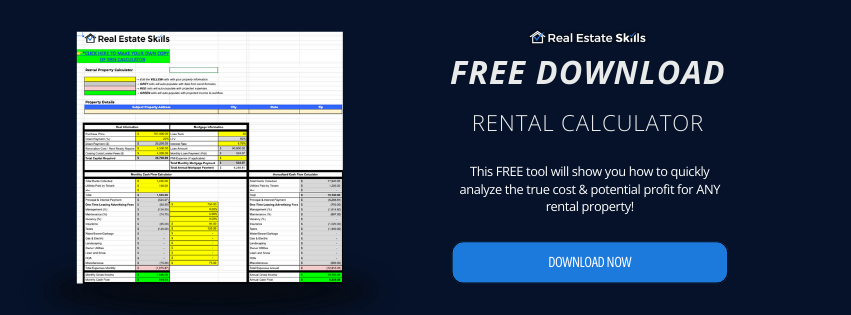
Buy-and-hold investing builds the most lasting wealth on this list — but only if the property actually cash flows. The investors who win never guess; they run every deal through the numbers first. Our free Rental Property Calculator lets you plug in the purchase price, rent, and expenses to see your real cash flow, cap rate, and cash-on-cash return before you commit a dollar. It's the same tool we use to analyze our own portfolios — download it and make sure your first rental is a winner.
How Adulo Built a Cash-Flowing Rental Portfolio Out of State While Working as a Nurse
Adulo works full-time as a nurse in New York — a market where high prices make cash flow nearly impossible. Rather than force a bad deal in his own backyard, he invested out of state in Tennessee, where the numbers actually work. He bought sight unseen using systems and a trusted local team, and built a portfolio that cash flows every month while he keeps his W-2. Here is how the numbers broke down:
| Metric | Details |
|---|---|
| Investor Location | New York (full-time nurse) |
| Investment Market | Tennessee (out-of-state, secondary market) |
| Strategy | Buy-and-hold rentals, purchased remotely with a local team |
| Why Out of State | NY prices don't cash flow; TN prices do |
| Approx. Cash-on-Cash Return | ~9% |
| Employment Status | Kept full-time W-2 throughout |
| Outcome | Positive monthly cash flow, portfolio built remotely |
How Ryan Generates $28,600/Month From a 7-Property Rental Portfolio
Ryan Zomorodi, co-founder of Real Estate Skills, started with a single $35,000 down payment in 2015 and built a portfolio that now spans 12+ states. Here is the snapshot of what disciplined, long-term buy-and-hold investing produces over time:
| Metric | Details |
|---|---|
| Monthly Passive Income | $28,600+ |
| Number of Properties | 7 (portfolio spanning 12+ states) |
| Starting Point | $35,000 down on first property (2015) |
| Example Cash Flow Model | $2,500 rent − $1,500 mortgage − $500 expenses = ~$500/mo per property |
| Target Cash-on-Cash Return | 8–12% (minimum 4%) |
| Funding Strategy | Used wholesale & flip income to fund additional rental purchases |
| License Required | No |
The Hard Truth About Tier 1 Careers
Everything in this tier shares one requirement, and it is not a license, a degree, or a pile of cash. It is deal flow. Wholesalers, flippers, and buy-and-hold investors all win or lose based on one skill: the ability to consistently find properties priced well below market value. The investor who can find deals never runs out of money, because cash buyers, private lenders, and partners will always fund a genuinely good deal.
This is also the honest reason most people never break into Tier 1. They chase funding, licenses, and courses, when the actual bottleneck is knowing how to source a discounted property and analyze it correctly. Master that one skill, and every path in this tier opens up. Skip it, and none of them do.
Your First Deal Is the Hardest — This Guide Makes It Simpler
Every high-paying investor path on this list — wholesaling, flipping, buy-and-hold — comes down to one skill the salary guides never mention: finding a deal with enough profit in it to pay you. That's what separates the people earning six figures from the people still reading about it. Our free Ultimate Guide to Start Real Estate Investing walks you through the fundamentals of finding deeply discounted properties, running the numbers, and turning your first deal into the start of a real business. Download it and get started today.
The Highest-Paying Paths All Come Down To One Skill: Finding Deals.
Wholesaling, flipping, and buy-and-hold investing top this list because the income is uncapped — but the ceiling is only as high as your ability to find discounted properties consistently. That's the skill that separates the six-figure investors from the people still reading about it. Our FREE Training walks you through the exact deal-finding system thousands of our students use — no license, no capital, no experience required. Watch it today, then go find your first deal.
Watch The FREE Training →Tier 2: The High-Commission Professionals (Sales)
This tier is where licensed real estate professionals live. These roles require credentials and, in most cases, a tolerance for commission-based income — but the ceilings are high, and the top performers earn well into the six and seven figures. The common thread: your income is a direct function of the deals you close and the size of those deals. Master a high-value niche, and these become some of the highest paying real estate jobs available to a licensed professional.
4. Mortgage Loan Officer (MLO)
- 💰 Median Income: $74,180 (top 10% over $145,000)
- 🚀 Top Potential: $265,000+
- 🚦 Barrier to Entry: Medium — Requires NMLS License
Mortgage loan officers are the financial matchmakers of real estate, connecting buyers with the financing they need to close. They earn through commissions (typically 0.5% to 1% of each loan amount), which means a single $500,000 mortgage can generate $2,500 to $5,000. Volume is the game: an MLO closing 8–10 loans a month is comfortably into six figures.
💡 Expert Note: An MLO's income is tied to the rate environment. When rates are in the low-to-mid 6% range (as they are as of 2026 — confirm current rates before quoting them), purchase and refinance volume shifts, and the officers who thrive are the ones diversified across purchase loans, refinances, and multiple loan products rather than dependent on any single market condition. If you become licensed, learn the full product suite — it's what keeps income stable when one part of the market cools.
To become an MLO, you must obtain a Mortgage Loan Originator license through the NMLS: complete at least 20 hours of coursework, pass the SAFE exam, and clear background and credit checks. Licenses renew annually.
5. Commercial Real Estate Broker
- 💰 Average Income: $196,249
- 🚀 Top Potential: $292,000+
- 🚦 Barrier to Entry: High — License + Deep Market Expertise
The commercial real estate broker is the highest-paying licensed role in the industry. Instead of selling homes, these brokers handle office buildings, retail centers, industrial warehouses, and multifamily apartment complexes. The deals are larger, the commissions are larger, and the expertise required is deeper — you are analyzing cap rates, net operating income, lease structures, and tenant creditworthiness, not granite countertops.
💡 Expert Note: One commercial deal can be worth more than a dozen home sales. A single $10 million office building sale at a 3% commission generates $300,000 — split between sides and the brokerage, but still a fraction of what any residential agent earns per transaction. The tradeoff is a long, slow ramp: commercial brokers often go months between closings early on, which is why the field rewards patience and capital reserves.
6. Real Estate Broker
- 💰 Average Income: $98,791
- 🚀 Top Potential: $300,000+ (with a team)
- 🚦 Barrier to Entry: High — Requires Broker License
A real estate broker is an agent who has leveled up — completing additional education and experience requirements to earn a broker license. Brokers can work independently, and, more importantly, they can hire agents to work under them, earning a share of every deal their agents close. This is where the income model shifts from selling your own time to building a team that scales beyond it.
💡 Expert Note: The broker license is the moment real estate becomes a business instead of a job. A broker with 15 productive agents earning an override on each transaction can out-earn the top solo agent in their market without personally selling a single house. The ceiling is a function of how many good agents you recruit and retain.
7. Real Estate Agent / Realtor
- 💰 Average Income: $99,288
- 🚀 Top Potential: $500,000+ (luxury/volume)
- 🚦 Barrier to Entry: Medium — Requires State License
The real estate agent is the most recognized career in the industry, and one of the most misunderstood when it comes to income. The "average" figure is deeply misleading, because it blends full-time top producers with part-timers and first-year agents who close a deal or two and quit. The truth is that agent income is a scoreboard, not a salary: it tracks one thing, closed transactions, and it has no floor and no ceiling.
The buyer-agent commission landscape also changed with the NAR settlement, effective August 2024: buyer-agent compensation is no longer posted on the MLS and is now negotiated directly between buyers and their agents. Commissions remain fully negotiable, and the agents who thrive are those who can clearly articulate their value.
What type of real estate agent makes the most money?
Luxury and commercial agents make the most money of any agent type. Luxury agents earn large commissions on high-priced homes — often well into six figures, and into the millions in the top markets — while commercial agents close deals on properties worth tens of millions. Both out-earn the typical residential agent by a wide margin.
Within residential, the highest earners cluster in three specializations: luxury (high price per sale), high-volume team leaders (income through scale), and new-construction agents working for builders (inbound leads plus per-unit commissions). But there's a ceiling every agent runs into that no specialization removes — and it's worth naming, because it's the reason the top of this whole list isn't an agent at all.
Here's the ceiling: an agent's income is capped by the commission percentage and the broker split. Take a $400,000 sale at a 2.5% commission — that's $10,000 gross, and after a standard 70/30 split with your broker, you take home about $7,000. Do ten of those in a year and you're at $70,000. Respectable, but structurally limited: every deal is capped at your percentage, and your broker takes a cut of all of it.
The agents who break past that ceiling do it by adding an investor's tools to their license. This is the move most agents never make, and it's the single fastest way to increase income per deal without chasing more clients. One of our students, a licensed agent, took home just $2,500 on a deal after his broker split and wasn't happy about it. He learned to wholesale, and on his very next deal he generated a $71,500 fee — split with a partner, he kept over $35,000, none of it owed to a broker. Same license, same market, same effort finding the deal. The difference was that on the second one he acted as the investor, not just the agent.
A licensed agent is actually positioned better than almost anyone to do this, because they already have the thing most beginners lack: direct MLS access, transactional experience, and the ability to write their own offers. An agent who finds a distressed listing can represent themselves as the buyer (earning the buyer's commission), then assign that contract to a cash buyer for a wholesale fee on top — turning a single $7,000 commission into $27,000 or more from one deal. Done carefully, some agents stack a third check by negotiating the relist of the renovated property with their cash buyer, earning a listing commission when it sells.
⚠️ One Firm Caveat
Because this is where agents get into trouble: you must disclose that you're a licensed agent in every transaction where you act as a principal, and the rules on self-representation, dual agency, and investor disclosure vary by state and by brokerage. This is legal and common when done correctly and transparently — and a liability when it isn't. Confirm your specific obligations with your broker and a local real estate attorney before you structure a deal this way.
This is also why wholesaling, flipping, and investing sit above every agent role on this list. An agent earns a percentage of someone else's transaction. An investor captures the full spread on their own. The best-paid people in real estate figured out that the license is a tool, not the ceiling.
8. New Home Sales Consultant
- 💰 Average Income: $119,439
- 🚀 Top Potential: $178,000+
- 🚦 Barrier to Entry: Medium — Varies by State
New home sales consultants represent home builders, selling newly constructed properties directly to buyers. It is one of the most underrated high-paying roles in real estate because the leads come to you: buyers walk into the model home already interested. You are not prospecting for clients the way a traditional agent is; you are converting warm traffic and earning a commission (often plus bonuses) on each home sold in the community.
💡 Expert Note: The inbound-lead structure is the hidden advantage here. A traditional agent spends heavily on marketing to generate leads; a new-home consultant inherits the builder's foot traffic. The tradeoff is that you sell one product line in one location — but for a strong closer who likes consistency over prospecting, the income-to-effort ratio is excellent.
Tier 3: The Stable Salary Earners (Corporate & Legal)
Not everyone wants commission volatility. This tier trades the uncapped upside of sales and investing for stability, structure, and a predictable paycheck. These are the specialized, credentialed roles — often requiring advanced degrees — that keep the real estate industry running. The ceilings are lower than Tier 1 or Tier 2, but the floors are far higher, and the work is steadier.
9. Real Estate Attorney
- 💰 Average Income: $140,845
- 🚀 Top Potential: $288,000+
- 🚦 Barrier to Entry: Very High — Law Degree + Bar Exam
Real estate attorneys specialize in the legal side of property: drafting and reviewing contracts, handling closings, resolving title disputes, and navigating zoning and land-use law. It is the highest barrier to entry on this entire list — a bachelor's degree, three years of law school, and passing the bar exam — but it comes with a stable, high income and the prestige of a professional credential.
💡 Expert Note: The knowledge itself is an investing asset. An attorney who understands title, liens, contracts, and foreclosure law has an enormous edge if they ever choose to invest — they can structure creative deals and spot risks that trip up everyone else. Many of the most sophisticated investors either have legal training or keep an attorney very close.
10. Real Estate Associate (Private Equity)
- 💰 Average Income: $134,221
- 🚀 Top Potential: $300,000+ (with carried interest)
- 🚦 Barrier to Entry: High — MBA/Finance Background Preferred
Real estate private equity associates work for firms that pool investor capital to acquire large commercial assets — apartment complexes, office towers, industrial portfolios. They build financial models, underwrite acquisitions, and manage deals worth tens or hundreds of millions. The base salary is strong, but the real upside is carried interest: a share of the profits when the firm's investments pay off, which can dwarf the base for senior professionals.
💡 Expert Note: This is institutional investing — the same fundamentals as buy-and-hold, executed at massive scale with other people's money. The skills (underwriting, cash-flow analysis, market selection) are identical to what an individual investor uses; the difference is the number of zeros. It is a strong path for the analytically minded who want investing exposure with a corporate salary.
11. Real Estate Investment Consultant
- 💰 Average Income: $92,419
- 🚀 Top Potential: $150,000+
- 🚦 Barrier to Entry: Medium — License Preferred, Not Required
Real estate investment consultants advise clients on building and managing property portfolios — helping investors identify opportunities, analyze returns, and make strategic buy-and-sell decisions. It blends financial advisory with real estate expertise, and it rewards those who can genuinely understand cash flow, ROI, and market cycles. The role can serve as a bridge for professionals who want investing exposure while advising others.
💡 Expert Note: The best investment consultants are usually active investors themselves. Advising others on deals you have never done is a hard sell; advising from real experience is where the credibility — and the higher fees — come from. If this path interests you, do a few of your own deals first.
Tier 4: Notable Mentions & Stepping Stones
These roles will not top any income leaderboard, but writing them off would be a mistake. Every one of them offers something more valuable than its salary: a front-row education in how real estate transactions actually work. The escrow officer who sees hundreds of closings, the appraiser who understands valuation cold, the foreclosure specialist who knows exactly where a distressed seller sits — each is sitting on knowledge that translates directly into investing advantage. Treat these as two-to-three-year education investments, not just destinations.
12. Property Accountant
- 💰 Average Income: $75,656 | 🚦 Barrier: Medium (CPA Preferred)
Property accountants manage the financial records for real estate portfolios — tracking income, expenses, and reporting for owners and management companies. It is a stable, specialized niche that pays solid money, and it teaches you to read a property's financials like an owner. Advancement beyond six figures typically means moving into a Controller or CFO role at a larger firm.
13. Real Estate Compliance Specialist
- 💰 Average Income: $74,040 | 🚦 Barrier: Medium
Compliance specialists ensure that real estate transactions and operations follow the maze of federal, state, and local regulations. As the industry faces growing regulatory scrutiny, this role has become increasingly important — and increasingly well-paid for those who master the rules that govern lending, fair housing, and disclosure.
14. Real Estate Manager
- 💰 Average Income: $74,284 | 🚦 Barrier: Medium (Varies by State)
Real estate managers oversee property portfolios on behalf of owners or corporations — handling operations, leasing strategy, budgets, and value optimization across multiple assets. It is a step up from single-property management into portfolio-level thinking, and it pays accordingly for those who can improve a portfolio's bottom line.
15. Real Estate Appraiser
- 💰 Average Income: $82,824 | 🚦 Barrier: Medium (Appraisal License)
Appraisers determine the market value of properties — a service required in nearly every financed transaction. The skill is directly transferable to investing: an appraiser knows how to value a property with precision, which is the exact competency a flipper or buy-and-hold investor needs to avoid overpaying. Experienced appraisers who specialize in commercial work or move into valuation consulting can push well past six figures.
16. Escrow Officer
- 💰 Average Income: $58,389 | 🚦 Barrier: Low/Medium
Escrow officers manage the neutral holding account and coordinate the closing process, making sure every condition is met before funds and title change hands. The exposure is exceptional: escrow officers see hundreds of deals a year across every price point and structure. Knowing exactly what kills deals at the closing table — and why — is directly applicable to anyone who plans to invest, wholesale, or flip. The hardest part is the salary ceiling, which stays relatively flat; treat it as an education, not a destination, unless you aim for escrow or title-operations leadership.
17. Property Manager
- 💰 Average Income: $66,700 | 🚦 Barrier: Low (Varies by State)
Property managers handle the daily operations of rental properties — screening tenants, collecting rent, coordinating maintenance, and managing owner relationships. It is one of the most accessible entry points in real estate, and it teaches you the operational reality of owning rentals before you own any yourself. Many buy-and-hold investors credit time spent in or around property management for their understanding of what actually makes a rental profitable.
18. Home Inspector
- 💰 Average Income: $72,120 | 🚦 Barrier: Low (Certification)
Home inspectors evaluate a property's condition — structure, systems, and safety — and report findings to buyers and sellers. For an aspiring investor, this is arguably the most useful skill on the list: an inspector can walk a distressed property and estimate repair costs on sight, which is exactly the ability that determines whether a flip or wholesale deal is profitable. The certification is quick and inexpensive relative to the earning potential.
19. Foreclosure Specialist
- 💰 Average Income: $40,392 | 🚦 Barrier: Low
Foreclosure specialists work for banks, mortgage servicers, and law firms to navigate the legal and administrative process of reclaiming a property when a borrower defaults. The salary is the lowest on this list. The knowledge is not. A foreclosure specialist develops a granular understanding of the foreclosure timeline that is directly applicable to sourcing deeply discounted investment opportunities — an investor who knows exactly where a distressed homeowner sits in the process, and what options they have at each stage, has a significant edge in finding motivated-seller leads. The hardest part is the emotional weight of the work: you are regularly dealing with people in genuine financial crisis.
Top Unlicensed Real Estate Jobs You Can Start Today
One of the biggest myths in this industry is that you need a license to make real money in real estate. You do not. The three highest-paying paths on this entire list — wholesaling, flipping, and buy-and-hold investing — require no license whatsoever. Several other well-paying roles are also open to you without one. If you want to start earning quickly without the time and cost of licensing, these are your fastest routes in.
Wholesaling (The Fastest Start)
Wholesaling is the single best unlicensed entry point in real estate. No license, no degree, and effectively no capital required — just the skill to find a discounted property and connect it with a cash buyer. It is the fastest path to your first check, and it doubles as the best possible education in deal-finding, the skill that underpins every other investor path. The one thing that varies by location is the legal framework: how you can legally wholesale, what you must disclose, and whether your state has assignment restrictions.
Start Wholesaling — The Fastest-Paying Job on This List — Legally in Your State
Wholesaling is the highest-paying real estate path you can start with no license, no capital, and no experience — but the rules for doing it legally vary by state. This free state-by-state guide shows you exactly how to wholesale in your market the right way: the licensing laws, assignment rules, and disclosure requirements that keep your deals — and your income — protected. Download it and start building toward your first paycheck on solid legal ground.
House Flipping & Buy-and-Hold
Neither flipping nor buy-and-hold investing requires a license. Both require capital or access to it (through hard money, private money, or partnerships), but the door is open to anyone who can find a deal that pencils. Many investors fund their first flips and rentals using profits from wholesaling — earning the capital first, then deploying it into the higher-barrier paths.
Other Unlicensed Roles Worth Knowing
Beyond the investor paths, several supporting roles typically require no real estate license: property accountant, compliance specialist (in many settings), certain property management positions depending on the state, and roles like transaction coordinator or acquisitions associate at investment firms. For a full breakdown of roles you can pursue without licensing, see our dedicated guide below.
What Skills Do the Highest Paying Real Estate Jobs Require?
Across every tier, the highest earners share a common toolkit. The specific job changes, but the underlying skills that drive income do not. If you are deciding where to invest your time, build these:
| Skill | Why It Pays | Roles It Powers |
|---|---|---|
| Deal Sourcing | Finding below-market properties is the rarest, most valuable skill in real estate | Wholesaler, Flipper, Investor |
| Deal Analysis | Knowing ARV, cash flow, and cap rates prevents costly mistakes and unlocks profit | All investor roles, PE Associate, Appraiser |
| Negotiation | Every dollar saved on the buy is a dollar of profit; every deal closed is income | All sales & investor roles |
| Sales & Relationship Building | Buyers lists, referral networks, and repeat clients compound income over time | Agent, Broker, MLO, Wholesaler |
| Market Knowledge | Knowing which markets and niches produce the biggest returns concentrates earnings | Every role on this list |
| Capital Access & Financing | Knowing how to fund deals (hard money, private money, leverage) removes the biggest barrier | Flipper, Buy-and-Hold, PE Associate |
🤖 The AI & PropTech Shift: Technology is reshaping which real estate skills pay. Data tools now surface off-market leads, automated valuation models speed up analysis, and CRM automation handles follow-up that used to eat entire days. This does not replace the core skills — it amplifies them. The professionals pulling ahead in 2026 are the ones who pair timeless fundamentals (finding deals, running numbers, closing) with the tools that let them do it faster and at greater scale. You do not need to be technical; you need to be willing to adopt the tools your competitors are ignoring.
Do the Highest-Paying Real Estate Jobs Pay More in Certain States or Cities?
Location changes real estate income more than almost any other factor. Licensed and salaried roles pay the most in high-cost, high-volume metros — New York, Los Angeles, San Francisco, and Seattle top most lists — because commissions and salaries track local home prices. Investor income works the opposite way: it's location-independent.
That last part is the piece most career guides miss, and it's worth understanding before you pick a market.
For a licensed agent, broker, or mortgage loan officer, geography is close to destiny. Your income is tied to local home prices, so the same job pays very differently depending on where you hang your license. A commercial broker in Manhattan or downtown LA is closing deals many times larger than one in a rural market — same skill, same commission percentage, wildly different checks. That's why "highest paid real estate jobs in [your city]" is a question worth asking if you're going the licensed route: high-cost, high-transaction metros like New York, Los Angeles, San Francisco, San Diego, Seattle, and Boston consistently produce the biggest paychecks for licensed professionals, while the fast-growth Sun Belt markets — Florida, Texas, the Carolinas, Arizona — reward volume, especially in new-home sales and mortgage origination.
But here's the part that flips the whole logic: the three highest-earning paths on this list — wholesaling, flipping, and buy-and-hold investing — don't require you to live in an expensive market. They don't even require you to live in the market you're working in.
This isn't a theory. Our students prove it constantly. Landon lives in South Carolina and wholesaled a property virtually one state over in North Carolina for a roughly $19,000 net profit — a deal he sourced and closed without ever living in that market. Adulo, a full-time nurse in New York, bought a cash-flowing rental in Tennessee sight unseen, because New York prices don't cash flow and Tennessee prices do. And Ryan, Real Estate Skills' co-founder, built a portfolio across 12+ states from his home in San Diego — buying in secondary markets like Memphis, where a property that would cost over a million dollars in California runs closer to $300,000 and actually produces monthly cash flow.
That's the real advantage of the investor paths when it comes to geography. A licensed agent in an expensive city earns more but pays more to live there. An investor can live wherever they want and deploy capital wherever the numbers work best — expensive coastal markets for appreciation, cheaper secondary markets for cash flow, or both. Your zip code sets the ceiling on a salaried real estate job. It sets nothing for an investor.
So if you searched for the highest-paying real estate jobs in your specific state or city, here's the honest answer: for licensed roles, yes, location matters enormously, and the metros above are where the money is. For investing, location is a tool you choose, not a limit you're stuck with.
How to Choose the Best Paying Real Estate Job for You
The "highest paying" job on paper is not automatically the right job for you. The best path is the one that matches your capital, your risk tolerance, your timeline, and how you actually like to work. Use these four questions to narrow it down:
1. How fast do you need income? If you need money quickly and have little capital, wholesaling is the fastest start — you can close a deal in weeks without a license or upfront investment. If you can afford a longer runway, buy-and-hold builds the most durable wealth over time.
2. How much capital (or access to capital) do you have? Wholesaling needs almost none. Flipping needs capital or private/hard money. Buy-and-hold needs a down payment or creative financing. Be honest about what you can access before committing to a capital-intensive path.
3. What's your risk tolerance? Wholesaling carries the least financial risk (you can assign a contract without ever owning the property). Flipping carries renovation and market risk. Salaried Tier 3 roles carry the least income volatility but have lower ceilings. Match the path to how much uncertainty you can stomach.
4. Do you want to be licensed? If the licensing time and cost are a barrier, the entire Tier 1 investor path is open to you without one. If you enjoy client relationships and want a professional credential, the agent-to-broker path may fit better — and remember, a license pairs powerfully with investing skills.
The through-line worth remembering: these paths aren't mutually exclusive. The most successful people in real estate often run them in sequence — wholesaling to generate fast cash, flipping to grow it, then deploying that capital into buy-and-hold rentals for lasting wealth. You don't have to pick just one forever. You just have to start with the one that fits where you are right now.
FAQ: Highest Paying Real Estate Jobs
Final Thoughts: The Highest Paying Real Estate Job Is the One You Build
If you came here looking for a single job title, here it is one more time: the highest-paying work in real estate is investing — wholesaling, flipping, and buy-and-hold — because those are the only paths with no ceiling on what you can earn. The commercial broker, the attorney, the private equity associate: these are excellent, high-income careers. But every one of them tops out somewhere, because you are earning a percentage of someone else's transaction or a salary someone else sets.
The investor earns the full spread on their own deal. That is the entire difference, and it is why a 20-year-old with no license and no capital can, with the right skill, out-earn a credentialed professional on a single transaction. The students in this guide — a documentary producer, a nurse, a NASA project lead, a food-service owner — are not special cases. They are ordinary people who learned one skill: how to find a deal.
You do not have to pick a single path and commit to it forever. The smartest move is often to start where you are — wholesaling for fast cash if you are starting from zero, flipping if you have some capital, buy-and-hold if you are building for the long term — and let one path fund the next. That is how real wealth gets built in this industry: not by chasing the highest salary, but by learning to control the deal.
Wherever you start, start. The gap between the people earning six figures in real estate and the people still reading about it is not talent, capital, or a license. It is action.
The Highest-Paying "Job" In Real Estate Isn't A Job — It's A Business.
Every path on this list rewards the same skills: finding deals, running the numbers, and closing consistently. The difference between earning a salary and building real wealth is deciding to own the deal instead of working someone else's. Our FREE Training shows you exactly how to put those skills to work — wholesaling, flipping, and investing in rentals — even if you're starting with no license, no capital, and no experience. Watch it today, then go build your own paycheck.
Watch The FREE Training →
About the Author
Alex Martinez
Alex Martinez is the Founder & CEO of Real Estate Skills. Starting his real estate career at 20 years old, he closed his first wholesale deal for $22,000 and went on to close over 50 wholesale deals generating more than $12 million in revenue in his first year. Over his career he has personally acquired more than 33 residential investment properties and co-led firms responsible for more than $15 million in total real estate sales. Today he leads Real Estate Skills, teaching aspiring investors the exact wholesaling, flipping, and buy-and-hold strategies covered in this guide.
Reviewed By
Ryan Zomorodi
Ryan Zomorodi is the Co-Founder & COO of Real Estate Skills and a licensed real estate agent (eXp Realty, CA). An active buy-and-hold investor with a rental portfolio spanning 12+ states, he reviewed and verified the income figures, career data, and investor examples in this guide.
Disclaimer: This article is for educational and informational purposes only and does not constitute financial, legal, investment, tax, or career advice. Income figures for licensed and salaried roles are averages drawn from third-party sources (including the U.S. Bureau of Labor Statistics, ZipRecruiter, and Salary.com) as of 2026 and will change over time; confirm current figures before making decisions. Investor income examples reflect the results of specific individuals and are not typical, guaranteed, or a promise of future earnings — real estate investing involves risk, including the potential loss of capital. Laws governing wholesaling, licensing, disclosure, and agent self-representation vary by state and change over time; consult a qualified attorney and your broker regarding your specific situation before acting. Real Estate Skills is an educational company and does not provide individualized financial or legal advice.

👉FREE Training
How To Consistently Wholesale, Flip Houses, & Invest In Rental Properties From The MLS
(Without Spending $1 On Marketing)

Alex Martinez, the founder of Real Estate Skills, is known for his strong, practical expertise in real estate, starting from a beginner with no family connections in the industry to acquiring over 55 real estate deals, including wholesale and flips, within his first year.
He has dedicated his career to providing cutting-edge education and resources for real estate professionals. He emphasizes the importance of self-taught knowledge through mentors, books, and hands-on experience.
His journey from earning a modest income to becoming a successful real estate entrepreneur and educator showcases his expertise and dedication to the field.

Ryan Zomorodi, co-founder and COO of Real Estate Skills, leverages his experience from a diverse background in real estate investment, construction management, and entrepreneurship to provide comprehensive education in the real estate sector.
His expertise is rooted in hands-on experience, extensive industry knowledge, and a commitment to empowering others through education.
Ryan's journey reflects a blend of practical experience and entrepreneurial success, contributing to his role in developing a platform that educates and supports aspiring real estate professionals.
Read Ryan's Full Bio >>
