
Best Places To Flip Houses In 2026 (Top 10 Markets Ranked)
Jul 20, 2026

Written by
Alex Martinez — Founder & CEO, Real Estate Skills. Has wholesaled and flipped houses for over a decade, personally acquiring 33+ residential investment properties.
Reviewed by
Ryan Zomorodi — Co-Founder & COO, Real Estate Skills. Reviewed and verified the market data, flip-ROI figures, and rankings in this guide before publication.
Publication history: Originally published August 25, 2023. Updated July 2026 with a fully re-ranked top 10 built on verified ATTOM Q1 2026 flip-ROI and Realtor.com 2026 demand data, a new best-states-to-flip section, honest 2026 margin context, a "where not to flip" caution, and a rebuilt FAQ. Market data and flip-ROI figures verified by Ryan Zomorodi, Co-Founder & COO of Real Estate Skills.
The best places to flip houses in 2026 are affordable Rust Belt, Northeast, and Midwest metros where low purchase prices and tight inventory produce the widest profit margins — led by Pittsburgh and Buffalo, where the typical flip returns roughly 85% gross ROI, far above the national average. According to ATTOM's Q1 2026 data, flipping returns just rose for the first time in nearly two years, to a 25.4% gross ROI and about $66,000 gross profit per deal nationwide. The markets that beat that average share three traits: cheap entry prices, scarce move-in-ready inventory, and buyers who can't afford new construction. Expensive coastal metros and most of Texas, by contrast, now deliver some of the thinnest margins in the country.
Most people pick the wrong city to flip in, and it costs them the whole deal. They chase a market they've heard is "hot," pay too much going in, and then watch their margin evaporate on a house that won't sell for what the spreadsheet promised. In 2026 that mistake is more expensive than ever, because the cushion that used to hide it is gone.
Here's the honest picture. Flipping profits fell to their lowest level since 2008 last year — the typical flip returned about 25% before expenses — and then, in early 2026, they finally ticked back up. That tells you two things. Flipping still works. But it only works where the math works, and the math is now brutally location-dependent. The same renovated house that nets you $80,000 in Pittsburgh loses money in Austin, because what you pay to get in the door is completely different.
This guide ranks the best places to flip houses in 2026 using real data — flip-specific profit figures from ATTOM and buyer-demand forecasts from Realtor.com, not a made-up index. We'll show you the ten metros where the spread is widest, the states with the strongest flip returns, and exactly what to look for so you can find the same conditions in your own backyard. If you're starting from zero, our free Ultimate Guide to Start Real Estate Investing covers the fundamentals first.
How We Chose The Best Places To Flip Houses
We ranked these markets on flip-specific profit data, not general "hot market" hype. Two authoritative sources do the heavy lifting: ATTOM's home-flipping reports, which track actual gross ROI and profit on real flipped properties, and Realtor.com's 2026 forecast, which projects where buyer demand is heading. A market earns a top spot only when both line up.
A market makes this list only when the flip margins are real today and the buyer pool will still be there when you list. Here's what we weighed, and why each one matters to your bottom line:
- Gross flip ROI and profit (ATTOM): This is the core number — the actual spread between what investors paid and what they sold for, on completed flips. It's the difference between a market where the typical flip clears 85% and one where it clears 4%. We used the most recent data available, the Q1 2026 report, so the rankings reflect today, not a two-year-old boom.
- Entry price: Cheap acquisition is the engine of flip profit right now. ATTOM's data shows the best margins come from homes bought between $100,000 and $200,000, while homes bought under $50,000 actually lost money on average in early 2026. Affordable metros give you room to renovate and still clear a spread.
- Inventory scarcity and new-build competition: When move-in-ready homes are scarce and new construction is expensive or absent, your renovated house becomes the best option a buyer has. Realtor.com's 2026 top markets nearly all share this trait.
- Buyer demand and resale speed: A great buy price means nothing if the house sits. We favored metros with durable demand — job growth, in-migration, first-time-buyer momentum — and reasonable days-on-market, so your capital isn't trapped while holding costs pile up.
- Exit flexibility: The strongest flip markets are also decent rental markets. If a retail buyer doesn't materialize, being able to pivot to a rental protects your downside. We noted where that backup exists.
We deliberately did not use a proprietary "score" you can't verify. Every figure here traces back to a named, checkable source — ATTOM's Q1 2026 U.S. Home Flipping Report, its state-by-state flipping data, and Realtor.com's 2026 top housing markets forecast. That's the standard we'd want if we were deploying our own capital.
Is House Flipping Still Profitable In 2026? The Honest Numbers
Yes — but the margin for error is thin, and where you buy now decides whether you profit at all. After seven straight quarters of falling returns, the typical U.S. flip generated a 25.4% gross ROI and about $66,000 in gross profit in the first quarter of 2026, the first uptick in nearly two years. That's before rehab and holding costs, which is the part beginners miss.
Let's run the real national numbers, because this is where the honesty matters. The typical flip in early 2026 was bought for about $260,000 and sold for about $326,000 — a $66,000 gross spread. That looks great until the real costs come out. Renovation alone typically runs 20% to 33% of the resale value, and then you add holding costs: loan interest, insurance, utilities, and taxes for the roughly five and a half months the average flip now takes. After all of it, the net on a typical deal is a fraction of that gross — often in the low-to-mid five figures. That's not a reason to quit. It's the reason location is everything: the only way to protect a real profit is to buy somewhere the spread starts wide enough to survive those costs.
💡 The Real Math On A Typical 2026 Flip
- Buy the property for the national median of $260,000.
- Renovate and resell at the national median of $326,000 — a $66,000 gross spread (25.4% gross ROI).
- Subtract renovation costs, which typically run 20–33% of the resale value — roughly $65,000 to $107,000 on a house like this.
- Subtract holding costs — loan interest, insurance, taxes, and utilities across the ~5.5-month average hold.
- What's left is your net — often a fraction of the gross. In a thin market it can vanish entirely; in a high-ROI market it survives.
That's exactly why the markets in this guide matter. In Pittsburgh or Buffalo, where the typical flip clears roughly 84–86% gross ROI on a low purchase price, there's real room to absorb a renovation surprise and still walk away paid. In Austin (about 2%) or Dallas (about 4%), there isn't — one bad quote and you're underwater. Same skills, same effort, completely different outcome, driven entirely by the market you chose.
The broader backdrop actually helps a disciplined buyer. Home list prices are softening — the national median asking price fell 2.5% year over year in June 2026, the steepest drop in the history of Realtor.com's monthly housing data, while buyer demand held up. For a flipper, softer acquisition prices plus steady end-buyer demand is a workable combination — if you underwrite conservatively and don't overpay going in.
📓 From The Field
On his very first flip, Alex bought a cosmetic fixer for $390,000 against an ARV he set conservatively at $520,000 — a number he knew it would sell at all day, not a hopeful one. He put about $42,000 into a roughly four-week cosmetic renovation (new flooring, paint, fixtures, no structural work), and it sold for $535,000, netting a little over $61,000. Two things made that deal, and they still hold in 2026: underwrite the ARV conservatively, and take on cosmetic work instead of a gut job. The higher your renovation budget, the more that can go wrong and the longer you hold — and in a thin-margin market, that discipline is the difference between a profit and a money pit. (Results vary; this was one deal in 2015 and is not typical.)
My First House Flip! | Flipping A House From Start To Finish As A Beginner
Alex walks through the exact numbers behind his first flip — purchase price, conservative ARV, renovation budget, and net profit — so you can see what disciplined flip economics actually look like.

Stop Guessing. Run The Numbers Before You Make An Offer.
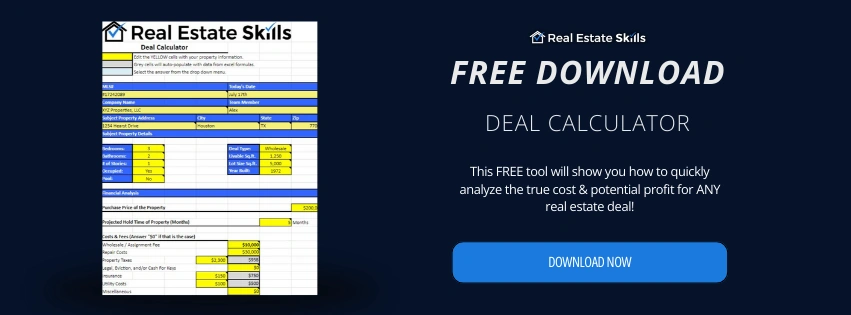
Flipping is a numbers game, and in 2026's thin-margin market, being off by a few percent is the difference between a profit and a loss. Don't risk a deal on back-of-the-napkin math. Download our free Deal Calculator to estimate your after-repair value (ARV), factor in rehab and holding costs, and pin down your Maximum Allowable Offer (MAO) — so you know your exact number before you ever make an offer in one of these markets.
Top 10 Best Places To Flip Houses In 2026
The best cities to flip houses in 2026 are affordable Rust Belt, Northeast, and Midwest metros with high flip returns and tight inventory. Pittsburgh and Buffalo lead on raw ROI (~84–86%), while Realtor.com's top demand markets — Hartford, Rochester, Toledo, Grand Rapids, and Milwaukee — round out a list where cheap entry meets real buyer demand.
Here are the ten metros where the numbers favor a flip this year. Each entry leads with the data that matters — gross flip ROI, entry price, demand signal, and one honest friction point — followed by why the market works and who it's best for.
- Pittsburgh, Pennsylvania
- Buffalo, New York
- Baltimore, Maryland
- Richmond & Virginia Beach, Virginia
- Hartford, Connecticut
- Rochester, New York
- Cleveland, Ohio
- Toledo, Ohio
- Grand Rapids, Michigan
- Milwaukee, Wisconsin
1. Pittsburgh, Pennsylvania
Pittsburgh is the best big-metro flip market in the country right now, with the typical flip returning about 85.9% gross ROI on a low entry price — and it's one of the few cities that also lands on Realtor.com's 2026 demand list.
- Gross flip ROI: ~85.9% — highest among metros over 1 million people (ATTOM, Q1 2026)
- Entry price: Low; Pennsylvania's median flip runs well under the national $260k median
- Demand signal: Realtor.com 2026 top-10 market (#10), with low mortgage "lock-in" pressure keeping listings moving
- Honest friction: Older, hillside housing stock — watch for foundation and grading issues on cheap shells
What makes Pittsburgh unusual is that it wins on both scoreboards at once. Most high-ROI flip markets are cheap but sleepy; most high-demand markets are expensive. Pittsburgh is cheap to buy into and has a buyer pool that's actually moving, because the gap between what current owners pay and what new buyers would pay is one of the smallest in the country — so people list and move instead of sitting frozen. That circulation is exactly what a flipper needs to source deals and exit them.
Why flip in Pittsburgh:
- The widest big-metro spread in the country between a distressed buy and a renovated resale
- Limited new construction makes your renovated "character home" the premium option on the block
- High share of owned-outright homes insulates the market from rate shocks
- Steady demand from buyers priced out of pricier East Coast metros
2. Buffalo, New York
Buffalo is one of the two or three most profitable flip markets in America, with roughly 84% gross ROI and years of ranking as one of the nation's hottest markets — a combination that makes its low entry prices genuinely rare.
- Gross flip ROI: ~84% — second only to Pittsburgh among large metros (ATTOM, Q1 2026)
- Entry price: Among the lowest of any major metro; deep affordability
- Demand signal: Ranked #1–2 on national "hottest market" lists for three straight years (2024–2026)
- Honest friction: Pre-1978 housing means lead-paint protocols; also one of the highest all-cash-buyer shares (~79%), so you're competing with cash
Buffalo is the market a lot of "best places to flip" lists still leave out, and that's a real miss. Very few places combine an 84% typical return with prices this low and demand this durable — most cheap markets are cheap because nobody wants them, but Buffalo has a genuine, sustained buyer pool. The catch worth naming: with roughly four in five flips there bought in cash, you need to move fast and be ready to compete on certainty, not just price.
Why flip in Buffalo:
- Elite gross ROI on an entry price most beginners can actually reach
- Multi-year run as a top national market signals demand that isn't a fluke
- Chronic shortage of updated, move-in-ready homes props up your resale
- Strong first-time-buyer absorption at the affordable end where flips live
You Know Where To Flip. Now Learn How To Find The Deals.
Picking the right market is half the battle — the other half is finding a discounted property in it and running the numbers so you actually profit. The flippers who win follow a proven process from day one: sourcing deals, underwriting them conservatively, and executing the renovation without blowing the budget. Our FREE Training walks you through the entire system, the same one thousands of our students use. Watch it today, then go find your first deal.
Watch The FREE Training →3. Baltimore, Maryland
Baltimore delivers some of the strongest big-metro flip margins in the country — around 66% gross ROI — backed by one of the highest state-level flip returns nationwide.
- Gross flip ROI: ~65.9% among metros over 1 million (ATTOM, Q1 2026)
- Entry price: Moderate; Maryland's typical flip profit is among the nation's largest in dollar terms (~$134k state median gross profit)
- Demand signal: Deep, dense metro with steady rowhome turnover and a broad buyer base
- Honest friction: Older rowhome stock and neighborhood-by-neighborhood variation — comps must be block-specific, not citywide
Baltimore rewards flippers who know it street by street, which is both its risk and its edge. Values can swing hard from one block to the next, so a citywide average tells you nothing — but that same variation is where the margin hides for someone doing real comp work within a half-mile. Maryland's overall flip economics are among the best in the country, and Baltimore is the engine of that, especially in its stock of renovatable rowhomes.
Why flip in Baltimore:
- Big-metro ROI without a big-metro entry price
- Dense inventory of rowhomes suited to repeatable cosmetic-to-moderate renovations
- Large, layered buyer pool from first-timers to move-up buyers
- Strong state-level flip profitability underpinning the metro
4. Richmond & Virginia Beach, Virginia
Virginia is the rare state that shows up on both the flip-ROI leaderboard and Realtor.com's demand forecast, with Virginia Beach flips returning roughly 75% gross ROI and Richmond ranking among the top demand markets for 2026.
- Gross flip ROI: ~74.9% in Virginia Beach among large metros; ~50% statewide (ATTOM, Q1 2026)
- Entry price: Moderate; strong profit-per-deal in dollar terms (~$115k state median gross profit)
- Demand signal: Richmond ranks in Realtor.com's 2026 top markets (#6) — the dual-signal that makes Virginia special
- Honest friction: Returns have compressed from a year ago, so today's conservative underwriting matters more than last year's comps
Virginia is the dual-signal state most lists overlook. Virginia Beach carries one of the highest big-metro flip returns in the country, while Richmond brings the demand tailwind Realtor.com flagged for 2026 — so you get profitable flip math and a growing buyer base, in two different metros within one state. The one caution: like most of the country, Virginia's flip returns have eased off their 2024 highs, so price your ARV to today's market, not last year's.
Why flip in Virginia:
- One of the few states strong on both flip ROI and forecasted demand
- Two distinct metros to work — coastal Virginia Beach and capital-city Richmond
- Healthy dollar profit per deal, not just percentage returns
- Diverse buyer base spanning military, government, and professional employment
5. Hartford, Connecticut
Hartford is Realtor.com's #1 housing market for 2026, driven by an extreme inventory shortage that turns any renovated, move-in-ready home into a hot commodity.
- Gross flip ROI: ~40% statewide (Connecticut, ATTOM Q1 2026); strong per-deal dollar profit (~$107k state median)
- Entry price: Moderate; higher than the Rust Belt metros but well below coastal Northeast hubs
- Demand signal: #1 on Realtor.com's 2026 top-markets forecast — projected strongest combined sales-and-price growth in the nation
- Honest friction: Municipal compliance and older suburban septic/sewer rules can add time and cost
Hartford's edge is scarcity, not cheap entry. It tops Realtor.com's 2026 list because demand is strong and move-in-ready inventory is thin, so a well-executed flip meets a buyer pool that has almost nothing else to choose from — often producing multiple offers. The buyer base skews older and financially stable, and new construction is minimal, which means your renovated home isn't competing against a shiny new subdivision down the road. Just underwrite for the compliance friction that comes with an older Northeast market.
Why flip in Hartford:
- The nation's #1 forecasted market for 2026 combined growth
- Record-thin inventory of updated homes drives fast, competitive resales
- Little new-build competition in established suburbs
- Financially stable, insurance- and healthcare-anchored buyer pool
6. Rochester, New York
Rochester pairs some of the deepest affordability in the country with Realtor.com's #2 demand ranking for 2026 — a combination that keeps renovated homes selling fast to first-time buyers.
- Gross flip ROI: ~25% statewide (New York, ATTOM Q1 2026), with much of the profit concentrated in affordable upstate metros like Rochester rather than pricey downstate
- Entry price: Very low — one of the most affordable metros on this list
- Demand signal: #2 on Realtor.com's 2026 forecast; among the metros with the smallest jump in monthly payment versus current owners, keeping the market liquid
- Honest friction: Older pre-1978 stock means lead-paint abatement on many properties
Rochester works because affordability itself is the demand driver. When the gap between what today's buyers would pay and what current owners already pay is small — one of the lowest in the nation here — people actually move, which keeps inventory circulating and gives flippers deals to buy and buyers to sell to. First-time buyers dominate the affordable end where flips live, and they're competing for a short supply of updated homes. The statewide ROI figure understates Rochester specifically, because New York's average is dragged down by expensive, thin-margin downstate deals.
Why flip in Rochester:
- Extreme affordability opens the door to beginners and out-of-state investors
- #2 national demand ranking with strong first-time-buyer absorption
- Low payment gap keeps the market moving instead of frozen
- Limited turnkey supply makes a renovated home stand out immediately
7. Cleveland, Ohio
Cleveland offers low entry prices in a high-activity flipping state, with Ohio posting one of the strongest state-level flip returns in the country at roughly 35% gross ROI.
- Gross flip ROI: ~35.2% statewide (Ohio, ATTOM Q1 2026) — among the highest of any high-volume state
- Entry price: Low; Ohio is a consistent affordability leader for flippers
- Demand signal: Ohio ranks among the nation's top states for flip activity, signaling a proven, liquid investor market
- Honest friction: Lead-safe certification and point-of-sale inspection requirements in some wards — build these into your timeline or risk losing your certificate of occupancy
Cleveland is where flip volume and flip margin overlap, which is rarer than it sounds. Ohio doesn't just have high returns on paper — it has one of the highest actual flipping rates in the country, meaning a deep, active market of investors, contractors, and cash buyers you can plug into. For a beginner, that ecosystem matters as much as the ROI: proven contractor crews and a liquid resale market lower your risk. The tradeoff is real regulatory friction — lead-safe rules and point-of-sale inspections are non-negotiable here, so factor them in from day one.
Why flip in Cleveland:
- High state-level flip ROI paired with genuinely low acquisition costs
- Deep, active flipping ecosystem with established contractor and buyer networks
- Strong entry-level demand where cosmetic flips perform best
- A "flip-to-rent" backup is realistic given solid rental fundamentals
8. Toledo, Ohio
Toledo has the lowest entry prices on this list and sits at #4 on Realtor.com's 2026 forecast, giving beginners the cheapest way onto the board in a high-return state.
- Gross flip ROI: ~35.2% statewide (Ohio, ATTOM Q1 2026) — the same strong state economics as Cleveland
- Entry price: Among the lowest of any metro in the country — the affordability leader here
- Demand signal: #4 on Realtor.com's 2026 top-markets forecast; buyers face one of the smallest payment jumps versus current owners, keeping the market liquid
- Honest friction: Point-of-sale inspection requirements in specific city wards — confirm before you buy
Toledo's whole case is liquidity at a low price point. Because homes are so affordable, the leap from a current owner's cheap payment to a new buyer's payment is small in absolute dollars, so people actually move — and that keeps inventory turning over, which is exactly what a high-volume flipper needs. The same Ohio state economics that make Cleveland attractive apply here, but with an even lower cost of entry, making Toledo one of the friendliest first-flip markets in the country for a beginner working with limited capital.
Why flip in Toledo:
- The lowest barrier to entry on this entire list
- Strong Ohio state-level flip returns behind an affordable metro
- High inventory velocity keeps the market moving instead of frozen
- Manufacturing and logistics employment anchors steady workforce demand
9. Grand Rapids, Michigan
Grand Rapids is the fastest-moving market on this list, with critically tight inventory and Realtor.com's #7 demand ranking backed by Michigan's roughly 59% state flip ROI.
- Gross flip ROI: ~59.3% statewide (Michigan, ATTOM Q1 2026) — one of the highest state returns in the country
- Entry price: Low to moderate; strong margins relative to buy price
- Demand signal: #7 on Realtor.com's 2026 forecast; consistently among the lowest days-on-market of any Midwest metro
- Honest friction: New 2026 flexible-zoning and ADU permitting rules to navigate on some projects
Grand Rapids is where capital velocity peaks. Inventory sits critically tight, so a home renovated to a high standard tends to draw offers fast — which means your money isn't trapped paying holding costs while a listing lingers. That speed is the whole advantage: if you can turn capital four or five times a year instead of two or three, a solid per-deal margin compounds into a real business. Michigan's state-level flip ROI is among the best in the nation, and Grand Rapids' low days-on-market lets you actually capture it.
Why flip in Grand Rapids:
- Among the lowest days-on-market of any top Midwest metro — fast exits
- One of the highest state-level flip ROIs in the country behind it
- Tight inventory means quality renovations get absorbed quickly
- Stable job base anchored by healthcare and higher education
10. Milwaukee, Wisconsin
Milwaukee rounds out the list as a steady Midwest value play, ranking #8 on Realtor.com's 2026 forecast with solid state-level flip returns and list prices below the national average.
- Gross flip ROI: ~30.8% statewide (Wisconsin, ATTOM Q1 2026)
- Entry price: Below the national average — median list prices run meaningfully under the U.S. norm
- Demand signal: #8 on Realtor.com's 2026 top-markets forecast; a "refuge market" for buyers leaving pricier Illinois and coastal metros
- Honest friction: Property-tax assessments vary widely across Milwaukee County's suburbs — verify the exact parcel, not the county average
Milwaukee is a dependable margin market rather than a flashy one, and that's the point. It draws steady demand from buyers priced out of Chicago and coastal hubs, its list prices sit well under the national average, and a lack of new residential construction keeps your renovated existing home competitive. The number to watch is property tax: assessments swing hard from one Milwaukee County suburb to the next, and a miss there can quietly eat your holding-cost budget, so underwrite the specific parcel.
Why flip in Milwaukee:
- Entry prices comfortably below the national average
- Steady "refuge market" demand from higher-cost neighboring metros
- Limited new construction keeps renovated homes in demand
- Solid buyer pool anchored by healthcare and manufacturing employment
Quick Comparison Of The Best Places To Flip Houses In 2026
Here's the whole list side by side, so you can match a market to your capital and strategy at a glance. ROI figures are gross returns before expenses; "metro" figures are metro-specific, while "state" figures reflect markets where ATTOM's freshest Q1 2026 breakdown is at the state level.
| City | Gross Flip ROI | Entry Price | Demand Signal | Best For |
|---|---|---|---|---|
| Pittsburgh, PA | ~85.9% (metro) | Low | Realtor.com #10 | Widest big-metro spread |
| Buffalo, NY | ~84% (metro) | Very low | Hottest market 3 yrs | Elite ROI at a reachable price |
| Baltimore, MD | ~65.9% (metro) | Moderate | Dense, steady turnover | Repeatable rowhome flips |
| Virginia Beach / Richmond, VA | ~74.9% (metro) / ~50% (state) | Moderate | Realtor.com #6 | Dual ROI + demand |
| Hartford, CT | ~40% (state) | Moderate | Realtor.com #1 | Scarcity-driven fast resales |
| Rochester, NY | ~25% (state) | Very low | Realtor.com #2 | Beginners, out-of-state |
| Cleveland, OH | ~35.2% (state) | Low | Top state for activity | Active ecosystem + flip-to-rent |
| Toledo, OH | ~35.2% (state) | Lowest | Realtor.com #4 | First flip, lowest capital |
| Grand Rapids, MI | ~59.3% (state) | Low–moderate | Realtor.com #7 | Fastest capital turnover |
| Milwaukee, WI | ~30.8% (state) | Below U.S. avg | Realtor.com #8 | Steady value margins |
The pattern worth noticing: the highest percentage returns (Pittsburgh, Buffalo) and the strongest forecasted demand (Hartford, Rochester) aren't always the same cities. High-ROI markets tend to be cheap and quiet; high-demand markets tend to be pricier and faster. The sweet spot is a market that scores on both — which is why Pittsburgh, Virginia, and the Realtor.com Rust Belt names rise to the top. Match the column that fits your situation: lowest capital points you to Toledo or Rochester; fastest turnover to Grand Rapids; the widest raw spread to Pittsburgh or Buffalo.
Best States To Flip Houses In 2026
If you'd rather choose a state than a single metro, the strongest flip states in 2026 combine high gross ROI with enough flipping activity to support a real ecosystem of contractors and cash buyers. Based on ATTOM's Q1 2026 data, Pennsylvania (~70%), Michigan (~59%), West Virginia (~57%), Maryland (~56%), Virginia (~50%), Tennessee (~50%), and Alabama (~49%) lead on flip returns.
Here are the top states by gross flip ROI, drawn from ATTOM's state-by-state flipping data for Q1 2026:
| State | Gross Flip ROI | Notable |
|---|---|---|
| Pennsylvania | ~70% | Highest ROI among high-volume states; Pittsburgh and Philadelphia drive it |
| Michigan | ~59.3% | Top-tier returns; Grand Rapids and Detroit metros |
| West Virginia | ~57.3% | High ROI, small market — thinner deal flow |
| Maryland | ~56% | Large dollar profits per deal; Baltimore-led |
| Virginia | ~50.3% | Dual ROI + demand (Richmond, Virginia Beach) |
| Tennessee | ~49.6% | Strong margins; Memphis and Nashville metros |
| Alabama | ~49.5% | High ROI on low entry prices |
A few honest caveats before you pick a state off a list. First, ROI isn't everything — West Virginia posts a great return but has thin deal flow, so a high percentage on very few available deals is harder to build a business on than a slightly lower return in a deep market like Pennsylvania or Michigan. Second, for flip volume — which signals an active, liquid market — Georgia, Ohio, Texas, and Missouri lead the nation in flipping rate, even though their ROI figures vary widely (Ohio strong at ~35%, Texas near the bottom at ~5.6%). And third, these are gross returns; the same rehab-and-holding-cost math from earlier applies at the state level too.
Don't overlook the affordable Southeast, either. South Carolina, for instance, posts a solid ~33% state flip ROI, and metros like Greenville pair genuine buyer demand with reachable entry prices — exactly the kind of market where a disciplined beginner can win.
📓 From The Field
Lindsay, a Real Estate Skills student in Greenville, South Carolina, landed her first flip off the MLS. She bought at $275,000, put roughly $125,000 into a cosmetic-heavy renovation, and listed at an ARV of $489,000 — a healthy built-in margin. She found the deal by working the numbers, not chasing it: about 60 deal analyses, 16 showings, and 5 offers to get 1 accepted. At listing she projected roughly $47,000 in profit after fees and interest, and the home drew a full-price offer within five hours on the market. (Projected at time of listing, not a closed result; individual results vary and are not typical.)
The takeaways are the ones that hold in any market: an affordable Southeast metro can absolutely work, disciplined deal-flow beats chasing, and a conservative ARV is what makes the margin real.
Read Also: Best States To Invest In Real Estate — if you're weighing states for long-term rental investing rather than flipping, that's a different question with different answers, ranked on buy-and-hold fundamentals like landlord laws and rental yield.
Honorable Mentions & Where NOT To Flip In 2026
Beyond the top 10, several markets are worth watching — Providence, New Haven, Philadelphia, Memphis, Kansas City, and Indianapolis all have real data behind them. Just as important is where to be careful: Texas and parts of the oversupplied Sun Belt now post some of the thinnest flip margins in the country.
These didn't crack the top 10, but they're real opportunities with real data behind them — worth a look depending on your strategy and where you already are.
| Market | Why It's On The Watchlist |
|---|---|
| Providence, RI | Realtor.com 2026 top-5 market; New England demand with tighter margins than the leaders |
| New Haven, CT | Realtor.com 2026 top-10; Connecticut's demand strength alongside Hartford |
| Philadelphia, PA | ~62% metro flip ROI; large, liquid market with deep rowhome inventory |
| Memphis, TN | ~50% state ROI; high flip activity and strong affordable-end demand |
| Kansas City, MO | High flipping rate; active, liquid market in an affordable price band |
| Indianapolis, IN | ~46% state ROI; landlord-friendly, making flip-to-rent a genuine backup |
Indianapolis deserves a specific note, since some "best places to flip" lists rank it as a top market: it's a legitimately good flip market on the data — Indiana posts a ~46% state ROI and the metro is landlord-friendly, which gives you a clean flip-to-rent fallback. It just isn't on Realtor.com's 2026 top-10 demand forecast, so we've placed it honestly here rather than overstating its ranking.
Where NOT To Flip In 2026: The Honest Caution
Just as important as where to buy is where to be careful — and in 2026 the data is blunt about it. The weakest big-metro flip returns in the country are concentrated in Texas and parts of the oversupplied Sun Belt, where high acquisition costs and rising inventory have crushed margins. Here's the reality, straight from the numbers:
- Texas is the hardest place to flip profitably right now. Among large metros in Q1 2026, the smallest flip margins were in Austin (~2%), Dallas (~4.3%), San Antonio (~5.1%), and Houston (~7.2%). Texas as a state posts a ~5.6% gross ROI — a fraction of the Rust Belt leaders. Four of the five lowest-ROI major metros in the country were in Texas.
- Salt Lake City (~9.5%) sits in the same thin-margin tier.
- Parts of the Sun Belt are cooling. Markets that boomed on appreciation are now seeing rising inventory and longer hold times, which is exactly the condition that turns a thin-margin flip into a loss.
This matters because it's the opposite of what a lot of older "best places to flip" content still says. Cities like Austin, Dallas, and Phoenix were flip darlings a few years ago — but the appreciation that carried those deals has stalled, and without it, a 2–5% gross return can't survive rehab and holding costs. That doesn't mean no one makes money there; experienced operators with deep local knowledge still do. But for a beginner choosing where to deploy limited capital in 2026, these markets carry far more risk for far less reward than the affordable, high-ROI metros above. Buy where the spread starts wide, not where the headlines were loudest.
What Makes A Market Great For Flipping Houses?
The best flip markets aren't the trendy ones — they're the ones where the numbers leave room to buy low, renovate smart, and still sell at a profit before holding costs eat the margin. Five factors decide it: a wide entry-to-ARV spread, fast resale, low holding costs, scarce move-in-ready inventory, and a strong exit either way.
Whether you use our list or scout your own backyard, these are the factors that actually decide whether a market works:
- A wide spread between entry price and after-repair value (ARV). The ARV is the whole game. The bigger the gap between what you pay and what the renovated home sells for, the more room you have to absorb a surprise and still profit. Cheap-entry markets create this gap; expensive ones erase it.
- Fast resale speed (low days-on-market). Every extra week you hold is interest, insurance, taxes, and utilities out of your profit. Markets where updated homes sell quickly protect your margin and let you recycle capital into the next deal faster.
- Low holding costs. Favorable property taxes, reasonable insurance, and a permit process that doesn't stall your timeline all keep overhead down while you renovate. A market with cheap homes but brutal taxes or slow permits can quietly erase the advantage.
- Scarce move-in-ready inventory and limited new construction. When buyers have few updated options and new builds are expensive or absent, your renovated home becomes the best choice on the market — which drives faster, stronger offers.
- A strong exit either way. The best markets let you sell or rent. If a retail buyer doesn't show, being able to pivot to a rental (a "flip-to-rent") caps your downside instead of leaving you stuck with an asset you can't move.
Nail these five and the specific city matters less than you'd think. Miss them, and even a "hot" market becomes a money pit.
Great Market. Now You Need A Great Deal.
Picking the right city is only half the equation. Once you know where to flip, you have to find a property in that market with enough room in it — enough equity to cover your rehab, your holding costs, and still leave a real profit at today's thinner margins. That skill is what separates flippers who make money from those who just find houses. Our free Ultimate Guide to Start Real Estate Investing walks you through the fundamentals of sourcing discounted properties and spotting the deals with enough "meat on the bone" to actually profit.

Common Mistakes When Choosing A Flip Market
Even experienced investors pick the wrong market. The costliest mistakes in 2026: chasing appreciation instead of the spread, overestimating ARV, underestimating holding and financing costs, ignoring the end-buyer pool, and skipping the local friction like permits and inspections.
If you're starting out, sidestepping these will save you real money:
- Chasing appreciation instead of the spread. The single biggest 2026 mistake. Buying in a pricey or "trending" market and counting on the value to rise is how flippers lose money now that appreciation has stalled. Buy on the spread that exists today, not the one you hope shows up.
- Overestimating ARV. Assuming top dollar without running honest, recent, nearby comps. A conservative ARV calculation— a number the home will sell at all day — is what keeps a deal profitable when the market doesn't cooperate. Never inflate it to make a deal "work."
- Underestimating holding and financing costs. Loan interest, taxes, insurance, utilities, and the taxes on flipping houses stack up fast — especially in expensive markets where the average flip now takes over five months. Thin deals die here.
- Ignoring the end-buyer pool. A great buy price is worthless if no qualified buyer wants the house. High-end flips in shallow markets stall; affordable homes in high-demand markets sell fast.
- Skipping the local friction. Lead-safe rules, point-of-sale inspections, permit timelines, and labor costs vary by city and can wreck a budget. Research them before you buy, not after.
Best Places To Flip Houses FAQs
Final Thoughts On The Best Places To Flip Houses
Flipping houses in 2026 comes down to one discipline: buy where the math works, not where the hype is. The margin that used to hide a bad market pick is gone — returns hit a 17-year low last year before ticking back up — so the market you choose now decides whether you profit at all. The same renovated house that clears $80,000 in Pittsburgh loses money in Austin, and the only difference is the price you paid to get in.
That's why this list leans toward affordable Rust Belt, Northeast, and Midwest metros. Pittsburgh and Buffalo give you the widest raw spread; Toledo and Rochester give you the cheapest way in; Grand Rapids gives you the fastest turnover; Hartford and Richmond give you demand plus margin. Every one of them shares the same DNA — low entry prices, scarce move-in-ready inventory, and buyers who can't afford new construction. Meanwhile, the markets to approach with caution are the ones that were loudest a few years ago.
But don't let the perfect market keep you from starting. The five fundamentals — a wide ARV spread, fast resale, low holding costs, scarce turnkey inventory, and a real exit either way — exist in pockets of almost every metro, including your own. Use this list as a starting point, run the numbers conservatively on every deal, and take action. If you want the exact system for finding deals, underwriting them, and executing a flip from start to finish, our free training walks you through all of it.
The Best Market In The World Won't Help If You Never Start.
Most people read a list like this, bookmark it, and never do a deal. The ones who succeed follow a proven process instead of guessing their way through it — finding discounted properties, analyzing them the right way, and flipping them for a real profit. Our FREE Training shows you exactly how to find deals, run the numbers, and build income in today's market, without spending a dollar on marketing or learning the hard way. Watch it, then go put it to work.
Watch The FREE Training →
About The Author
Founder & CEO, Real Estate Skills
Alex Martinez is the Founder and CEO of Real Estate Skills. With more than a decade of investing experience and 33+ residential properties acquired, he has personally wholesaled and flipped houses across the country. Through Real Estate Skills, Alex and his team have helped thousands of students learn how to find deals, analyze markets, and close profitable flips and rentals.
Real Estate Skills is not a law firm or a financial advisor, and the information in this article is provided for educational purposes only — it does not constitute legal, tax, or financial advice. Real estate markets, flipping returns, and the figures cited here vary by location and change over time; all data reflects the most recent ATTOM and Realtor.com reporting available as of July 2026 and is not a guarantee of future results. House flipping carries real financial risk, and past performance does not guarantee future outcomes. Always run your own numbers and consult a licensed real estate, tax, and financial professional before making any investment decision.

👉FREE Training
How To Consistently Wholesale, Flip Houses, & Invest In Rental Properties From The MLS
(Without Spending $1 On Marketing)

Alex Martinez, the founder of Real Estate Skills, is known for his strong, practical expertise in real estate, starting from a beginner with no family connections in the industry to acquiring over 55 real estate deals, including wholesale and flips, within his first year.
He has dedicated his career to providing cutting-edge education and resources for real estate professionals. He emphasizes the importance of self-taught knowledge through mentors, books, and hands-on experience.
His journey from earning a modest income to becoming a successful real estate entrepreneur and educator showcases his expertise and dedication to the field.

Ryan Zomorodi, co-founder and COO of Real Estate Skills, leverages his experience from a diverse background in real estate investment, construction management, and entrepreneurship to provide comprehensive education in the real estate sector.
His expertise is rooted in hands-on experience, extensive industry knowledge, and a commitment to empowering others through education.
Ryan's journey reflects a blend of practical experience and entrepreneurial success, contributing to his role in developing a platform that educates and supports aspiring real estate professionals.
Read Ryan's Full Bio >>
